Haney’s 60.49m World Record: The Javelin Throw That Took India Past 100 Asian Para Games Medals
The Indian para-athlete delivered a record-breaking throw in Nagoya to win the men’s F37/F38 javelin final. His achievement celebrates elite athletic performance—and highlights why classification, coaching and sustained support matter in para-sport.
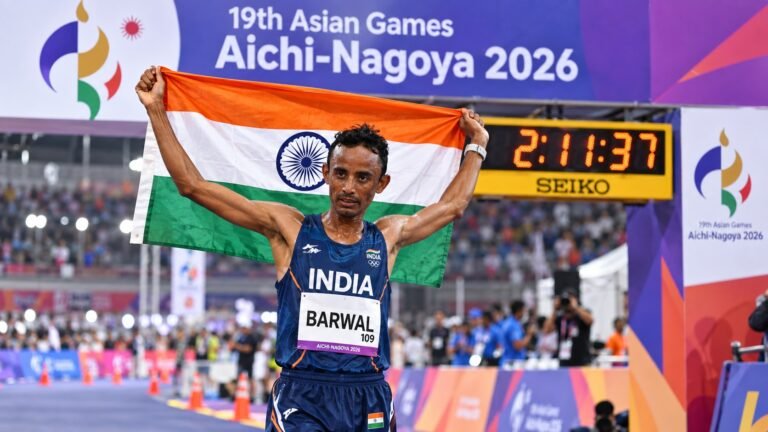
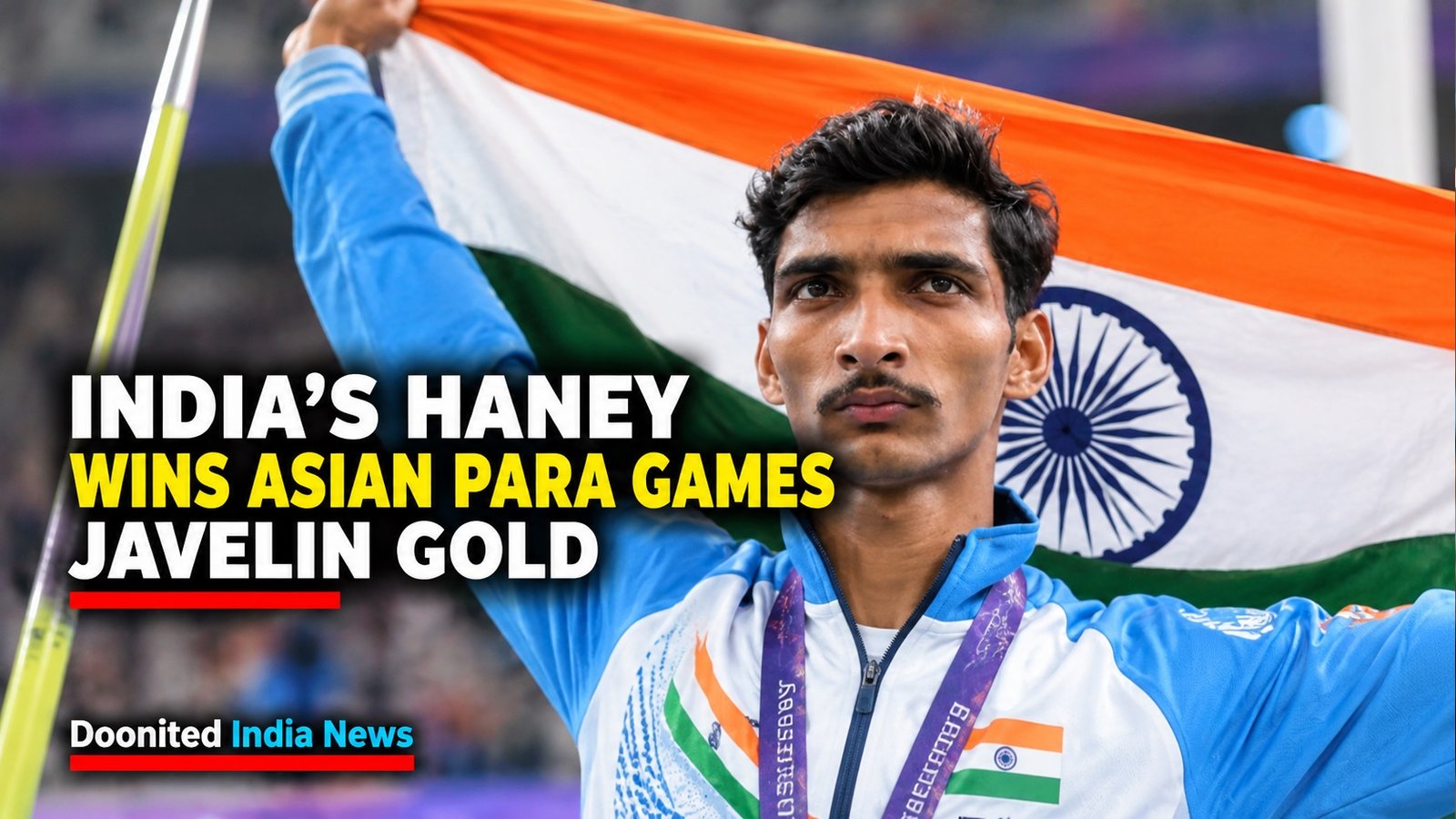
One throw can change the direction of a competition. At the Aichi-Nagoya 2026 Asian Para Games in Japan, Indian javelin thrower Haney produced a performance that did more than secure a gold medal: his final mark of 60.49 metres set a world record in the men’s F37/F38 event and helped India move beyond the 100-medal milestone.
Haney scored 1,116 Raza points to finish ahead of Iran’s Hormoz Seidikazpounji, who threw 50.68 metres for 1,009 points, and China’s Yu Chengjie, whose 53.66-metre throw earned 943 points and an Asian record. The results underline an important feature of combined-class para-athletics: the longest throw does not always determine the final ranking.
For India, the gold was another major result in a campaign featuring strong performances across para-athletics and other sports. For Haney, it added a new world-record achievement to a career that already included a gold medal at the previous Asian Para Games.
The performance is worth examining not only for the distance achieved, but for what it reveals about the precision and competitive depth of modern para-sport.
A record built on years of development
Haney, an Indian athlete from Haryana, has competed in international para-athletics despite coordination and strength impairments affecting the left side of his body. Reports on his career describe an early introduction to athletics, followed by difficulties in obtaining the classification certification required for competition. He later resumed structured training under coach Sunil Phogat in Rohtak.
Those details matter because a para-athlete’s route to elite competition can involve additional hurdles beyond the usual demands of training, technique and physical conditioning. Classification, access to suitable coaching and opportunities to compete at the right level can all influence whether talent develops into international results.
Haney won javelin gold at the Hangzhou Asian Para Games, held in 2023 after being postponed from 2022. His 55.97-metre performance set a Games record at that competition. In Nagoya, the 60.49-metre mark represented a substantial advance on that earlier achievement.
The progression is a reminder that a record-breaking performance rarely emerges in isolation. It rests on repeated training, technical refinement, competition experience and the support needed to keep improving.
What F37 and F38 mean
The labels F37 and F38 identify sport classes used in para-athletics field events. The letter “F” refers to field disciplines, including javelin, discus and shot put.
These classes are used for athletes with eligible coordination impairments, which can include hypertonia, ataxia or athetosis. The precise classification depends on the athlete’s impairment and its effect on sporting activity. Broadly, F37 athletes have a moderate level of coordination impairment, while F38 athletes have a milder impairment.
Combining classes can allow more athletes to compete in a viable event, but athletes may have different functional profiles. That is why the scoring system matters.
In the Nagoya men’s F37/F38 javelin final, Haney competed in the F37 classification. The other medal winners represented F37 and F38 respectively. Their throws could not be ranked simply by measuring the distance from the throwing line.
Why Raza points matter
In a combined-class event, the Raza points system adjusts performances to account for the different classifications represented in the competition. It allows athletes from different classes to be compared through a points-based calculation rather than raw distance alone.
That explains why Yu Chengjie’s 53.66-metre throw—longer than Seidikazpounji’s 50.68 metres—did not earn the silver medal. Yu scored 943 points, while Seidikazpounji recorded 1,009.
Haney’s 60.49 metres and 1,116 points put him clearly ahead of both competitors.
The system is designed to make a combined event more equitable, but understanding it requires looking at both the mark and the points. A medal table that lists distances without the scoring context can leave readers with the mistaken impression that the rankings are inconsistent.
For spectators unfamiliar with para-athletics, the lesson is simple: the rules of the event are part of the achievement. Understanding them allows the audience to appreciate why a performance wins, rather than assuming that all competitors are being compared under identical functional conditions.
India crosses 100 medals
Haney’s world-record gold arrived as India passed 100 medals at the Aichi-Nagoya Games, which run from 18 to 24 October 2026.
His performance was part of a wider Indian campaign in which athletes achieved podium finishes across multiple disciplines. Sandeep also won gold with a world-record performance in the men’s 400-metre T64 event, while other Indian athletes contributed medals in athletics and other sports.
India had won 111 medals at the Hangzhou Asian Para Games, held in 2023. Crossing the 100-medal mark again in Nagoya demonstrates the country’s continued competitiveness at the continental level, although the final medal tally and the distribution of medals across sports are needed to assess the full campaign.
A medal count is a useful headline measure, but it does not tell the whole story. The longer-term health of para-sport depends on the number of athletes entering the system, access to coaching and facilities, quality of classification services, competitive opportunities and support after an athlete’s breakthrough result.
One world record can draw attention to a sport. A reliable development system is what gives more athletes the opportunity to reach that level.
Beyond inspiration: what para-sport needs
Athletes with disabilities are often described primarily through stories of overcoming adversity. Such narratives can recognise determination, but they can also overlook the technical skill and competitive work that make elite performances possible.
Haney’s 60.49-metre throw deserves to be understood as a sporting achievement: a world-record distance delivered in a major international final, under a classification system designed for fair competition.
The practical questions now are what support can help him sustain that performance, how he and his coaching team will build on the result, and whether India can turn the attention generated by these Games into stronger pathways for emerging para-athletes.
That means accessible training facilities, qualified coaches, dependable equipment, sports science, medical support and opportunities to compete internationally. It also means ensuring that young athletes can access classification and registration processes without avoidable delays.
These needs are not unique to India, but the country’s large population and growing sporting ambitions make them especially important. A wider talent pool can only translate into international success when athletes have a clear route from local participation to elite competition.
The distance—and the work ahead
Haney’s 60.49-metre throw has placed his name at the centre of the Asian Para Games’ athletics story. It delivered gold, established a world record and contributed to India’s crossing of 100 medals.
The achievement should be celebrated on its own terms, without turning it into a claim that every challenge facing para-sport has been solved. Records mark the peak of a particular performance; they do not measure the strength of an entire sporting system.
The next challenge is to sustain the progress: for Haney, through continued training and competition; for India, through investment in athletes and infrastructure; and for spectators, through a better understanding of the classifications and scoring that make para-sport distinctive.
At 60.49 metres, Haney sent the javelin beyond the previous standard. The lasting value of the moment will depend on how far the sporting system can advance from it.


World Beyond the News
Bees Communicate Where Food Is
Honeybees use movement patterns known as waggle dances to communicate information about food locations.
Street Food Reflects Local History
Many famous street foods developed from migration, trade, local ingredients and the everyday needs of working communities.
A Day on Venus Is Extremely Long
Venus rotates so slowly that one rotation relative to distant stars takes longer than its trip around the Sun.
Human Achievement Continues to Push Limits
Athletes, engineers, scientists and explorers regularly establish new benchmarks in speed, endurance, scale and precision.