Who Is Toshniwal? The Pant Project’s ₹109 Crore Bet on India’s Trouser Market
The co-founder is taking a business built around better-fitting trousers into its next phase, with ₹109 crore in fresh funding and a plan to grow from 25 exclusive stores to more than 150. The real test will be turning a focused product idea into a durable menswear brand.
A pair of trousers is hardly the first thing that comes to mind when discussing India’s startup economy. Yet the everyday frustration of finding the right fit has become the foundation of a fashion business that has attracted ₹109 crore in fresh investment.
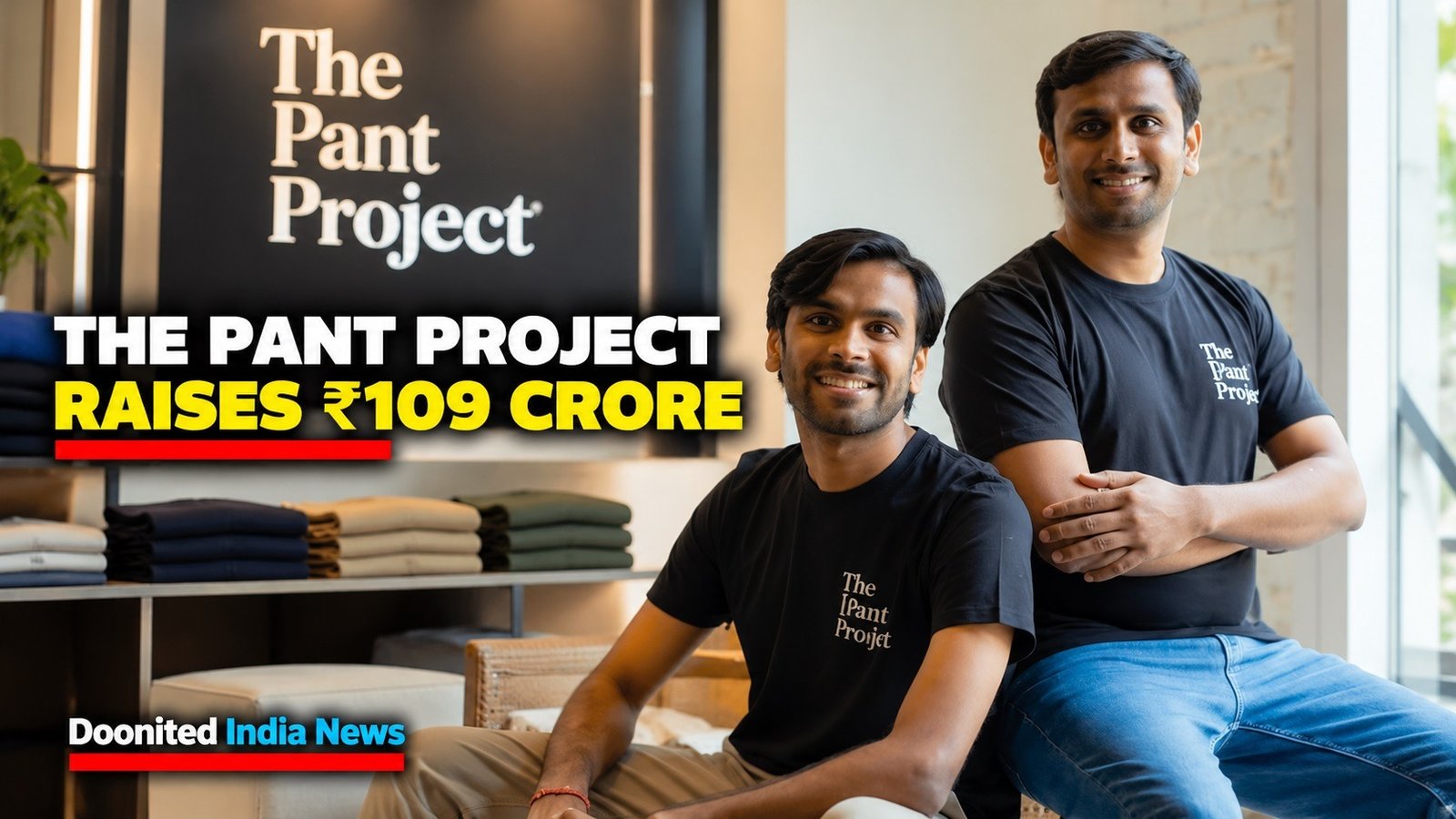
The company is The Pant Project, founded by brothers Dhruv Toshniwal and Udit Toshniwal in 2020. Its co-founder and chief executive, Dhruv, leads the business side, while Udit serves as founder and creative director. The brand began online with a relatively narrow proposition: make trousers that fit more comfortably, offer useful customisation and reduce the compromises shoppers often make when buying ready-made clothing.
That proposition has now attracted a Series B funding round led by Mirae Asset Venture Investments (India), announced in October 2026. Existing investor Sorin Investments also participated, alongside other investors. The company has separately secured venture-debt financing from Alteria Capital, although the amount of that debt has not been disclosed in the reports reviewed for this article.
From a familiar problem to a business idea
The Pant Project’s official account of its origins begins with an ordinary wardrobe problem: finding trousers that are neither uncomfortably tight nor awkwardly loose.
The brothers drew on their family’s textile background. The company’s website says their grandfather established Banswara Syntex in 1976, giving the family a longstanding connection to the textile industry. Dhruv’s business experience and Udit’s creative training helped shape a venture that combined fabric knowledge, fit and online convenience.
The idea was timely. Online shopping had made it easier for consumers to browse a vast range of clothing, but buying trousers remotely still involved a basic uncertainty: a size label could not guarantee a comfortable fit. Different brands interpret sizing differently, while customers vary in waist, hip, thigh and leg proportions.
The Pant Project sought to address this gap through custom-made options and, over time, a wider ready-to-wear range. Its current product catalogue includes formal trousers, chinos, cargos, jeans, shorts and casual styles. The company also offers products for women.
That is a practical form of innovation, and one that can be easier for customers to understand than a grand promise to reinvent fashion.
Why fit can be a competitive advantage
Fashion brands frequently compete on price, celebrity endorsements, seasonal trends and visual identity. The Pant Project has built its positioning around a more functional question: how does the garment feel and perform when someone wears it through an ordinary day?
This gives the company a clear starting point. A customer who finds a comfortable, reliable pair of trousers may return for another style or colour. If the brand consistently delivers the promised fit, repeat purchasing can become an important part of its economics.
The challenge is consistency. Fit is personal, and a garment that works for one customer may not work for another. Online sizing guidance, accurate product descriptions, quality control, exchanges and alterations can therefore influence whether a first-time buyer becomes a repeat customer.
The brand’s move from custom-made trousers into ready-to-wear clothing also changes the business. Customisation can help address individual measurements, but it requires reliable measurement guidance and production processes. Ready-to-wear products can be easier to scale, but the company must predict which sizes, cuts, fabrics and colours customers will buy.
In other words, a strong product idea is only the beginning. The operating system behind it must work just as well.
What the ₹109 crore funding will finance
The Series B round gives The Pant Project additional capital to pursue three connected ambitions.
First, a larger physical retail network. The company has reported a plan to grow from 25 exclusive brand stores to more than 150 within two to three years. Physical stores allow shoppers to feel fabrics, try different fits and seek help with sizing—advantages that an online product page cannot fully reproduce.
Second, a broader product portfolio. Jeans, athleisure and casualwear can help the company reach customers on more occasions rather than relying predominantly on trousers. But category expansion also brings more complexity: different fabrics, seasonal demand, inventory decisions and competition with established brands.
Third, better integration between online and offline sales. The company has described technology and omnichannel operations as priorities. In a well-run system, customers can discover a product online, try it in a store and buy through whichever channel suits them. Retail data can also help the company understand local demand and plan stock more intelligently.
The money is an opportunity, not proof of future success. Opening stores requires spending on leases, staff, inventory, fit-out and local marketing. A rapidly growing store count can increase visibility, but it can also increase fixed costs if sales fail to keep pace.
The relevant question is therefore not simply whether The Pant Project can open 125 or more additional outlets. It is whether those stores can attract enough customers and generate sufficient sales to justify the investment.
A crowded market—and a demanding customer
India’s menswear market includes established clothing groups, specialist trouser and denim labels, international brands and newer direct-to-consumer businesses. The Pant Project competes in a landscape where shoppers can compare products and prices quickly, while switching brands is relatively easy.
Its focused positioning may help it stand out, but that advantage needs to survive contact with the market. Customers will judge the brand on fabric quality, comfort, durability, price, availability and service—not on its funding announcement.
Moving into adjacent categories creates another strategic tension. A brand known for trousers may find opportunities in jeans and casualwear, but expanding too far could dilute the specialisation that made it distinctive in the first place.
The company will need to decide which products genuinely strengthen its identity and which merely add more items to its catalogue. More choice is not automatically a stronger business.
There is also a difference between reported growth and demonstrated financial sustainability. Investor commentary cited in recent coverage says the company’s revenue has grown more than fivefold since its Series A investment, with repeat purchases contributing to the business. That is an encouraging signal, but the claim comes from an investor and should not be mistaken for a complete, independently audited picture of profitability, cash flow or store-level performance.
What Indian entrepreneurs can learn from the story
The Pant Project’s journey offers a useful lesson for founders: a business does not always need to begin with a completely new product. It can begin by identifying a persistent problem in an existing market and solving it with greater focus.
The second lesson is that a clear niche can be a launchpad, but not necessarily a permanent boundary. The company started with bottomwear and is now seeking a broader role in menswear. The challenge is to expand without losing the product credibility that brought customers in.
The third lesson is about timing. Digital sales can help a young brand reach customers without immediately building a large physical network. Once demand and customer behaviour become clearer, stores may improve product discovery, fitting and trust. But moving offline changes the cost structure. Growth that looks attractive on a sales chart must also work at the level of rent, inventory and store productivity.
For consumers, the implications are simpler. More specialised Indian brands may create alternatives to the standardised sizing and limited fit choices found in parts of the market. Whether The Pant Project delivers on that promise will depend on its products and customer service, not the amount of money it raises.
The real test begins now
Dhruv and Udit Toshniwal have built The Pant Project around a recognisable need, connected it to a family textile background and developed an online business with a growing physical presence. The ₹109 crore Series B round gives the company resources to attempt a much larger expansion.
But funding is a milestone, not a verdict. The next phase will test whether the brand can maintain fit and quality across a wider range, build stores that make commercial sense and persuade customers to return even as competitors respond.
India’s consumer economy has room for brands that solve everyday problems thoughtfully. The Pant Project has a clear proposition. Its achievement over the coming years will be measured not by how many stores it announces, but by how many customers find that the product genuinely works for them—and come back for another pair.


World Beyond the News
Bees Communicate Where Food Is
Honeybees use movement patterns known as waggle dances to communicate information about food locations.
Street Food Reflects Local History
Many famous street foods developed from migration, trade, local ingredients and the everyday needs of working communities.
A Day on Venus Is Extremely Long
Venus rotates so slowly that one rotation relative to distant stars takes longer than its trip around the Sun.
Human Achievement Continues to Push Limits
Athletes, engineers, scientists and explorers regularly establish new benchmarks in speed, endurance, scale and precision.