THURSDAY, NOVEMBER 26, 2026
05:01:28 PM
Doonited India
LOCAL WEATHER
Loading...
INDIA WEATHER
DELHI --°C
MUMBAI --°C
CHENNAI --°C
KOLKATA --°C
BREAKING NEWS
GENERAL

general

Indian companies overseas acquisitions
November 26, 2026

Indian companies overseas acquisitions

India’s Global Acquisition Drive: Why Indian Companies Are Buying Abroad Indian companies are increasingly looking beyond India’s borders—not simply to sell more products, but to secure the assets, capabilities and supply chains that may determine who remains competitive in the next decade. That shift is…

Read More
Pravasi Bharatiya Divas 2027: Official Website Goes Live
November 19, 2026

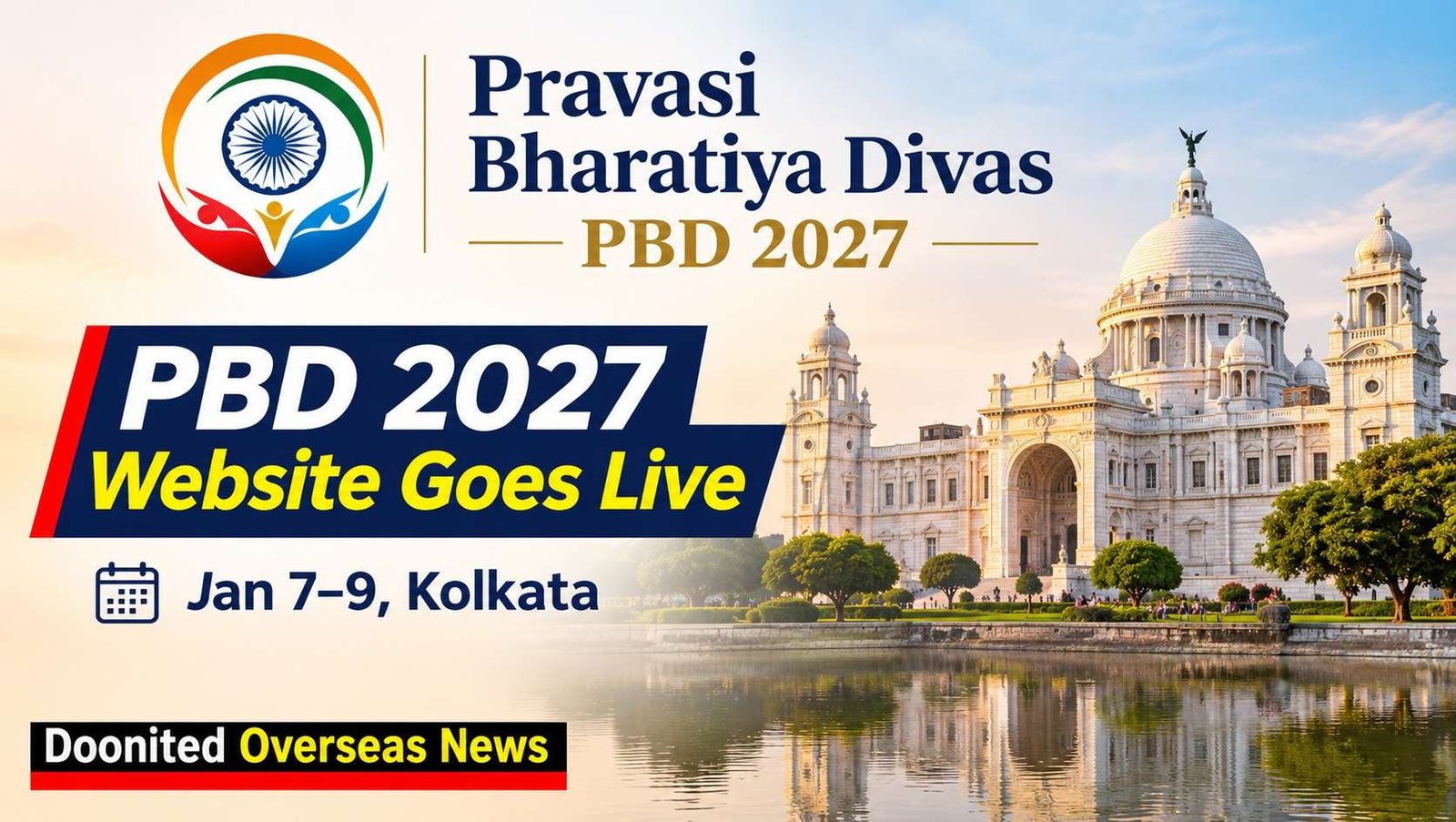
Pravasi Bharatiya Divas 2027: Official Website Goes Live

Pravasi Bharatiya Divas 2027: India Opens a Digital Gateway to Reconnect with Its Global Diaspora The official website for the 19th Pravasi Bharatiya Divas Convention is now live ahead of the January 7–9 gathering in Kolkata. Designed to support delegate registration and provide convention updates,…

Read More
Abhishek Awasthi: Mandi-Born Leader Becomes Bendigo Mayor
November 18, 2026

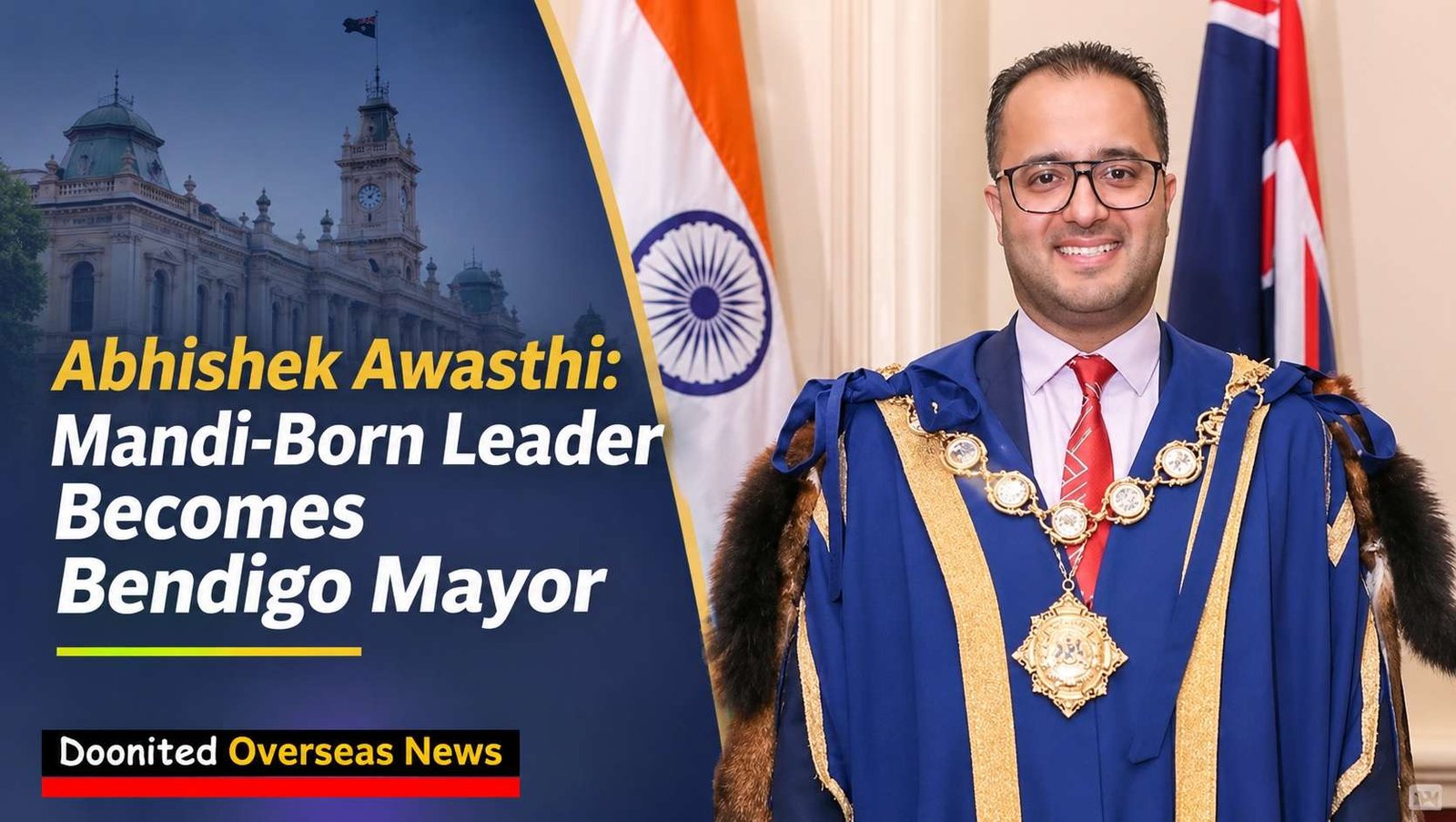
Abhishek Awasthi: Mandi-Born Leader Becomes Bendigo Mayor

From Mandi to the Mayor’s Office in Australia: Abhishek Awasthi Makes History in Greater Bendigo Arriving in Australia as an international student in 2008, Abhishek Awasthi has become the first person of Indian origin to serve as Mayor of Greater Bendigo, Victoria. His journey from…

Read More
Canada Makes Rural Immigration Permanent: New PR Route in 2027
November 16, 2026

Canada Makes Rural Immigration Permanent: New PR Route in 2027

Canada Makes Rural Immigration Permanent: Could Smaller Cities Open New Doors for Indian Professionals? Canada’s Rural Community Immigration Program will offer a permanent-residence pathway through 14 participating communities. For Indian professionals and skilled workers, the opportunity could extend beyond Toronto and Vancouver—but securing a qualifying…

Read More
Bodhana Sivanandan Breaks Judit Polgár’s Chess Record
November 11, 2026

Bodhana Sivanandan Breaks Judit Polgár’s Chess Record

Bodhana Sivanandan: British-Indian Chess Prodigy Breaks Judit Polgár’s 38-Year Record At just 11, the Harrow-born chess sensation has completed the requirements for the International Master title, surpassing a record held by Judit Polgár since 1988. Her rise highlights a remarkable British-Indian sporting story—and the discipline…

Read More
Uday Ruddarraju: Indian-Origin Executive Leading OpenAI Compute
November 10, 2026

Uday Ruddarraju: Indian-Origin Executive Leading OpenAI Compute

From Hyderabad to the Heart of the AI Race: Uday Ruddarraju Takes Charge of OpenAI’s Computing Infrastructure Indian-origin technology executive Uday Ruddarraju is set to lead OpenAI’s broader computing and infrastructure organisation, placing him at the centre of the systems that power the company’s artificial…

Read More
Paras Defence–Powerus Deal: Guardian-1 and India’s Counter-Drone Push
November 9, 2026

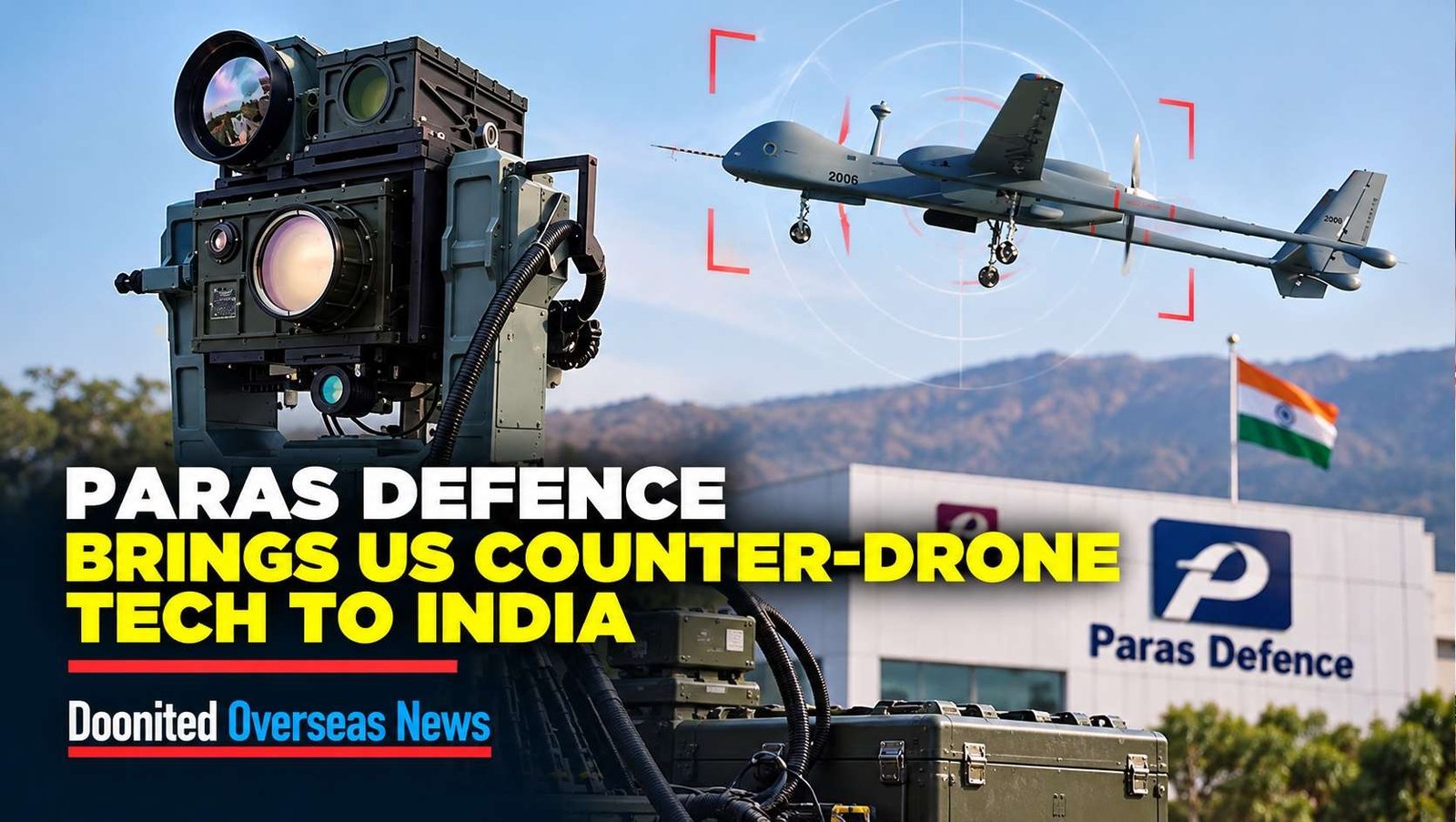
Paras Defence–Powerus Deal: Guardian-1 and India’s Counter-Drone Push

Paras Defence–Powerus Deal: India’s Counter-Drone Ambitions Meet a New Geopolitical Test Paras Defence and Space Technologies has secured an exclusive Indian manufacturing and commercialisation licence for the US-developed Guardian-1 counter-drone interceptor. But the agreement is not an Indian military procurement order—and Powerus’s subsequent defence engagement…

Read More
Romanch’s Law: Indian Teen’s Death Spurs NYC Carriage Ban
November 7, 2026

Romanch’s Law: Indian Teen’s Death Spurs NYC Carriage Ban

Romanch’s Law: How an Indian Teenager’s Death Could Change New York’s Tourist Industry New York City’s Council has voted to phase out commercial horse-drawn carriages by June 2028, following the death of 18-year-old Indian tourist Romanch Mahajan in Central Park. The measure links visitor safety…

Read More
Indian Triathlon Team Targets Asian Championship in Aqaba 2026
November 6, 2026

Indian Triathlon Team Targets Asian Championship in Aqaba 2026

India’s Triathletes Set Their Sights on Aqaba: Elite and Age-Group Squad Prepares for Asian Championship India’s triathlon contingent is preparing for an international test in Jordan, with athletes selected through the Indian Triathlon Federation’s national championship in Pune set to compete at the 2026 Asia…

Read More
GenomeIndia and BIRSA 101: India’s Precision-Medicine Push
November 6, 2026

GenomeIndia and BIRSA 101: India’s Precision-Medicine Push

GenomeIndia and BIRSA 101: How India Is Building a Homegrown Precision-Medicine Pipeline India’s genomic ambitions are moving from mapping genetic diversity to developing therapies. With more than 10,000 whole genomes now assembled under GenomeIndia and BIRSA 101 advancing an indigenous CRISPR-based treatment for sickle-cell disease,…

Read More
G20 Miami Summit 2026: What It Could Mean for Overseas Indians
November 5, 2026

G20 Miami Summit 2026: What It Could Mean for Overseas Indians

How Global Economic Decisions Could Reach Everyday Life The G20 Leaders’ Summit in Miami on 14–15 December will bring major economies together amid debates over growth, energy security, trade and technology. For overseas Indians, the stakes are practical: the cost of sending money home, the…

Read More
Garba Goes Global: How Young Indians Keep Navratri Alive in Europe
November 4, 2026

Garba Goes Global: How Young Indians Keep Navratri Alive in Europe

How Young Diaspora Organisers Are Keeping Gujarati Traditions Alive in Europe From community Garba nights in Switzerland to Navratri gatherings in Germany and the Netherlands, Gujarati dance is bringing generations together across Europe. With UNESCO recognition giving the tradition greater international visibility, a new generation…

Read More
Amandeep Singh Gill: India’s Voice in Global AI Governance
October 28, 2026

Amandeep Singh Gill: India’s Voice in Global AI Governance

Amandeep Singh Gill: The Indian Diplomat Helping Shape the World’s AI Governance As artificial intelligence moves from a technology-sector debate into a question of international policy, an Indian diplomat is helping build the institutions through which governments, scientists, businesses and civil society will debate its…

Read More
Hong Kong Sixes 2026: How India Is Helping Cricket Go Global
October 25, 2026

Hong Kong Sixes 2026: How India Is Helping Cricket Go Global

Hong Kong Sixes: How India Is Helping Cricket Build a New Global Audience As India returns to the Hong Kong Sixes in October, the six-a-side tournament is expanding to 12 teams, a larger fan park and a stronger India-facing commercial strategy—offering a glimpse of how…

Read More
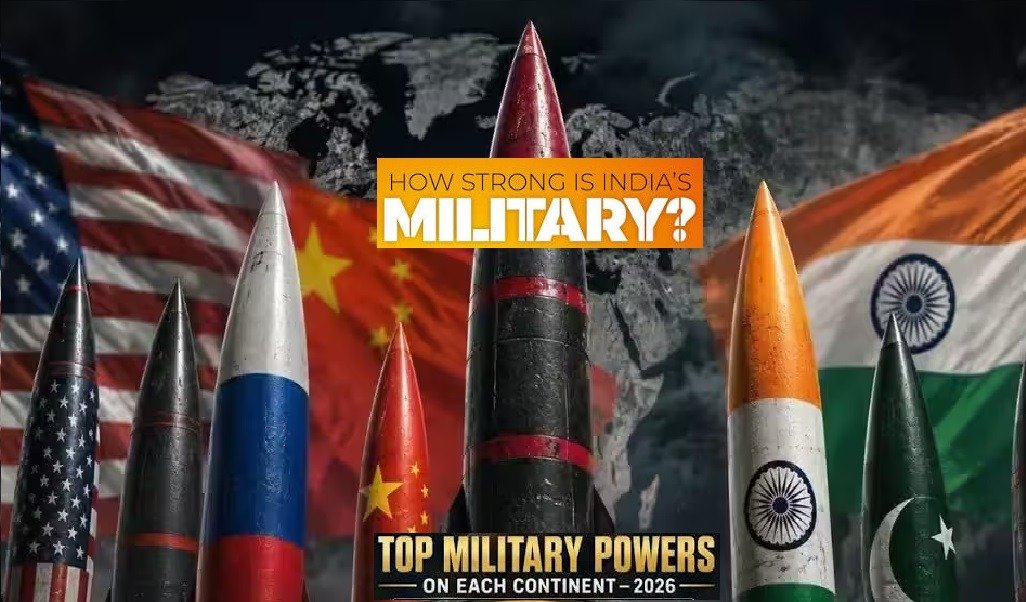
What Really Makes India a Major Military Power?
October 20, 2026

What Really Makes India a Major Military Power?

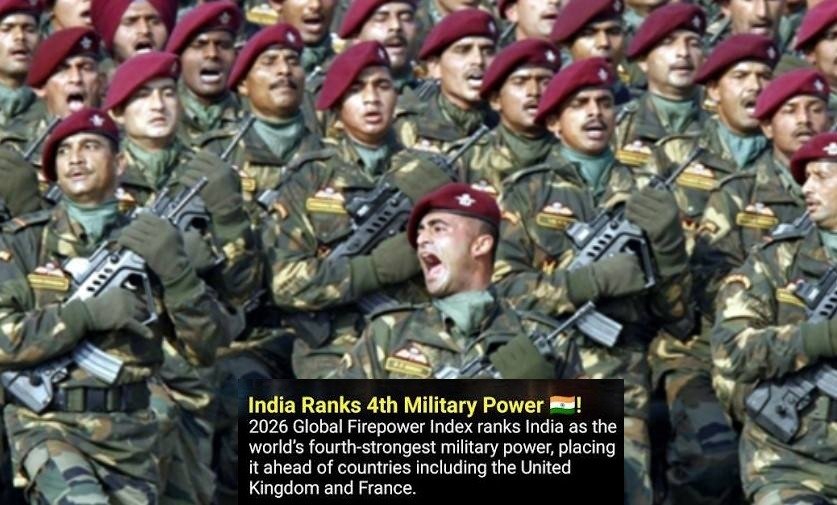
India’s Military Strength in 2026: Beyond the Numbers How powerful is India’s military? It sounds like a question with a simple answer: count the soldiers, tanks, aircraft, ships and submarines. But modern military power is rather less cooperative than a spreadsheet. A country can have thousands of tanks and still face problems with maintenance. It can possess hundreds of aircraft but have fewer available for immediate operations. It can have a large navy but still need greater numbers of tankers, submarines and long-range surveillance systems. So when we look at India’s military strength in 2026, the interesting story is not simply how many weapons India possesses. It is how those numbers combine with geography, technology, manpower, industrial capacity and strategic deterrence. Open-source assessments currently place India among the world’s major military powers. GlobalMilitary’s 2026 assessment ranks India fourth globally and lists about 1.48 million active troops, approximately 1.16 million reserves, 2,256 military aircraft and 353 naval vessels. MilitaryCompare also places India fourth in its 2026 ranking, although its underlying figures differ somewhat. The differences are a useful reminder: military statistics are estimates, not cricket scores. A massive manpower base India’s greatest conventional military asset remains manpower. The latest open-source estimates

Read More
India’s Chess Revolution: How a New Generation Is Taking on the World
October 18, 2026

India’s Chess Revolution: How a New Generation Is Taking on the World

India’s Chess Revolution: How a Game of 64 Squares Became a National Talent Engine There was a time when asking an Indian child to choose a sport usually produced a predictable answer: cricket. Chess was different. It was respected, certainly. It was associated with intelligence, concentration and perhaps the child who was unusually good at mathematics. But it was hardly a mass sporting aspiration. That equation has changed. Today, India is producing world-class chess players at a remarkable rate. The country’s current generation includes World Champion Gukesh D, Grandmaster R Praggnanandhaa, Arjun Erigaisi and a rapidly rising group of young players, including Divya Deshmukh. And this is no longer simply a story about individual genius. It is the story of an ecosystem. The Anand effect: the first great move Any serious discussion of India’s modern chess transformation must begin with Viswanathan Anand. Anand became India’s first Grandmaster in 1988 and subsequently established himself among the world’s elite, eventually becoming world champion. His success fundamentally altered the perception of chess in India. For a generation of Indian parents, Anand demonstrated something important: chess could be more than an intellectual hobby. It could become a serious international sporting career. The significance of

Read More
Namaste Meaning: The Real History Behind India’s Global Greeting
October 18, 2026

Namaste Meaning: The Real History Behind India’s Global Greeting

Namaste: How Two Sanskrit Syllables Became One of the World’s Most Recognised Indian Greetings There are few Indian words that have travelled as far as Namaste. It can be heard in an Indian home, at a temple, in a Bollywood film, at an international diplomatic event—and increasingly at yoga studios thousands of kilometres from India. Sometimes it is spoken with genuine understanding. Sometimes it is simply followed by the words, “Thank you, everyone. Namaste.” And sometimes it appears at the end of a yoga class with such predictable regularity that the ancient Indian greeting almost seems to have acquired a job description. But the real history of Namaste is considerably richer. It is not simply a Sanskrit version of “hello.” Nor is its historical meaning literally the now-popular Western yoga interpretation about “the divine light in me recognising the divine light in you.” The actual story begins with something much simpler: bowing. What does Namaste actually mean? The Sanskrit word namas carries meanings including bowing, obeisance, reverential salutation and adoration. The related verbal root nam means to bend or bow. The familiar explanation of namaste is generally analysed as: namas + te with te meaning “to you.” So the literal

Read More
India Defence Technology: How Drones, Satellites and AI Are Changing Warfare
October 16, 2026

India Defence Technology: How Drones, Satellites and AI Are Changing Warfare

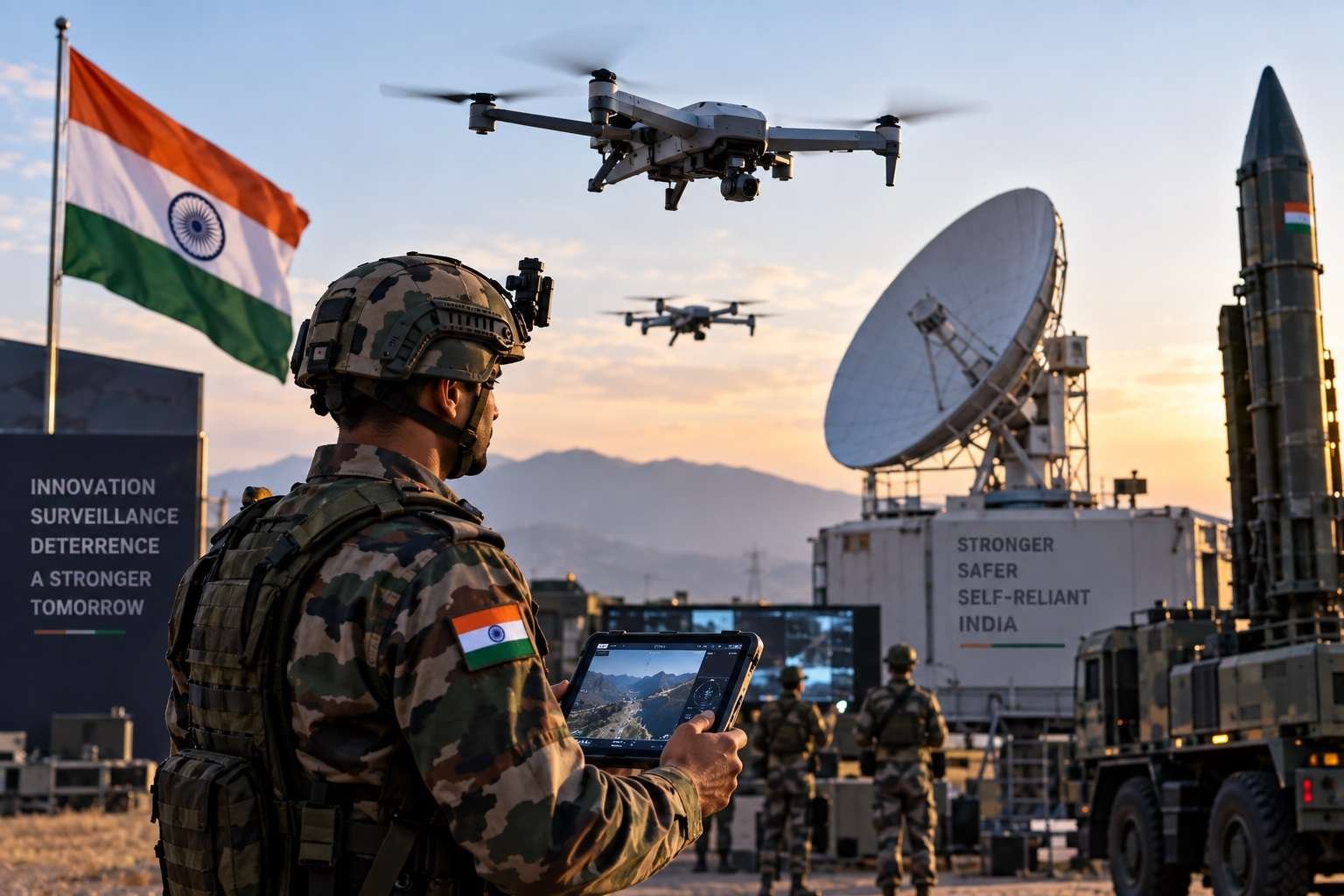
India’s New Battlefield: When Drones, Satellites and AI Start Working as One For centuries, military power was largely measured in familiar things. How many soldiers? How many tanks? How many fighter aircraft? How many ships? Those numbers still matter. But another question is becoming increasingly important: How quickly can a military see, understand and respond to what is happening around it? That is where India’s defence transformation is becoming particularly interesting. India is building an increasingly networked military architecture involving drones, satellites, sensors, artificial intelligence, electronic systems and increasingly autonomous platforms. The objective is not simply to replace soldiers with machines. It is to make the machines, sensors and people work together faster and more intelligently. That is a very different proposition. The drone is becoming a military sensor—and sometimes a weapon The most visible change is in unmanned systems. India’s armed forces are acquiring and developing drones for surveillance, reconnaissance, targeting and increasingly for precision strike. The 2024 contract for 31 MQ-9B Sky/Sea Guardian HALE remotely piloted aircraft represented a major step in this direction. The fleet includes 16 Sky Guardians and 15 Sea Guardians for the tri-services. And India’s maritime requirements are becoming even more apparent. In August

Read More
India Defence Exports: From Major Buyer to Global Defence Manufacturer
October 16, 2026

India Defence Exports: From Major Buyer to Global Defence Manufacturer

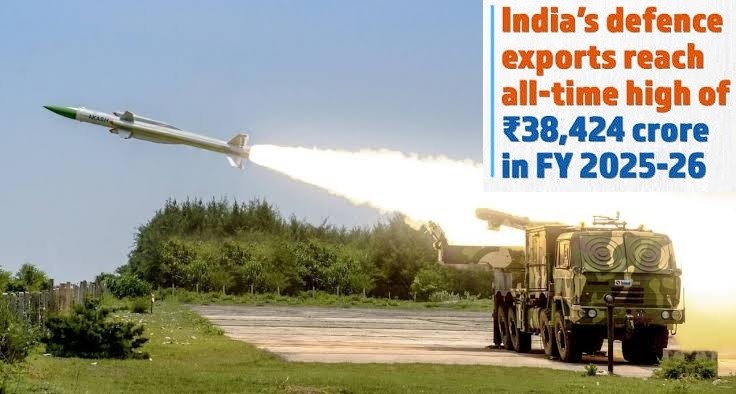
From Buyer to Supplier: How India Is Building a Global Defence Export Industry India’s defence story is changing — and the interesting part is no longer only what the country buys, but what the world is beginning to buy from India. For decades, India was better known as one of the world’s major defence importers. Today, a different picture is emerging. In financial year 2025–26, India’s defence exports reached a record ₹38,424 crore, up from ₹23,622 crore a year earlier — a rise of 62.66%. At the same time, domestic defence production reached an all-time high of ₹1.78 lakh crore. Indian defence products are now being exported to more than 80 countries, according to the Ministry of Defence. That does not mean India has suddenly become a global military superpower in manufacturing. But it does mean something important has changed: India is increasingly becoming part of the international defence supply chain — as a manufacturer, supplier, technology partner and exporter. And that may ultimately be more significant than a single missile sale. What is India actually exporting? The popular image of defence exports is a missile leaving a launcher and heading towards some distant horizon. The reality is much larger

Read More
Military OSINT Verification: Battlefield Facts from Digital Fiction
October 16, 2026

Military OSINT Verification: Battlefield Facts from Digital Fiction

How Open-Source Analysts Separate Battlefield Facts from Digital Fiction In modern warfare, the battlefield is no longer limited to deserts, mountains, oceans and airspace. There is another battlefield that can be just as consequential: the smartphone screen. A missile strike can take place thousands of kilometres away. Within minutes, a video can appear on social media claiming that an airbase has been destroyed, a fighter has been shot down or a senior military officer has admitted defeat. Sometimes the video is genuine. Sometimes it is old footage. Sometimes it shows a completely different country. And increasingly, sometimes the person speaking in the video never said those words at all. This is where open-source intelligence, or OSINT, has become an important tool for journalists, researchers, investigators and ordinary internet users trying to establish what actually happened. The first rule: don’t believe the picture simply because it looks convincing A photograph or video is evidence. It is not automatically proof. Professional OSINT analysts therefore ask a deceptively simple question: What independent evidence supports this claim? A dramatic explosion may show an actual explosion. It does not necessarily prove when it happened, where it happened or what caused it. That distinction is fundamental.

Read More
India’s Defence Export Boom : Record ₹38,424 crore
October 16, 2026

India’s Defence Export Boom : Record ₹38,424 crore

From Buying Weapons to Selling Them to the World For decades, India had an uncomfortable reputation in defence: a major military power that also happened to be one of the world’s significant arms importers. That picture is beginning to change. India’s defence exports reached a record ₹38,424 crore in financial year 2025–26, according to the Ministry of Defence. That is an increase of ₹14,802 crore, or 62.66%, over the previous year’s ₹23,622 crore. The number is impressive. But the more interesting story is not simply the size of the cheque. It is what the cheque represents. India is increasingly trying to move from being primarily a buyer of military hardware to a manufacturer capable of selling defence products, systems, components and technology to other countries. And that is a much bigger transformation. ₹38,424 crore — but who is actually exporting? The headline number becomes more interesting when we look inside it. Defence Public Sector Undertakings contributed ₹21,071 crore, or 54.84% of exports, while the private sector contributed ₹17,353 crore, or 45.16%. The private sector’s role is particularly significant. For a long time, Indian defence manufacturing was strongly associated with government-owned organisations. Today, private companies, smaller manufacturers, technology firms and suppliers

Read More
India Is Building a Multi-Layered Drone Defence
October 16, 2026

India Is Building a Multi-Layered Drone Defence

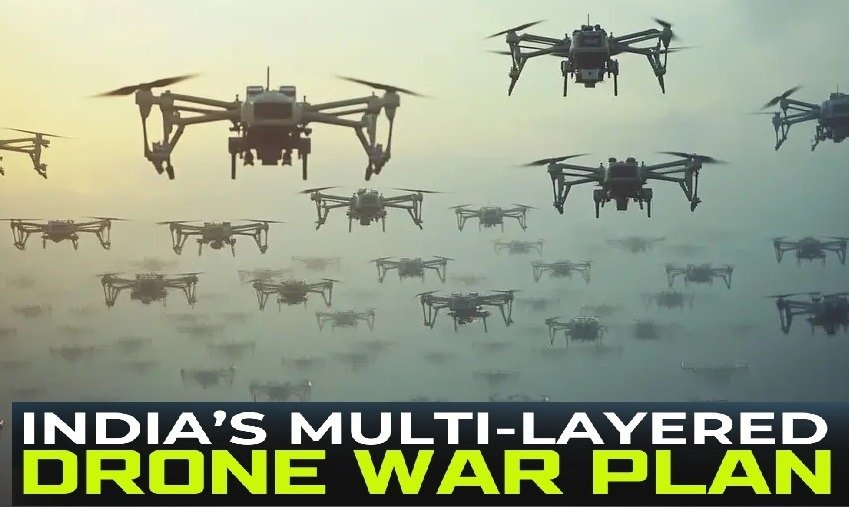
India’s New Drone War: From Bhargavastra to Lasers and Microwaves The battlefield is getting smaller, cheaper and increasingly difficult to see. A drone costing a fraction of a conventional missile can now threaten soldiers, vehicles, radar installations and critical infrastructure. Worse, several drones can arrive together in a swarm, forcing defenders to solve an awkward mathematical problem: how do you stop dozens of inexpensive flying machines without spending a fortune shooting each one down? India’s answer in 2026 is increasingly becoming a layered one. From the vehicle-mounted Bhargavastra counter-swarm system to the 30-kilowatt Sahastra Shakti laser and DRDO’s new SHIELD high-power microwave programme, India is exploring different ways of defeating the drone threat. And then there is the rather important twist: India is simultaneously developing drones capable of striking targets deep inside contested territory. In other words, the drone race is no longer simply about building better drones. It is about building the technology to find them, confuse them, disable them or destroy them—and, when necessary, use similar technology offensively. Bhargavastra: when jamming isn’t enough One of the most interesting developments is Bhargavastra, developed by Solar Defence and Aerospace Ltd. (SDAL), a subsidiary of Solar Industries India. In July 2026,

Read More
India Is No. 4 in the World’s Military Strength Ranking
October 16, 2026

India Is No. 4 in the World’s Military Strength Ranking

What the Number Really Means India has entered another interesting chapter in its long military journey. The 2026 Global Firepower Military Strength Ranking places India fourth among 145 countries, behind the United States, Russia and China, and ahead of South Korea. India’s Power Index, or PwrIndx, is 0.1346. In the GFP methodology, a lower score indicates greater conventional military strength. At first glance, the headline is straightforward: America No. 1. Russia No. 2. China No. 3. India No. 4. But the more interesting story begins after the ranking. Because military power is not a school examination in which the student with rank four necessarily loses to the student with rank three. There is no question paper, no 100-mark total and, thankfully, no parent-teacher meeting afterwards. Modern military strength is a complicated combination of manpower, aircraft, naval power, land forces, logistics, finances, geography, industrial capacity and the ability to sustain operations. And that is where India’s position becomes particularly interesting. What exactly does “No. 4” mean? Global Firepower says its 2026 assessment uses more than 60 individual factors, ranging from military equipment and manpower to financial strength, logistics and geography. The organisation also makes clear that some figures are estimates where

Read More
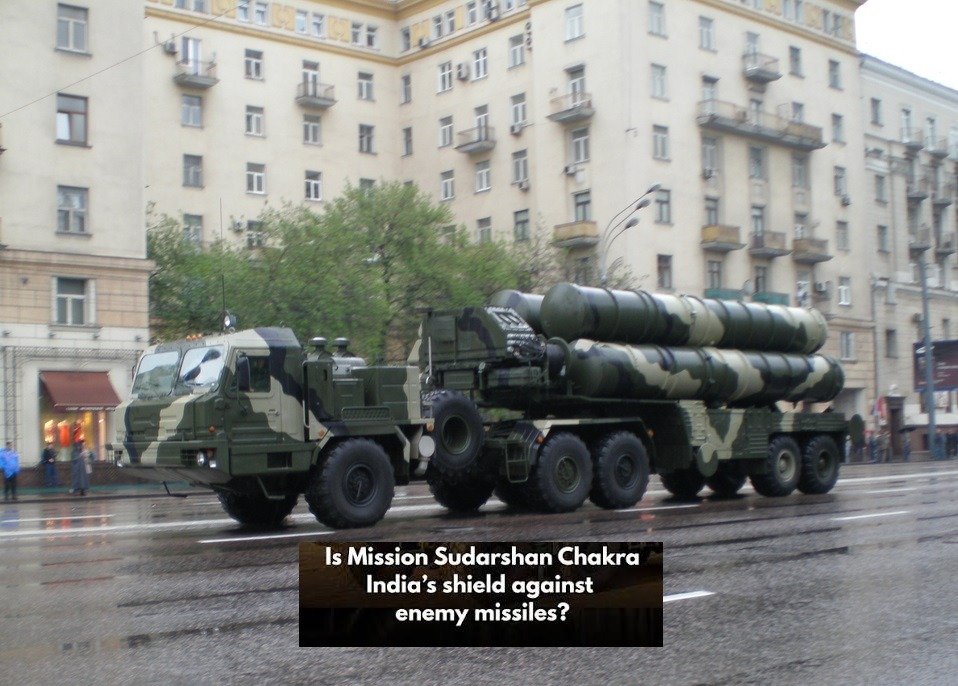
Why India’s Sudarshan Chakra Matters
October 16, 2026

Why India’s Sudarshan Chakra Matters

India’s S-400 Shield: Why India Still Wants a Desi Replacement For a country that has to watch two very different strategic frontiers, air defence is not simply about owning a powerful missile system. It is about knowing what is coming, deciding what must be stopped, and having enough layers of protection to ensure that one missed target does not become a national crisis. That is where Russia’s S-400 Triumf has become particularly important for India. India received its fourth S-400 system in 2026, strengthening a long-range air-defence network that already includes three operational systems. The fifth and final system under the original 2018 contract is expected later this year. In Indian discussions, the system is associated with the name Sudarshan Chakra. But behind the dramatic name is a very practical military idea: keep hostile aircraft, missiles and drones at a distance before they can get close enough to threaten important targets. And that changes the question from “How powerful is the S-400?” to something much more interesting: How does India build an air-defence shield in which the S-400 is only one part of a much larger system? The 400-kilometre headline needs a little explanation The S-400 is frequently described as

Read More
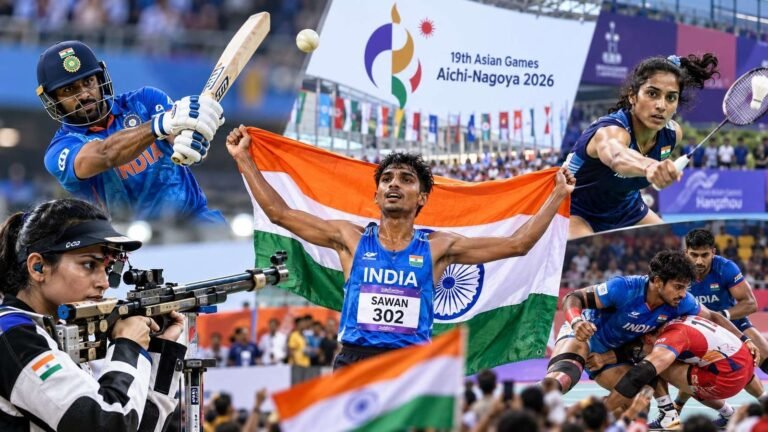
India at Asian Games 2026: Medals, Momentum and Sporting Depth
September 25, 2026

India at Asian Games 2026: Medals, Momentum and Sporting Depth

India at the Asian Games 2026: The Midway Test of Medals, Momentum and Sporting Depth India’s campaign at the 2026 Asian Games has reached its midway stretch with a mix of established strengths, emerging achievements and a familiar question: can a country that is increasingly…

Read More

Category general

GenomeIndia and BIRSA 101: India’s Precision-Medicine Push

GenomeIndia and BIRSA 101: India’s Precision-Medicine Push

GenomeIndia and BIRSA 101: How India Is Building a Homegrown Precision-Medicine Pipeline India’s genomic ambitions are moving from mapping genetic diversity to developing therapies. With more than 10,000 whole genomes now assembled under GenomeIndia and BIRSA 101 advancing an indigenous CRISPR-based treatment for sickle-cell disease,…

Amandeep Singh Gill: India’s Voice in Global AI Governance

Amandeep Singh Gill: India’s Voice in Global AI Governance

Amandeep Singh Gill: The Indian Diplomat Helping Shape the World’s AI Governance As artificial intelligence moves from a technology-sector debate into a question of international policy, an Indian diplomat is helping build the institutions through which governments, scientists, businesses and civil society will debate its…

What Really Makes India a Major Military Power?

What Really Makes India a Major Military Power?

India’s Military Strength in 2026: Beyond the Numbers How powerful is India’s military? It sounds like a question with a simple answer: count the soldiers, tanks, aircraft, ships and submarines. But modern military power is rather less cooperative than a spreadsheet. A country can have thousands of tanks and still face problems with maintenance. It can possess hundreds of aircraft but have fewer available for immediate operations. It can have a large navy but still need greater numbers of tankers, submarines and long-range surveillance systems. So when we look at India’s military strength in 2026, the interesting story is not simply how many weapons India possesses. It is how those numbers combine with geography, technology, manpower, industrial capacity and strategic deterrence. Open-source assessments currently place India among the world’s major military powers. GlobalMilitary’s 2026 assessment ranks India fourth globally and lists about 1.48 million active troops, approximately 1.16 million reserves, 2,256 military aircraft and 353 naval vessels. MilitaryCompare also places India fourth in its 2026 ranking, although its underlying figures differ somewhat. The differences are a useful reminder: military statistics are estimates, not cricket scores. A massive manpower base India’s greatest conventional military asset remains manpower. The latest open-source estimates


India’s Chess Revolution: How a New Generation Is Taking on the World

India’s Chess Revolution: How a New Generation Is Taking on the World

India’s Chess Revolution: How a Game of 64 Squares Became a National Talent Engine There was a time when asking an Indian child to choose a sport usually produced a predictable answer: cricket. Chess was different. It was respected, certainly. It was associated with intelligence, concentration and perhaps the child who was unusually good at mathematics. But it was hardly a mass sporting aspiration. That equation has changed. Today, India is producing world-class chess players at a remarkable rate. The country’s current generation includes World Champion Gukesh D, Grandmaster R Praggnanandhaa, Arjun Erigaisi and a rapidly rising group of young players, including Divya Deshmukh. And this is no longer simply a story about individual genius. It is the story of an ecosystem. The Anand effect: the first great move Any serious discussion of India’s modern chess transformation must begin with Viswanathan Anand. Anand became India’s first Grandmaster in 1988 and subsequently established himself among the world’s elite, eventually becoming world champion. His success fundamentally altered the perception of chess in India. For a generation of Indian parents, Anand demonstrated something important: chess could be more than an intellectual hobby. It could become a serious international sporting career. The significance of

Namaste Meaning: The Real History Behind India’s Global Greeting

Namaste Meaning: The Real History Behind India’s Global Greeting

Namaste: How Two Sanskrit Syllables Became One of the World’s Most Recognised Indian Greetings There are few Indian words that have travelled as far as Namaste. It can be heard in an Indian home, at a temple, in a Bollywood film, at an international diplomatic event—and increasingly at yoga studios thousands of kilometres from India. Sometimes it is spoken with genuine understanding. Sometimes it is simply followed by the words, “Thank you, everyone. Namaste.” And sometimes it appears at the end of a yoga class with such predictable regularity that the ancient Indian greeting almost seems to have acquired a job description. But the real history of Namaste is considerably richer. It is not simply a Sanskrit version of “hello.” Nor is its historical meaning literally the now-popular Western yoga interpretation about “the divine light in me recognising the divine light in you.” The actual story begins with something much simpler: bowing. What does Namaste actually mean? The Sanskrit word namas carries meanings including bowing, obeisance, reverential salutation and adoration. The related verbal root nam means to bend or bow. The familiar explanation of namaste is generally analysed as: namas + te with te meaning “to you.” So the literal