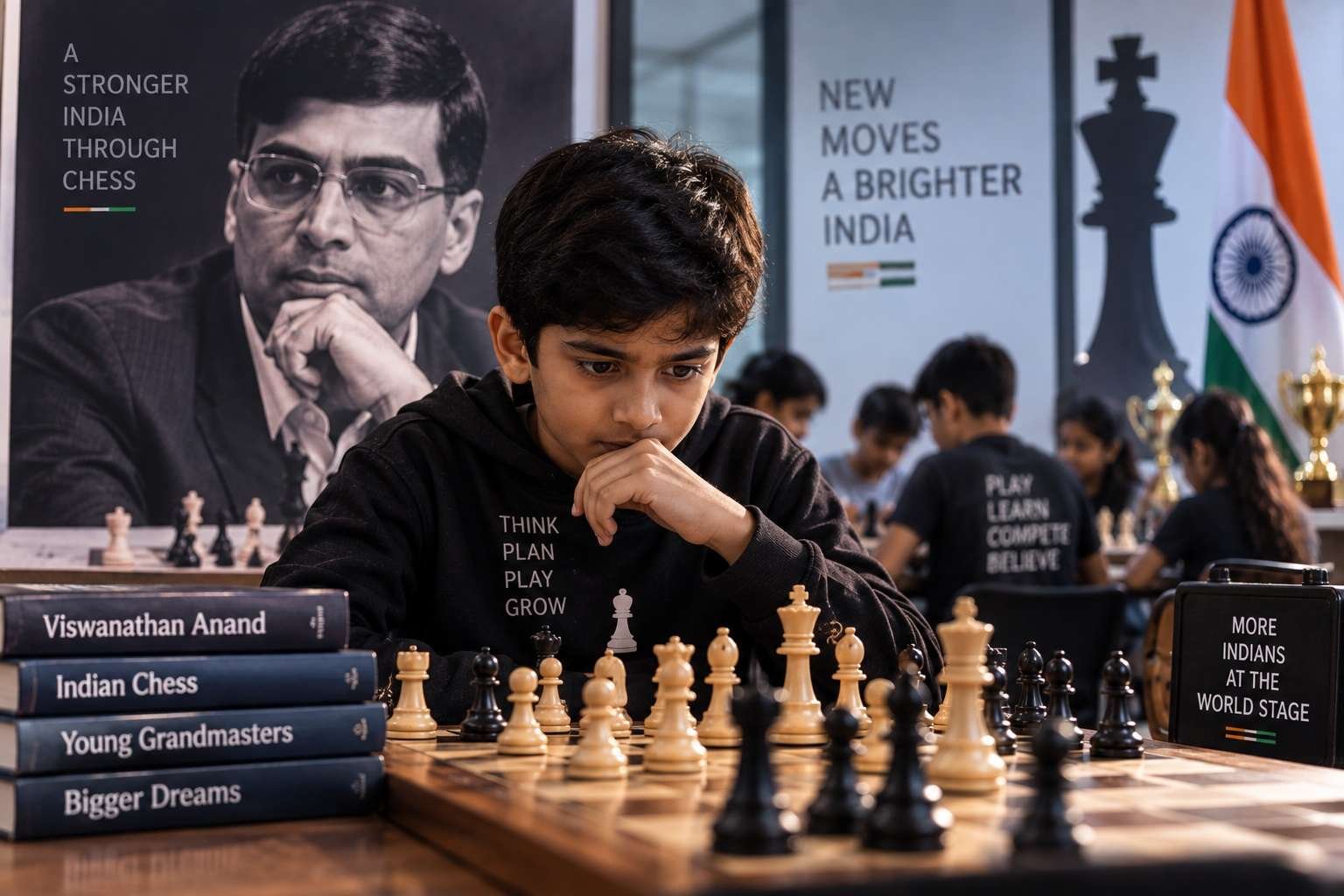
India’s Chess Revolution: How a Game of 64 Squares Became a National Talent Engine There was a time when asking an Indian child to choose a sport usually produced a predictable answer: cricket. Chess was different. It was respected, certainly. It was associated with intelligence, concentration and perhaps the child who was unusually good at mathematics. But it was hardly a mass sporting aspiration. That equation has changed. Today, India is producing world-class chess players at a remarkable rate. The country’s current generation includes World Champion Gukesh D, Grandmaster R Praggnanandhaa, Arjun Erigaisi and a rapidly rising group of young players, including Divya Deshmukh. And this is no longer simply a story about individual genius. It is the story of an ecosystem. The Anand effect: the first great move Any serious discussion of India’s modern chess transformation must begin with Viswanathan Anand. Anand became India’s first Grandmaster in 1988 and subsequently established himself among the world’s elite, eventually becoming world champion. His success fundamentally altered the perception of chess in India. For a generation of Indian parents, Anand demonstrated something important: chess could be more than an intellectual hobby. It could become a serious international sporting career. The significance of


World Beyond the News
Birds Can Navigate Using Earth’s Magnetic Field
Several bird species can sense Earth’s magnetic field, helping them navigate during long-distance migration.
Fermentation Is a Global Food Tradition
People across continents have used fermentation for centuries to preserve food and create distinctive flavours.
Modern Batteries Store Energy Chemically
Rechargeable batteries repeatedly move ions between electrodes, allowing electrical energy to be stored and released.
Why Songs Become Global Hits
Streaming platforms, short-form video, playlists and international collaborations can rapidly carry music across borders.