Mahila Housing Trust: How India’s Women-Led Climate Model Could Help Cool Cities Worldwide
Named a 2026 Earthshot Prize finalist, India’s Mahila Housing Trust is combining reflective rooftops, heat-triggered insurance and women-led community action to protect vulnerable households. Its next challenge is scaling an approach that addresses both rising temperatures and lost livelihoods.
When extreme heat enters a low-income household, its consequences extend far beyond discomfort. A metal roof can trap heat long after sunset, making sleep difficult and home-based work exhausting. For a woman who earns her living outdoors or from a small enterprise, avoiding dangerous temperatures can also mean losing a day’s income.
India’s Mahila Housing Trust (MHT) is addressing these interconnected problems through a combination of affordable housing improvements, financial protection and community participation.
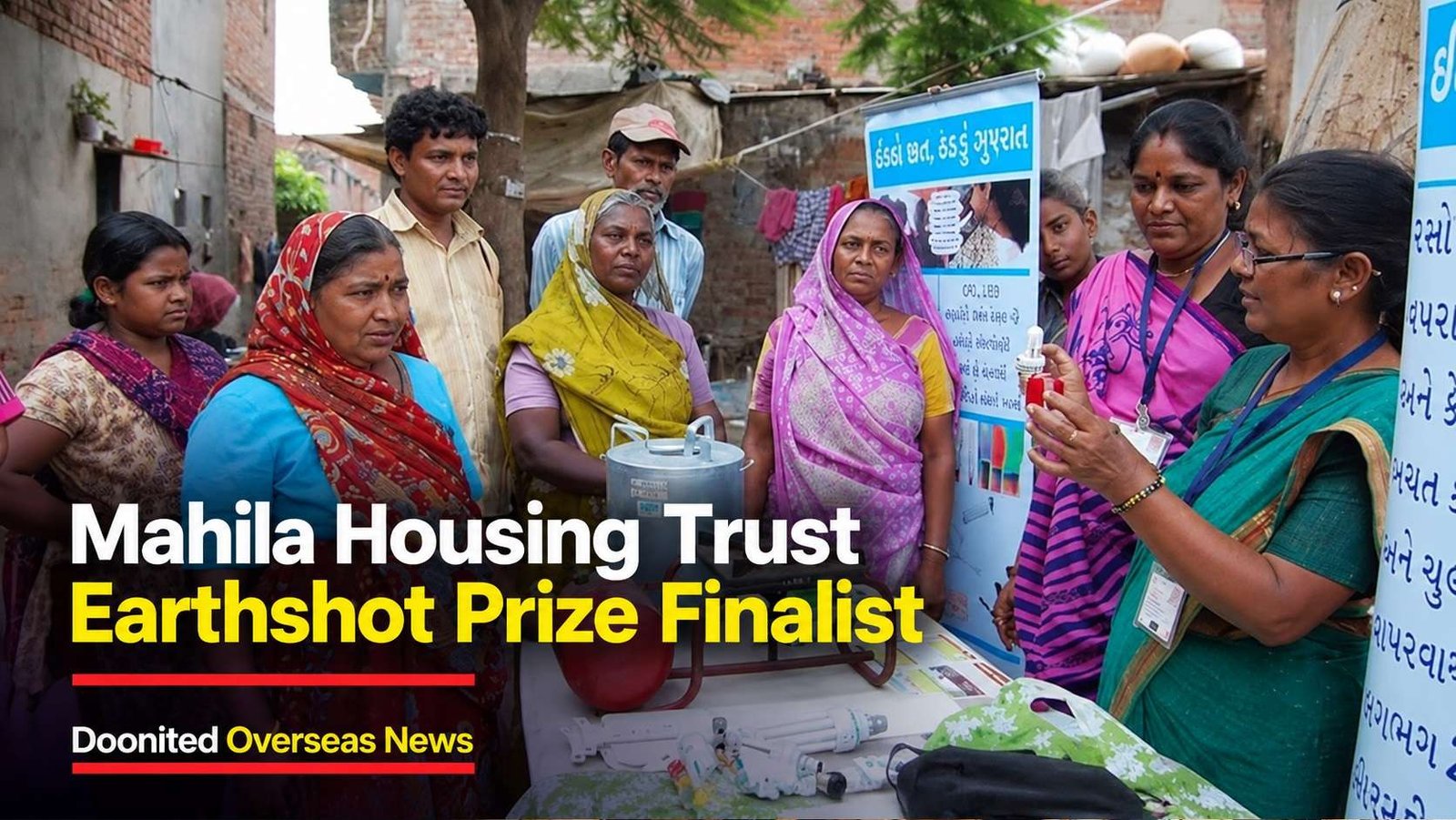
The Ahmedabad-based organisation has been named a finalist in the 2026 Earthshot Prize’s Fix Our Climate category. The recognition places its community-led approach among 15 international finalists selected from nearly 7,000 nominations across 169 countries.
The five Earthshot winners will be announced at the awards ceremony in Mumbai on 17 November 2026. Each winner will receive £1 million to help scale its solution. MHT is a finalist, not yet a confirmed winner.
For the organisation, the opportunity extends beyond an award. International attention could help attract the partnerships, expertise and investment required to take its approach to more communities facing extreme heat.
Three decades of work in vulnerable communities
Established in 1994, MHT works with women in low-income urban settlements to improve housing, basic services and living conditions. Its approach combines technical solutions with community organisation, helping residents participate in decisions that affect their neighbourhoods.
According to MHT’s published impact figures, the organisation has reached approximately 17.3 million people across 41 Indian cities in 10 states.
Its work has increasingly focused on climate resilience, particularly as dangerous heat threatens both housing conditions and informal livelihoods.
The organisation’s approach rests on an important principle: residents should help shape solutions rather than simply receive them. Women familiar with local housing, water shortages and working conditions can identify problems that may be missed when programmes are designed without community participation.
This local knowledge is combined with technical expertise and engagement with municipal authorities.
Cool roofs: a practical response to urban heat
One of MHT’s most visible interventions is its cool-roof programme.
In homes with poorly insulated metal or concrete roofs, sunlight can cause indoor temperatures to rise substantially. MHT promotes affordable reflective roof coatings that send more sunlight back rather than allowing the roof to absorb as much heat.
The Earthshot Prize says these coatings can lower indoor temperatures by up to 5°C. The organisation reports that it has supported the installation of 36,500 cool roofs.
The benefits can extend beyond comfort. Cooler indoor conditions can make sleeping, childcare and home-based work more manageable. Reduced dependence on fans and other cooling equipment may also lower electricity consumption and household expenses, although the actual savings depend on the building, weather and cooling practices.
MHT also trains women known as Climate Saathis to help residents understand heat risks, assess potential solutions and engage with local authorities.
The model is deliberately practical. Demonstration homes and temperature monitoring allow communities to observe the effects of interventions, helping residents make informed decisions about whether a solution is suitable for their own homes.
However, reflective coatings are not a complete answer to urban heat. Their effectiveness depends on maintenance, roof construction and local conditions. They also cannot replace shade, ventilation, access to drinking water, public cooling facilities or broader improvements to urban planning.
Insurance for the income lost during heatwaves
Cooling a home addresses one part of the problem. It does not compensate a worker who cannot earn money because temperatures have made outdoor work unsafe.
MHT has therefore developed a complementary intervention: parametric climate-risk insurance.
Unlike conventional insurance that generally assesses an individual claim after a loss, parametric insurance uses a predefined measure of an event. In this case, independently measured temperature data can trigger a payout when an agreed threshold is crossed, subject to the policy’s terms.
The mechanism can reduce the need for individual policyholders to prove their precise financial losses. It is designed to provide financial support when extreme heat disrupts livelihoods.
MHT reports that 49,000 women have been covered by its climate-risk insurance across Delhi and Gujarat.
The approach is promising, but its effectiveness depends on careful policy design. A temperature threshold may not always capture the conditions experienced by every worker. Differences between weather datasets, local temperatures and the timing of income losses can also affect whether a payout is triggered when beneficiaries expect it.
Premium affordability, coverage periods, exclusions and the amount of compensation therefore matter as much as the existence of the insurance product.
For informal workers with little financial cushion, these details determine whether insurance provides meaningful protection or leaves significant gaps.
Women as climate leaders
MHT’s model also connects household-level improvements with public decision-making.
Its impact dashboard records 39,364 women trained as climate-resilience specialists. The organisation has also formed Community Action Groups and supported local climate-resilience planning.
These activities can help bring the experiences of low-income neighbourhoods into discussions about heat preparedness, housing and public services.
For city authorities, community participation can improve understanding of where vulnerable households are located and which interventions residents consider most urgent. Women who are already active within their neighbourhoods can also help communicate information about heat risks and available support.
MHT’s work has contributed to climate-resilience planning in cities including Jaipur, Indore and Jalgaon, according to the Earthshot Prize.
The wider significance is institutional: climate adaptation becomes more effective when community knowledge informs municipal planning rather than remaining separate from it.
From an Indian model to a global opportunity
The Earthshot Prize identifies MHT’s potential for expansion beyond India, including across Asia and into Africa.
By 2030, the organisation aims to protect three million households through cool roofs and reach 300,000 women with climate insurance. These are future targets, not current achievements.
The international relevance is clear. Cities across Asia and Africa face combinations of extreme heat, rapidly growing populations, inadequate housing and large informal workforces. Affordable cooling and financial protection could form part of their adaptation strategies.
But transferring a model between countries requires more than reproducing a successful programme. Roof materials, housing tenure, insurance regulations, weather data, municipal capacity and the ability of households to pay all vary. Expansion must be adapted to local circumstances and supported by evidence that interventions remain effective at scale.
The Earthshot recognition may help MHT establish partnerships and secure resources, but international visibility alone cannot guarantee that its targets will be met.
The organisation’s longer-term test will be whether it can sustain affordable interventions, demonstrate measurable benefits and help local governments incorporate heat resilience into everyday urban services.
Why this matters beyond India
For overseas Indians, climate resilience is an important part of India’s wider international story. The country’s contribution to global problem-solving includes not only technology and commercial innovation, but also approaches developed alongside communities facing economic and environmental insecurity.
Indian-origin entrepreneurs, professionals, philanthropic organisations and diaspora associations may find opportunities to support such work through research partnerships, climate finance, technical expertise and community investment.
Any such support should be guided by demonstrated local needs and transparent impact measurement rather than by publicity alone.
MHT’s Earthshot Prize candidacy brings attention to a broader lesson: climate adaptation must protect both the places where people live and the livelihoods that sustain them.
A cooler roof can make a home more liveable. Insurance can help soften the financial consequences of extreme heat. Women’s participation can connect these interventions to decisions about how cities develop.
The challenge now is to bring these elements together at a scale that makes vulnerable communities safer, more resilient and better able to earn a living as temperatures rise.
Originally published on Doonited Overseas: Read the original article


World Beyond the News
Dolphins Use Individual Signature Whistles
Bottlenose dolphins develop distinctive whistles that function somewhat like individual acoustic identifiers.
The Pacific Is Earth’s Largest Ocean
The Pacific Ocean covers more area than any other ocean basin and stretches between Asia, Australia and the Americas.
Artificial Intelligence Learns Statistical Patterns
Modern machine-learning systems identify patterns in large datasets and use those patterns to generate predictions or outputs.
Why Some Stories Spread So Quickly
Emotion, novelty, visual appeal and easy sharing can make a story travel rapidly across social platforms.