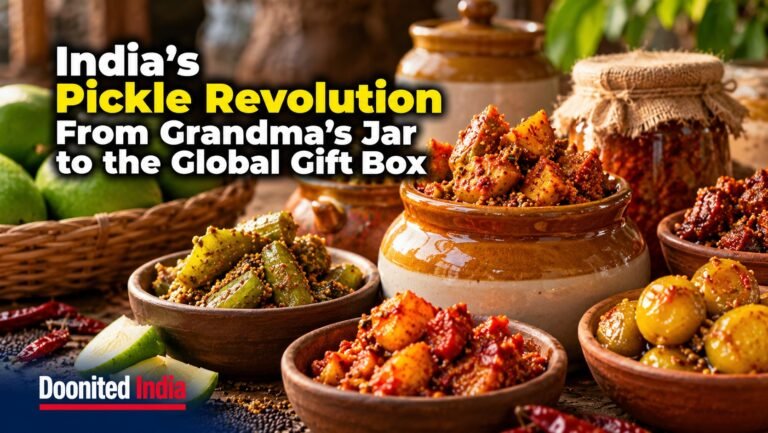
India’s Spice Power: How Masala Became a Global Export Business From chilli and cumin to turmeric, cardamom, curry powders and spice oils, India remains the world’s leading spice-exporting nation. But the next chapter is not simply about shipping more spices—it is about proving that Indian spices can consistently meet the increasingly demanding standards of global consumers. There are few Indian products that need no introduction anywhere in the world. Spices are one of them. You can travel thousands of kilometres from India and still find turmeric in a supermarket, cumin in a restaurant kitchen, chilli on a food label and curry powder on a shelf. India’s relationship with spices is ancient. Its modern spice-export business, however, is increasingly sophisticated. According to the Spices Board of India, the country exported 17.34 lakh tonnes—about 1.734 million tonnes—of spices and spice products in FY2025–26, worth approximately $4.43 billion. That was lower than the previous year’s 1.799 million tonnes and $4.72 billion, but India retained its position as a leading global exporter. So the story in 2026 is not simply India exports lots of spices. It is: India has built a global spice industry—and now quality, traceability and value addition are becoming just as


World Beyond the News
Octopuses Can Change Their Appearance
Octopuses can rapidly alter their skin colour and texture to communicate, camouflage themselves and respond to danger.
Some Cities Exist Across Two Continents
A small number of cities are geographically associated with two continents, creating unusual cultural and geographic identities.
Earth’s Climate Is Measured in Many Ways
Scientists track temperature, atmospheric gases, sea level, ice cover and other indicators rather than relying on a single climate number.
Streaming Changed How Audiences Discover Shows
Recommendation systems and global streaming releases allow audiences to discover programmes far beyond their original markets.