Anup Bagchi’s HDFC Bank Appointment: Can an ICICI Veteran Lead India’s Biggest Private Lender Into Its Next Phase?
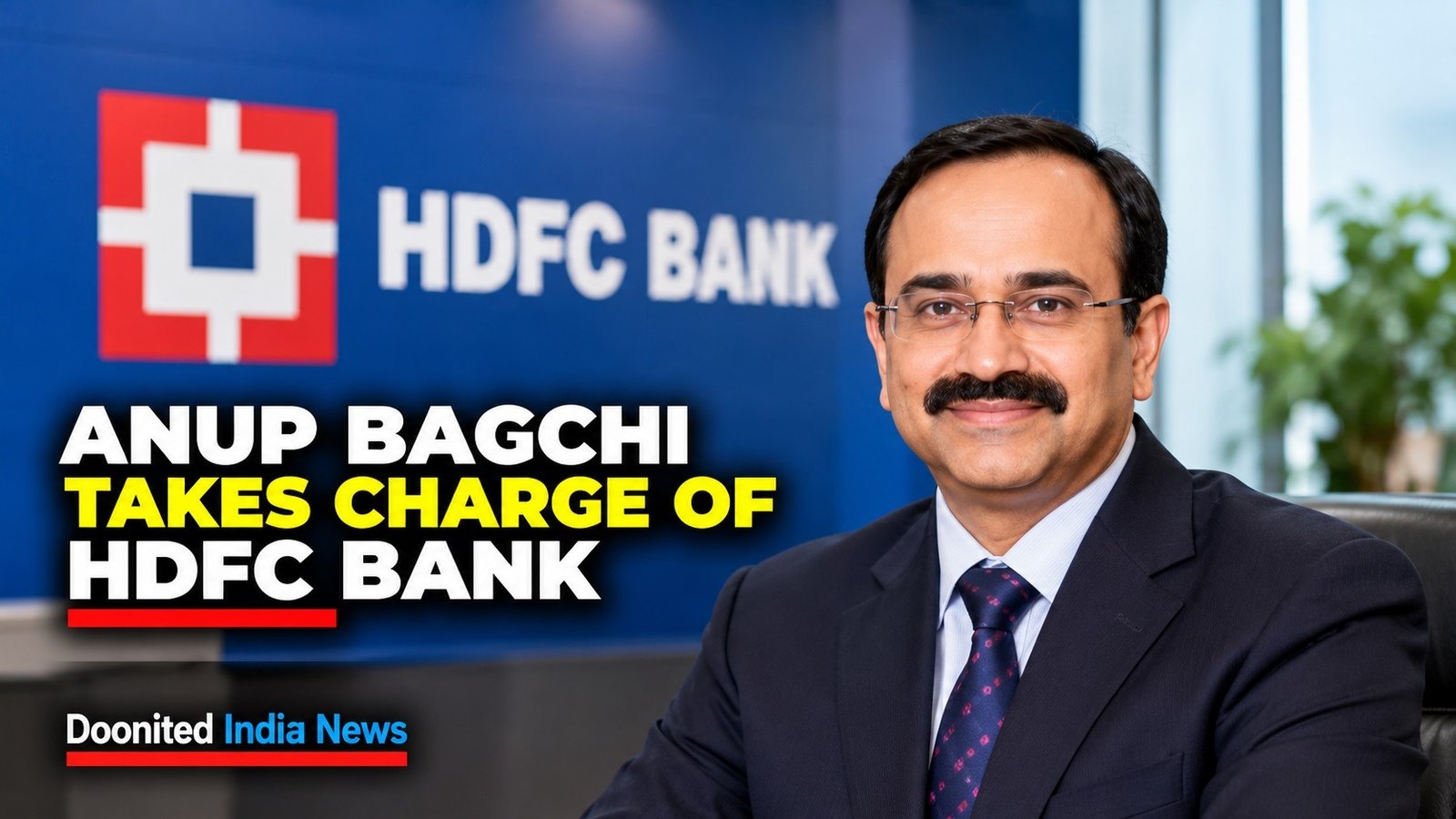
Anup Bagchi is set to take charge of HDFC Bank on 27 October 2026, bringing more than three decades of financial-services experience spanning banking, capital markets and life insurance. His three-year term begins with a demanding agenda: strengthening deposit growth, managing margins, maintaining asset quality and sustaining confidence in the bank’s leadership and governance.
A leadership change with consequences beyond the boardroom
When a major bank changes its chief executive, the implications reach far beyond the executive suite. Customers want reliable services, businesses need access to credit, investors look for sustainable returns and regulators expect sound governance. For HDFC Bank, India’s largest private-sector lender, the appointment of Anup Bagchi represents both a leadership transition and a test of how an established financial institution adapts to its next phase.
The Reserve Bank of India approved Bagchi’s appointment as managing director and chief executive officer for three years beginning 27 October 2026. HDFC Bank announced the decision on 1 October, following the completion of incumbent Sashidhar Jagdishan’s tenure on 26 October. The appointment remains subject to the applicable shareholder approval process.
Who is Anup Bagchi?
Bagchi joined the ICICI Group in 1992 and spent more than three decades working across different parts of the financial-services industry. His responsibilities included banking, capital markets, wealth management and insurance. He served as managing director and CEO of ICICI Securities before becoming executive director at ICICI Bank, where he oversaw retail, business and rural banking, followed by wholesale banking. In June 2023, he took over as managing director and CEO of ICICI Prudential Life Insurance.
His educational background combines engineering and management: he holds an engineering degree from the Indian Institute of Technology Kanpur and a management degree from the Indian Institute of Management Bangalore.
That combination is relevant in a banking industry increasingly shaped by technology, data, digital distribution and complex risk management. Yet qualifications and a long career establish experience, not a guarantee of future performance. The decisive evidence will come from the results achieved during his tenure.
Why HDFC Bank’s next phase matters
HDFC Bank is a central institution in India’s private banking system, serving households, small businesses, large companies and institutional customers. Its performance matters because it affects the availability of credit, the cost of financial services and confidence in the broader banking sector.
The bank’s leadership transition comes after several demanding years for the industry. Competition for deposits has intensified as banks seek to fund loan growth, while digital services have raised customer expectations around speed, reliability and convenience.
HDFC Bank is also navigating the integration and longer-term benefits of its 2023 merger with its parent housing-finance business, HDFC Limited. The combined institution has a larger lending franchise and a broad customer base, but scale alone does not guarantee stronger profitability. The bank must manage its funding costs, loan mix, operational efficiency and risk exposure as it grows.
The task for Bagchi is therefore not simply to expand the balance sheet. It is to make growth sustainable.
Four priorities that will define his tenure
1. Deposits and the cost of funding
Banks need deposits to finance lending. When loan growth outpaces deposit growth, a lender may have to compete harder for customer funds or adjust its lending pace.
For HDFC Bank, attracting stable deposits at a sustainable cost will be an important measure of management effectiveness. Higher deposit rates may help attract funds, but they can also squeeze profitability if lending income does not rise enough to compensate.
Customers should not expect a change in deposit rates simply because a new CEO is taking over. Rates depend on market conditions, liquidity needs, monetary policy and the bank’s funding strategy.
2. Profitability and net interest margins
A bank’s net interest margin reflects the difference between the income it earns on interest-bearing assets and the cost of its interest-bearing liabilities, relative to the relevant asset base.
HDFC Bank’s September-quarter results showed that profitability remains an important issue to watch. Reuters reported on 17 October that standalone net profit rose 4.7% year-on-year to ₹19,510 crore for the quarter ended 30 September 2026. Net interest income increased 9.7%, while provisions for bad loans rose 2.1%. The bank’s gross non-performing asset ratio improved to 1.11% from 1.17% in the previous quarter.
3. Governance and institutional confidence
A chief executive’s responsibilities include financial performance, but also the quality of internal controls, risk oversight and communication with stakeholders.
HDFC Bank’s leadership transition follows a period of scrutiny around governance and leadership continuity. Reuters reported that the bank’s previous chairman, Atanu Chakraborty, resigned earlier in 2026, while Jagdishan did not seek another term as CEO. These events make clear communication and consistent governance especially important for the incoming leadership.
4. Digital banking and customer experience
Indian banks face competition not only from one another but also from payment platforms, fintech firms and new ways of delivering financial services.
HDFC Bank needs to maintain reliable digital services while protecting customers from fraud, strengthening cybersecurity and ensuring that technological expansion does not weaken operational controls. The challenge is to make banking easier without making it less secure.
Bagchi’s experience across several parts of financial services may help him understand the links between distribution, customer relationships and product economics. Whether that experience produces measurable improvements at HDFC Bank remains to be seen.
What should customers and investors watch?
For depositors and borrowers, the immediate message is continuity rather than disruption. A change at the top does not automatically alter existing deposits, loans, cards or service agreements. Customers should continue to rely on official bank communications for any changes to products, fees or terms.
Investors, meanwhile, should avoid treating the appointment as a guarantee of higher returns. More useful indicators include deposit growth relative to lending, net interest margins, asset quality, provisions, operating costs and consistency in governance disclosures.
The bank’s three-year leadership term gives Bagchi time to establish priorities, but the market will assess progress quarter by quarter. A credible strategy must translate into durable financial performance rather than short-lived improvements in sentiment.
The bigger lesson for Indian banking
Bagchi’s move from the ICICI Group to HDFC Bank illustrates how leadership experience can travel across different parts of the financial system. Banking, securities and insurance share some fundamentals—risk assessment, customer trust, capital allocation and regulation—but they are not interchangeable businesses.
HDFC Bank’s next chapter will be judged on how well its new chief executive balances growth with funding discipline, profitability with prudent lending, and innovation with sound controls.
The real test begins after the appointment announcement. For customers, the priority is dependable service and responsible lending. For investors, it is evidence of sustainable growth. For the banking industry, it is whether a change in leadership can strengthen an institution without losing sight of the discipline that made it successful.


World Beyond the News
Bees Communicate Where Food Is
Honeybees use movement patterns known as waggle dances to communicate information about food locations.
Street Food Reflects Local History
Many famous street foods developed from migration, trade, local ingredients and the everyday needs of working communities.
A Day on Venus Is Extremely Long
Venus rotates so slowly that one rotation relative to distant stars takes longer than its trip around the Sun.
Human Achievement Continues to Push Limits
Athletes, engineers, scientists and explorers regularly establish new benchmarks in speed, endurance, scale and precision.