MONDAY, OCTOBER 26, 2026
02:33:08 PM
Doonited India
LOCAL WEATHER
Loading...
INDIA WEATHER
DELHI --°C
MUMBAI --°C
CHENNAI --°C
KOLKATA --°C
BREAKING NEWS
Pradeep Banerjee

Pradeep Banerjee

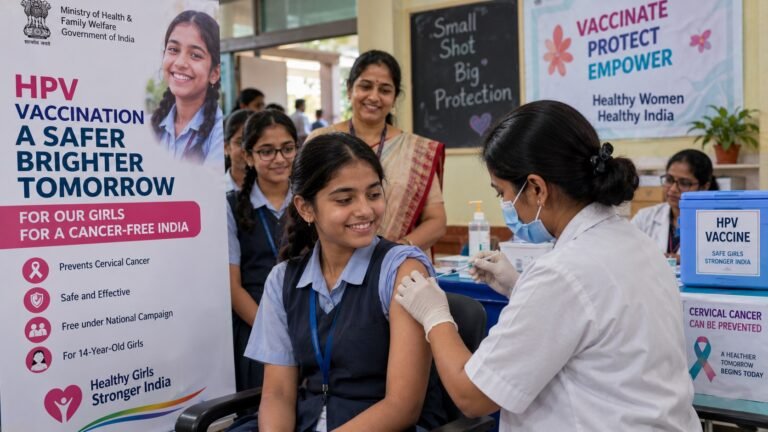
India’s Cervical Cancer Prevention Push

India’s Cervical Cancer Prevention Push

80 Lakh HPV Vaccinations: Why India’s Cervical Cancer Prevention Story Starts Before Adulthood It begins much earlier — with an adolescent girl receiving a vaccine. India’s most important cancer-prevention story this year may not begin in a cancer hospital More…

India’s global diaspora is no longer simply a source of money sent home

India’s global diaspora is no longer simply a source of money sent home

Beyond Remittances: How India’s Global Diaspora Could Become an Economic Superpower for Viksit Bharat For years, the economic story of Indians living abroad has been told mainly through one impressive number: remittances. Money earned in Dubai, London, New York, Toronto, Singapore and elsewhere travels back to India, paying for education, homes, healthcare, family expenses and investments. But there is a much bigger story developing. It is increasingly a source of capital, professional expertise, technology, international networks and global credibility. And that could make the diaspora an important partner in India’s ambition to become a developed nation by 2047. $730 billion is an impressive number—but it needs context A 2026 report by Indiaspora estimates that more than 35 million people of Indian heritage live across more than 200 countries. It estimates that the diaspora earns more than $730 billion annually from formal employment. That figure should not be misunderstood as $730 billion flowing into India. It is an estimate of the income earned by the diaspora in the countries where they live and work. The more interesting question is therefore not, “How much money do Indians abroad earn?” It is: How much of that economic power can become productive engagement with

India Singapore relations 2026 : 600,000 Indian visitors in six months is impressive.

India Singapore relations 2026 : 600,000 Indian visitors in six months is impressive.

India and Singapore: The Relationship You Can Now See, Spend and Travel Through More than 600,000 Indian visitors in six months is impressive. But the more interesting India-Singapore story is what happens after the plane lands. Singapore has long been one of India’s most important partners in Southeast Asia. The relationship has traditionally been discussed in the language of diplomacy: trade, investment, technology, finance, infrastructure and strategic cooperation. But increasingly, the relationship can be experienced in much simpler ways. An Indian family lands at Changi Airport. A student begins university. A professional attends a business meeting. A tourist pays for lunch. An entrepreneur meets an investor. And increasingly, the Indian visitor can use a digital payment system without treating an international transaction like a small banking expedition. That is the fascinating part of the India-Singapore story in 2026. The bilateral relationship is becoming increasingly visible in everyday life. More than 600,000 Indian visitors India remains one of Singapore’s most important tourism markets. More than 600,000 Indian visitors travelled to Singapore during the first half of 2026, according to figures reported from Singapore Tourism Board data. The number is significant because Singapore is not simply benefiting from India’s enormous population. It

Indian Students Study Abroad: Why ROI Is Replacing the Big Four

Indian Students Study Abroad: Why ROI Is Replacing the Big Four

Indian Students Are Rewriting the Study-Abroad Map: From Big-Four Prestige to Career ROI For years, the international education decision for an Indian family could be remarkably simple. USA. UK. Canada. Australia. Pick a country. Pick a university. Arrange the funds. Get the visa. And, hopefully, find a job after graduation. That formula increasingly looks incomplete. The overseas education market is entering a more complicated phase in 2026. Indian students and their families are asking questions that would once have appeared almost secondary: How much will the degree actually cost? What salary can I realistically expect? Can I work after graduation? For how long? What happens if I don’t get a job immediately? And perhaps the most uncomfortable question of all: What if the degree is prestigious but the career outcome isn’t? This is the emerging ROI mindset in Indian study abroad. It does not mean the traditional destinations are finished. Far from it. The US, UK, Canada and Australia continue to attract large numbers of international students. But the assumption that they are automatically the best choices is weakening. The degree is no longer the whole product An overseas degree was once viewed almost like a premium passport to a

Ireland Student Visa & Work After Graduation: 2026 Guide for Indian Students

Ireland Student Visa & Work After Graduation: 2026 Guide for Indian Students

Ireland After Graduation: What Indian Students Really Need to Know About Staying and Working For an Indian student, getting admission to an Irish university is only the beginning. The more important question is what happens after the degree. Ireland has become an attractive destination for international students because it combines English-language higher education with access to a European labour market. But the popular version of the story — study in Ireland, work part-time, graduate and automatically stay — is dangerously incomplete. Ireland does provide a structured route from study to graduate employment and, for eligible graduates, employment permits. But every step has conditions. For an Indian student considering Ireland in 2026, understanding those conditions may be more valuable than another glossy university brochure. First: the visa and the immigration permission are not the same thing Students planning to study in Ireland for more than three months generally need a long-stay ‘D’ study visa if they are from a visa-required country. The application is made through Ireland’s AVATS system, and the Irish authorities advise applying up to three months before travel. But the visa gets you to Ireland. It is not the same thing as your ongoing immigration permission. After arrival,

NRI global influence: 35 million people live in more than 200 countries

NRI global influence: 35 million people live in more than 200 countries

Indian Diaspora Global Influence: How Indians Abroad Are Becoming a Strategic Asset for India For most of modern history, the Indian diaspora was discussed in fairly simple terms. People left India. They built careers abroad. They sent money home. Families prospered. India benefited from remittances. That story is still true—but it is no longer the whole story. In 2026, India’s global diaspora has become something much more complicated and potentially much more valuable. Indian-origin people are now present in governments, parliaments, universities, technology companies, hospitals, financial institutions and global businesses. They are not merely living abroad. They are participating in the institutions that shape the countries in which they live. And that gives India an unusual form of global influence. From diaspora to global network Indiaspora’s 2026 report estimates that more than 35 million people of Indian heritage live in more than 200 countries, with estimated annual income of around $730 billion. It argues that the diaspora’s contribution is moving beyond traditional remittances toward capital, capability and credibility. That last word—credibility—is particularly interesting. Money can be transferred. Skills can be hired. But relationships and trust take years to develop. An Indian-origin scientist working in a major research institution, an entrepreneur

USD to INR Exchange Rate 2026: What ₹95.46 Means for NRIs and India

USD to INR Exchange Rate 2026: What ₹95.46 Means for NRIs and India

Rupee at 95.46: What a Weak Indian Currency Really Means for NRIs and India The rupee’s slide toward ₹95.46 against the US dollar has produced a familiar headline: the Indian currency is weakening. But behind that number is a much bigger story—one involving oil, global capital, imports, exports and millions of Indians earning money overseas. There is a number that has become increasingly difficult for Indians to ignore: 95.46. That was the rupee’s recent closing level against the US dollar in one trading session, after the currency weakened by 38 paise. For someone travelling abroad, buying an imported product or paying an international bill, the number can look rather unpleasant. For an Indian living overseas and sending dollars home, however, the same number tells a very different story. One dollar now buys substantially more rupees. And that is the strange dual personality of a depreciating currency. For one person, it is an expense. For another, it is an advantage. Why is the rupee under pressure? There is no single villain sitting in a dark room responsible for the rupee’s weakness. Several forces are working together. The first is the US dollar itself. When global investors prefer dollar-denominated assets, emerging-market currencies

India-Singapore Relations 2026: Diaspora, Tourism & Digital Payments

India-Singapore Relations 2026: Diaspora, Tourism & Digital Payments

India and Singapore: When a Bilateral Relationship Becomes a People-to-People Partnership From a Tricolour ceremony attended by thousands to a digital payment crossing borders in seconds, India-Singapore relations are increasingly being experienced not just by governments, but by ordinary people. Singapore is only a few hours away from India by air. Yet the relationship between the two countries has become much bigger than tourism. In August 2026 alone, the connection could be seen in several very different places: at an Independence Day gathering of more than 2,500 members of the Indian community, at a new diaspora-led leadership forum in Sentosa, in Singapore’s tourism numbers and even inside the payment systems used by travellers and businesses. Taken together, these developments tell an interesting story. India-Singapore relations are moving from diplomatic partnership to everyday connectivity. A Tricolour thousands of kilometres from home On August 15, 2026, more than 2,500 members of the Indian diaspora joined India’s 80th Independence Day celebrations at the Indian High Commission’s Chancery in Singapore. Indian High Commissioner Shilpak Ambule hoisted the national flag, while students from Indian schools presented cultural performances. The celebrations also included a community initiative highlighting India’s handloom and textile traditions. But the day was