Googlebook: Can Google’s New AI Laptop Make Android Users Rethink the PC?
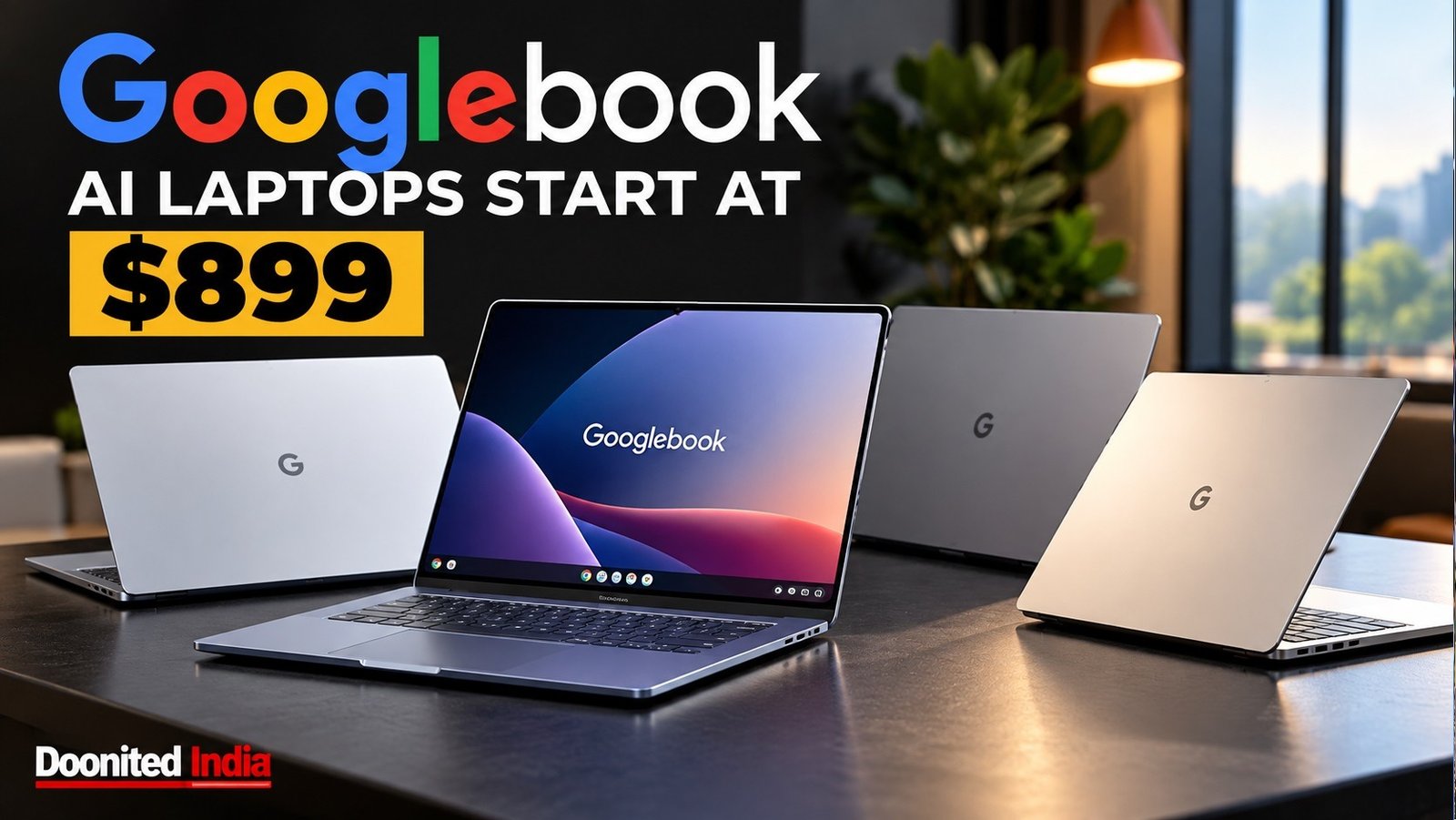
Google wants your laptop and smartphone to behave less like two separate devices and more like parts of the same digital life. Its new Googlebook range, announced on September 21, brings Android technology, ChromeOS desktop foundations and Gemini AI together in a premium laptop category designed especially for people who already use Android phones.
Pre-orders have opened in the United States, with prices starting at $899. US retail availability begins October 4, 2026, while selected markets including the UK, Canada, Germany, France, Ireland and Australia are scheduled to follow on October 5. Google has not announced an official India launch date or local pricing.
For Indian consumers, the question is whether that promise will translate into practical value at a price that makes sense.
What exactly is a Googlebook?
Google describes Googlebook as a new category of premium laptops built on the Android technology stack and the desktop foundations of ChromeOS. The aim is to combine the familiarity of Android with the keyboard, display, multitasking and development capabilities expected from a computer.
That makes Googlebook different from a conventional Chromebook in positioning. Chromebooks have often been associated with web-based computing, education and relatively affordable devices. Googlebook is aimed at buyers seeking more powerful hardware, premium displays and deeper AI integration.
The distinction should not be overstated: Googlebook is not simply an Android tablet with a keyboard, nor does the announcement mean existing Chromebooks are being replaced. Google is presenting it as a separate premium offering.
Five manufacturers, one Google-led experience
Google has partnered with Acer, ASUS, Dell, HP and Lenovo for the first wave. The range offers different designs and configurations rather than one standard laptop.
The US lineup begins with the Acer Googlebook 14 at $899. Other models include ASUS and HP 14-inch devices, Dell’s XPS Googlebook and Lenovo’s larger Googlebook 15.3-inch model. Prices and configurations vary by manufacturer.
The hardware is designed to compete in the premium segment. Depending on the model, buyers get Intel Core Ultra or Qualcomm Snapdragon X Elite processors, touchscreen displays, and dedicated neural processing units designed to accelerate AI tasks. Some models feature 2.8K OLED panels; the Dell model, for example, has a 2.5K LCD display. The range also includes different battery capacities, port selections and physical designs.
This variety is useful, but it means buyers should not assume that every Googlebook has the same screen, processor or battery life. The headline specifications describe a family of devices, not a single universal configuration.
Gemini AI: the laptop becomes a working partner
Google’s central software pitch is Gemini Intelligence. The company says the system is designed to help users work with content on their screen, draft and organise information, and move between tasks more smoothly.
One of the more practical ideas is continuity between an Android phone and a laptop. A user might begin a task on their phone and continue it on the larger screen, or access phone-related content while working on the computer. The aim is to reduce the small but constant friction of switching devices.
Google is also promoting tools such as Magic Pointer and voice dictation, alongside developer features and a Linux terminal environment. These capabilities could make the devices relevant to students, professionals, creators and software developers—not just people who want an AI chatbot beside their browser.
AI should reduce work, not create a new hobby called managing AI.
Premium displays, battery life and bundled services
Google’s official announcement describes touchscreen options reaching 2.8K OLED resolution and battery life of up to 14 hours. Its product listings give model-specific estimates, with some configurations rated for longer web-browsing sessions. These are manufacturer estimates under controlled testing; real-world endurance depends on brightness, connectivity, applications and workload.
The launch package is another selling point. Eligible purchases in the announced markets include 12 months of Google AI Pro, with 5TB of cloud storage and access to additional Gemini features. Google is also advertising selected app and entertainment offers.
There is an important qualification for Indian buyers: Google’s published offer terms list eligible countries, and India is not among the markets named in the material reviewed. The bundled subscription should therefore not be treated as an assured India benefit. Offers may also have activation dates, redemption deadlines and other conditions.
The India question: price will decide much of the story
At $899, Googlebook enters a segment where buyers expect strong performance, build quality and long-term support. A direct currency conversion would not provide a reliable Indian retail price. Taxes, import costs, distribution, warranty arrangements and local product positioning can all affect the final figure.
The absence of an announced Indian launch date also leaves practical questions unanswered. Will all five manufacturers bring their models to India? Will the AI features and bundled services be available in the same form? What will the local warranty and repair network look like? And will Googlebook support the applications and workflows Indian users rely on every day?
These details matter more than a global launch headline. A laptop may be technically impressive, but it becomes a viable purchase only when its price, support and software ecosystem fit the local market.
For Indian students and professionals, the Android connection could be especially attractive. Many already use Android phones, Google services and cloud-based tools. A laptop that works smoothly with those devices could offer a more coherent experience without requiring users to rebuild their digital routines.
However, buyers should also check application compatibility before switching platforms. Familiarity with Android does not automatically guarantee that every desktop application, peripheral or specialised workflow will behave exactly as it does on Windows or macOS.
Security, privacy and the ecosystem trade-off
Google says Googlebook builds on ChromeOS security architecture, including Titan security hardware and layered protections. The company also highlights an isolated Linux environment for developer tools. These are relevant features for users who work with personal files, business documents or code.
Still, security claims should be assessed through real-world implementation, updates and user controls. Cloud integration and AI assistance can make work more convenient, but users should understand what information is processed on the device, what is sent to online services and which features require an account or subscription.
Google says Googlebook OS will receive updates for up to 10 years. That commitment could help address one of the most important questions in laptop ownership: how long will the device remain secure and supported? Buyers should check the precise support terms for the model and market they purchase.
DOONITED View: a laptop should fit the user, not the ecosystem
Googlebook’s most interesting idea is not its AI branding or OLED display. It is the attempt to make the smartphone-to-laptop transition feel seamless. For people already invested in Android, that could be a meaningful improvement in everyday computing.
But convenience can also deepen dependence on one company’s services. Buyers should weigh the benefits of integration against their need for flexibility, offline access, application compatibility and control over their data.
The Indian market will provide a particularly important test. Googlebook’s success here will depend not only on hardware, but on local pricing, after-sales support, software availability and whether the bundled services deliver lasting value.
Google has made its opening move. The next test is whether the experience feels sufficiently useful to justify a premium price—and whether Indian buyers will get the same choice and benefits as customers in the first launch markets.
Learning Point
Do not buy a laptop for its AI label alone. Check the applications you use, the quality of its phone integration, the features that work offline, the update commitment and the full cost after bundled subscriptions expire. Those are the details that determine whether a new platform earns a place on your desk.


World Beyond the News
Octopuses Can Change Their Appearance
Octopuses can rapidly alter their skin colour and texture to communicate, camouflage themselves and respond to danger.
Some Cities Exist Across Two Continents
A small number of cities are geographically associated with two continents, creating unusual cultural and geographic identities.
Earth’s Climate Is Measured in Many Ways
Scientists track temperature, atmospheric gases, sea level, ice cover and other indicators rather than relying on a single climate number.
Streaming Changed How Audiences Discover Shows
Recommendation systems and global streaming releases allow audiences to discover programmes far beyond their original markets.