Max Fashion’s Festive 2026 Collection: When Art, Sanganeri Craft and Everyday Fashion Meet
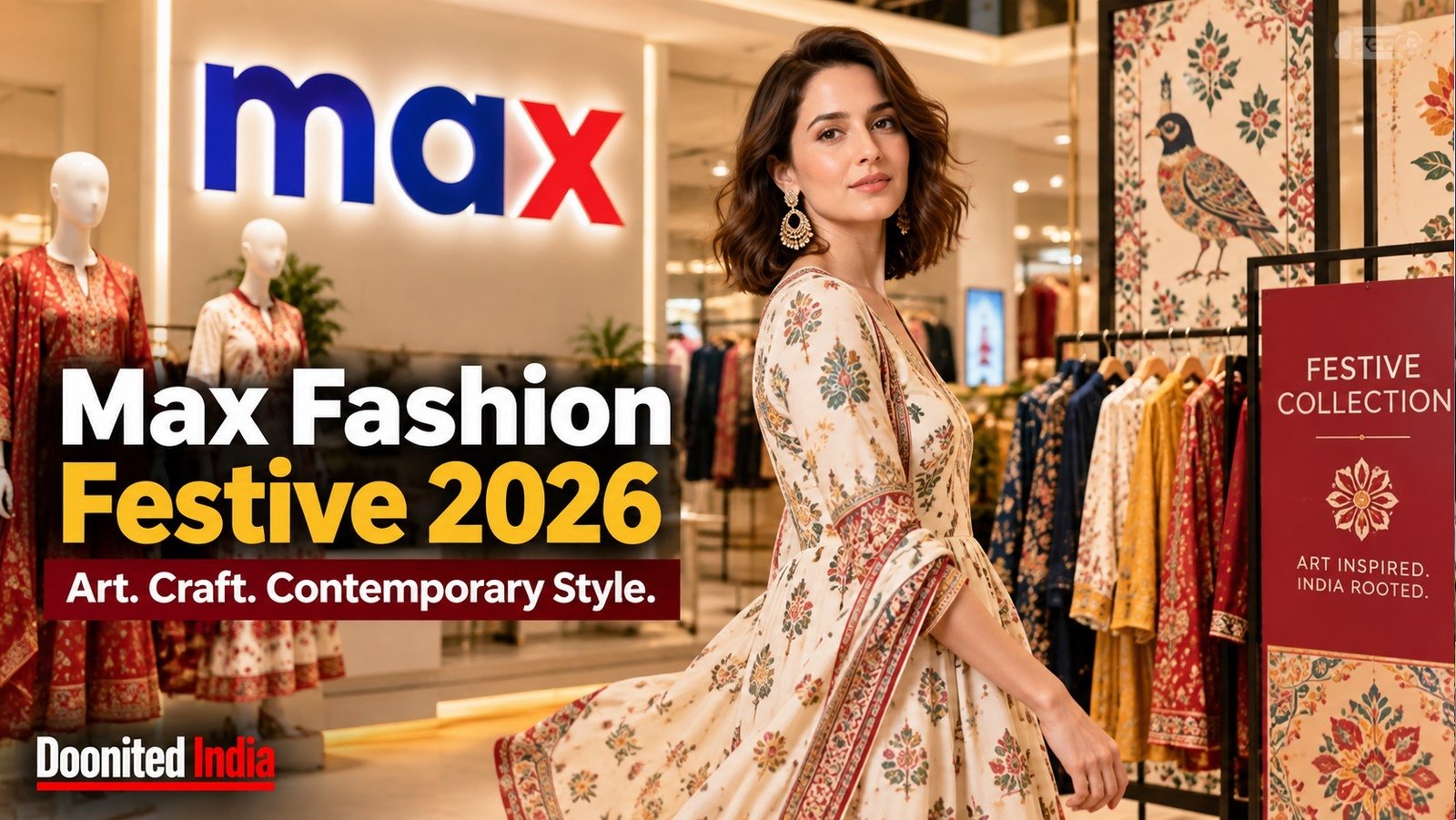
Editorial focus: Max Fashion’s new festive collection, curated with Kalki Koechlin, brings original artwork by artists associated with Chennai’s Kairassi Foundation and hand-block printing from Sanganer, Rajasthan, into contemporary clothing. The collection is part of the retailer’s new platform, Max Project New.
A Festive Wardrobe With a Story Behind It
Festive fashion in India is a familiar annual ritual. As the calendar moves towards celebrations, wardrobes begin their seasonal transformation: a new kurta, a dress for a family gathering, a printed shirt for a festive dinner or an outfit reserved for the photographs that will inevitably outlive the occasion.
But what if a garment could offer more than a new colour or silhouette? What if the print on a dress carried the work of an artist, or the pattern on a shirt reflected a craft tradition shaped by generations of skilled hands?
That is the idea behind Max Fashion’s Festive 2026 collection, launched under Max Project New, a creative platform bringing together contemporary fashion, original artwork and traditional craftsmanship. Actor Kalki Koechlin is the collection’s curator and campaign face.
The collection launched across India on September 11, 2026, with a second product drop scheduled for October. It is available through Max Fashion stores, its website and mobile app.
The proposition is straightforward: festive dressing can be expressive without being predictable. And the story behind a garment can be as interesting as the garment itself.
From Chennai’s Artists to the High Street
One of the collection’s defining collaborations is with the Kairassi Foundation, a Chennai-based organisation that supports artists with disabilities and helps connect their creative work with opportunities.
For this project, Max Fashion worked with three artists — Simron, Pavithra and Manas — using their original paintings as designs for fashion products.
Simron’s watercolour landscapes appear on skirts. Pavithra’s ocean-inspired blue artwork finds its way onto shirts. Manas, whose distinctive approach includes painting with a straw rather than a conventional brush, has artwork featured on a tote bag.
The important distinction is that the artwork is not merely a reference for a designer to reinterpret. The collection uses the artists’ original creations, translating them from canvas to wearable pieces.
That shift matters. In fashion, creative inspiration is often described in broad terms, while the people whose work sparks a design can remain invisible to shoppers. Here, the artists are identified as contributors to the collection’s visual language.
The collaboration also raises a wider question about inclusion in the creative economy: how can artistic talent become a source of recognition, access and income, rather than being celebrated only as an inspiring story?
A retail collection cannot, by itself, answer that question. But bringing artists’ work into products sold through a large national retail network creates a route for their art to reach audiences beyond galleries, exhibitions and specialist communities.
The longer-term measure of success will be whether such collaborations lead to sustained opportunities, fair compensation and continued visibility for the artists.
Sanganer’s Craft, With a Contemporary Twist
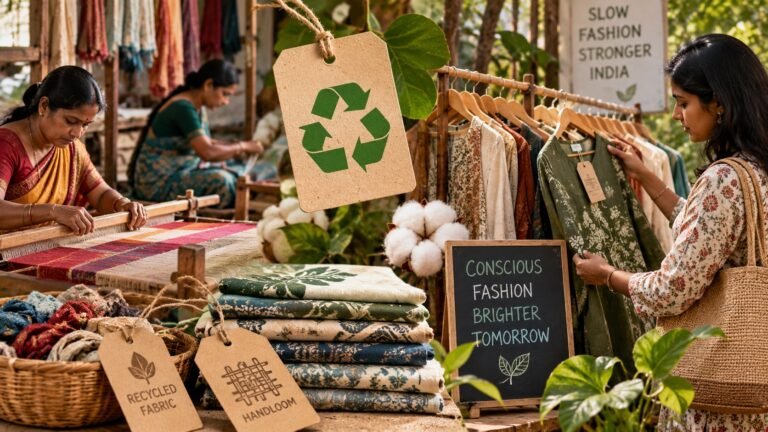
The collection’s second creative thread leads to Sanganer, Rajasthan, a region associated with the tradition of hand-block printing.
The collaboration combines Japanese floral inspiration with Sanganeri printing techniques. The resulting design draws on delicate floral motifs while retaining the character of a craft built around carved wooden blocks, colour and repeated hand printing.
Creating a block-printed textile involves several stages. Wooden blocks must be carved to form the pattern; colours are prepared; and the design is printed onto fabric in carefully aligned layers. Each stage calls for skill and consistency. Unlike a digital print, the process places the physical tool and the artisan’s hand at the centre of production.
The collection’s floral direction is an interesting example of how design influences can travel across cultures. Japanese-inspired blossoms meet a craft tradition from Rajasthan, producing a hybrid visual language intended for contemporary Indian festive wear.
The key is that the outside inspiration does not erase the local technique. The Japanese floral reference supplies a design vocabulary, while Sanganeri craftsmanship gives it material form.
For consumers, this can make traditional craft feel relevant to a wider range of outfits. For artisans, the opportunity lies in having their work commissioned for a contemporary collection and distributed through a national retail network.
However, the presence of hand-crafted elements in a fashion campaign should not automatically be taken as proof that every garment is entirely handmade. The specific production process can vary by product. Shoppers interested in the craft content of an individual item should check its product description and ask the retailer about the technique used.
What Does the Collection Cost?
The reported starting prices place the collection within the accessible fashion segment, although the final price depends on the product.
|
Product category |
Reported starting price |
|---|---|
|
Men’s shirts and T-shirts |
₹599 |
|
Women’s dresses, skirts and shirts |
₹899 |
|
Indian wear, including fusion styles and kurta sets |
₹999 |
|
Collection-wide upper price point reported |
₹1,999 |
These are reported launch prices, not a guarantee that every size, style or item remains available at the same price. Availability and current prices should be checked on Max Fashion’s website, app or in stores.
The price positioning is relevant because collaborations involving artists and traditional craft can sometimes be presented as premium, occasional purchases. A collection starting below ₹1,000 may make selected designs accessible to shoppers looking for festive clothing without committing to a high-cost wardrobe.
Still, affordability is not just the price on the tag. Fabric quality, stitching, comfort, colourfastness and how often an outfit can be worn all influence value. A festive garment that works for several occasions may prove more useful than one bought for a single photograph.
Two Drops, One Festive Season
The collection is planned in two stages. The September edit leans towards a fresh, painterly palette, while the October drop is described as moving towards warmer, earthier and more bohemian styling.
The staggered release gives shoppers another reason to revisit the collection as the festive season progresses. It also allows the brand to present a changing visual story rather than treating festive fashion as one fixed launch.
For consumers, the practical question is whether the pieces fit their own wardrobes. A floral skirt or printed shirt can be styled with existing basics; a fusion outfit may work across family celebrations, dinners and other occasions. The more combinations a garment supports, the greater its potential value.
And while celebrity curation brings visibility, the collection’s distinguishing feature is not simply that Kalki Koechlin is associated with it. It is the attempt to connect a mass-market retail product with named artists and craft practitioners.
The Business of Purpose-Led Fashion
For retailers, collaborations like Max Project New offer a way to differentiate seasonal collections in a crowded market. New colours and silhouettes are easy to imitate. A recognisable creative story — involving particular artists, a craft location and a documented production process — can give a collection a more distinct identity.
There is also a risk. When inclusion and heritage become marketing language, consumers are entitled to ask what sits behind the campaign. Are the artists properly credited? Are artisans recognised? Does the collaboration continue beyond a single season? Is the craft described accurately? And does the commercial relationship create meaningful opportunities for the people whose work gives the collection its identity?
Those questions do not negate the value of the initiative. They establish what responsible storytelling should be measured against.
Max has described Project New as an ongoing platform intended to bring new artists, craftspeople and creative voices into future collections. That creates an opportunity to build continuity rather than leaving the project as a one-season campaign.
The meaningful test will be what happens next: whether future editions expand the range of contributors, maintain transparent credit and make the creative collaboration a lasting part of the product rather than a temporary promotional theme.
DOONITED View
Max Fashion’s Festive 2026 collection offers a useful reminder that fashion does not have to choose between commercial reach and creative individuality. Original paintings from artists associated with the Kairassi Foundation and the hand-block printing tradition of Sanganer are brought into a retail format designed for everyday shoppers.
The initiative is constructive because it places identifiable creative contributors closer to the centre of the story. But good intentions and attractive campaign imagery are only the beginning. Long-term value depends on fair creative partnerships, accurate craft representation and opportunities that continue after the festive season.
For shoppers, the invitation is to look beyond the label: understand the design, check the garment’s details and choose pieces that suit both personal style and practical use.
Because a garment can be new in more ways than one. Sometimes the most interesting thing about what we wear is not the trend it follows, but the people and skills that helped bring it to life.
Learning Point: When buying fashion inspired by art or traditional craft, look for clear artist or artisan credit, transparent product information and evidence of the technique used. A compelling story is valuable; a credible, fairly represented story is worth more.


World Beyond the News
Bees Communicate Where Food Is
Honeybees use movement patterns known as waggle dances to communicate information about food locations.
Street Food Reflects Local History
Many famous street foods developed from migration, trade, local ingredients and the everyday needs of working communities.
A Day on Venus Is Extremely Long
Venus rotates so slowly that one rotation relative to distant stars takes longer than its trip around the Sun.
Human Achievement Continues to Push Limits
Athletes, engineers, scientists and explorers regularly establish new benchmarks in speed, endurance, scale and precision.