ESTIC 2026: Can India Build a Stronger Bridge Between Scientific Research, Startups and Industry?
Important update for readers: ESTIC 2026 is scheduled for 27–29 October at Bharat Mandapam, New Delhi. However, the official delegate-registration portal currently displays “Registration Closed.” The official exhibition page separately invites registrations from startups, industries and research institutions, so prospective exhibitors should check that route directly.
India’s Innovation Challenge Is No Longer Just About Discovery
India’s scientific ambitions are entering a phase in which discovery alone is not enough. The country needs research that can become useful technology, startups capable of turning prototypes into products, and industries willing to adopt home-grown innovation.
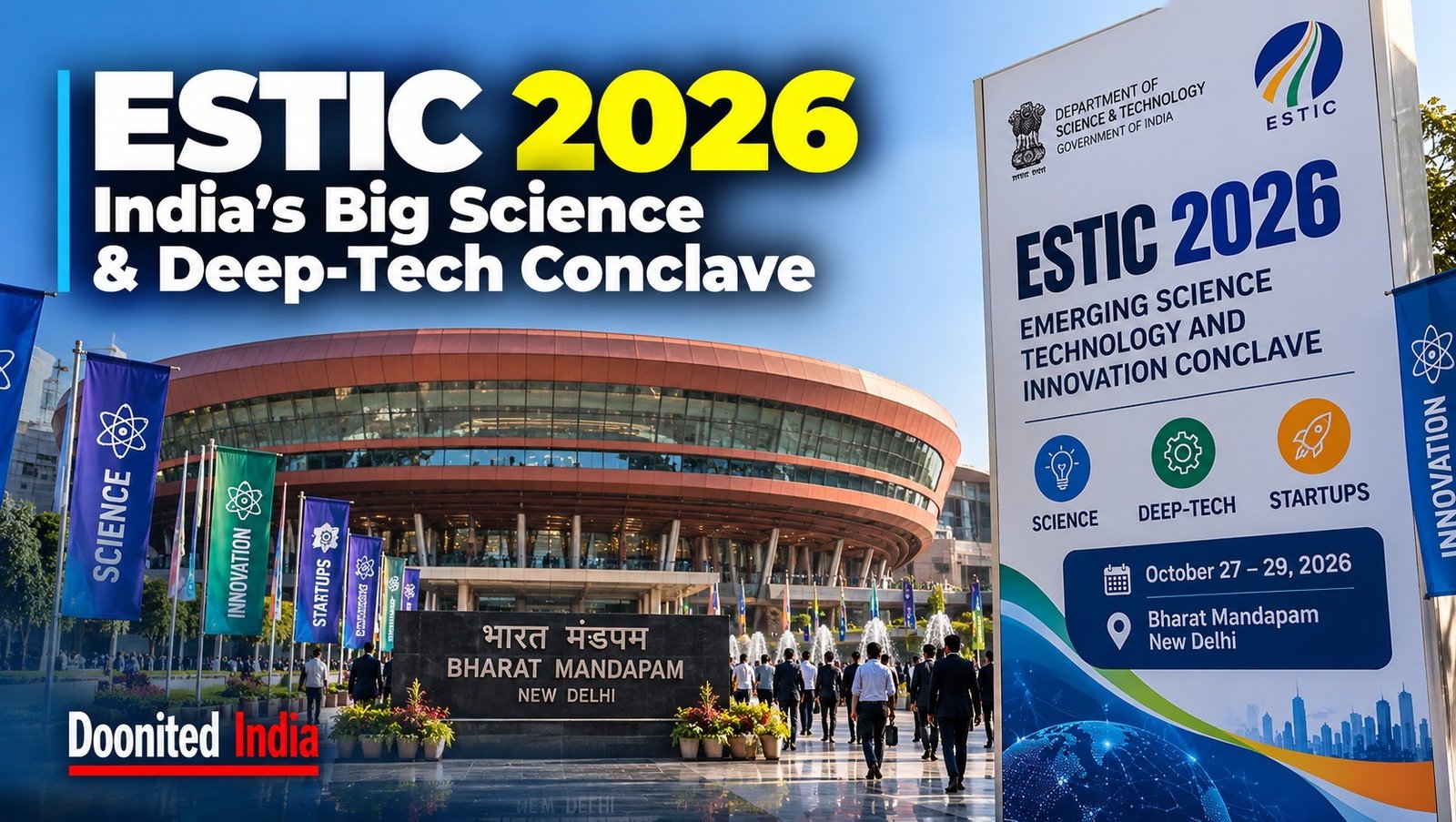
That is the central question surrounding the second Emerging Science, Technology and Innovation Conclave, or ESTIC 2026. Scheduled for October 27–29 at Bharat Mandapam in New Delhi, the conclave is designed to bring researchers, deep-tech startups, industry leaders, policymakers and international scientific voices onto a shared platform.
Its theme, “Creative Minds, Catalyzing Science, Empowering Technologies,” reflects a familiar national ambition: to strengthen India’s scientific capabilities while accelerating the journey from laboratory research to real-world applications.
The difficult part is not assembling these groups in one venue. It is ensuring that they continue working together after the event ends.
ESTIC 2026: The Essential Details
|
Detail |
Information |
|---|---|
|
Event |
Emerging Science, Technology and Innovation Conclave |
|
Dates |
October 27–29, 2026 |
|
Venue |
Bharat Mandapam, New Delhi |
|
Theme |
Creative Minds, Catalyzing Science, Empowering Technologies |
|
Organising coordination |
Council of Scientific and Industrial Research (CSIR), with participation across government |
|
Programme |
Plenary talks, thematic sessions, panels, startup presentations, posters and exhibitions |
The official programme describes a three-day event featuring 12 thematic areas. Prime Minister Narendra Modi is scheduled to inaugurate the conclave on October 27, according to the government’s announcement.
The programme is expected to include three Nobel Laureates: Prof. Joachim Frank, Sir Richard J. Roberts and Prof. Kostya Novoselov. Their participation adds an international scientific dimension, although the lasting value of the event will depend on the quality of the discussions, collaborations and follow-through it generates.
From Semiconductors to Space: The Technologies in Focus
ESTIC 2026 spans technologies that could shape India’s economic and strategic future. Its official themes include:
-
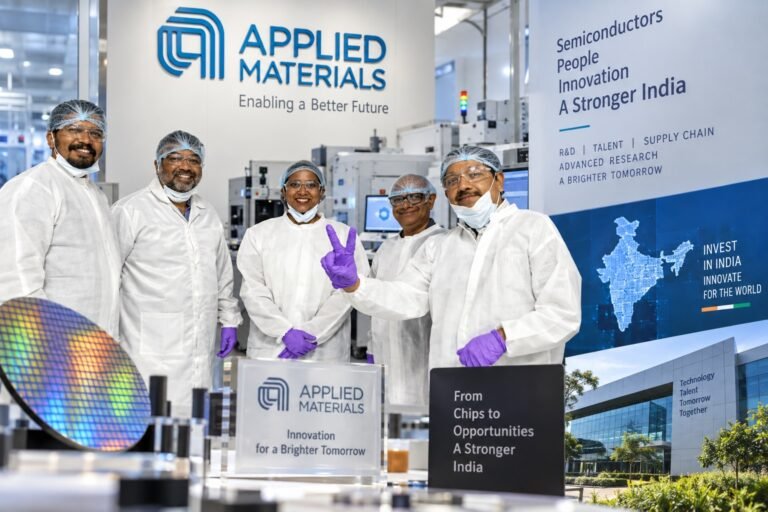
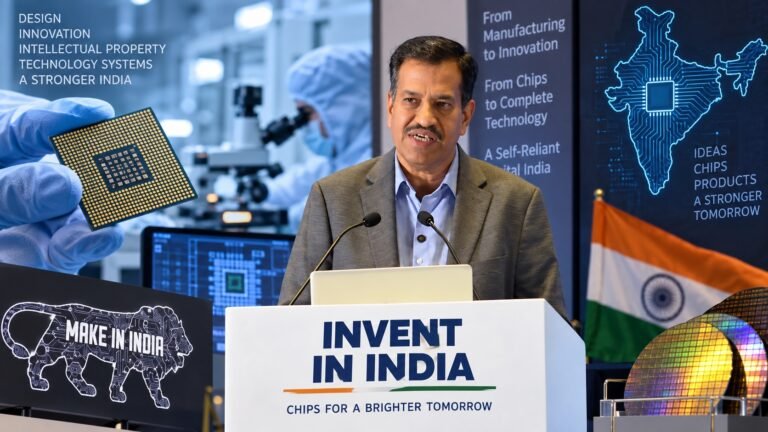
Semiconductors and next-generation chips
-
Generative and autonomous artificial intelligence
-
Autonomous systems, physical AI and robotics
-
Intelligent networks and quantum communication
-
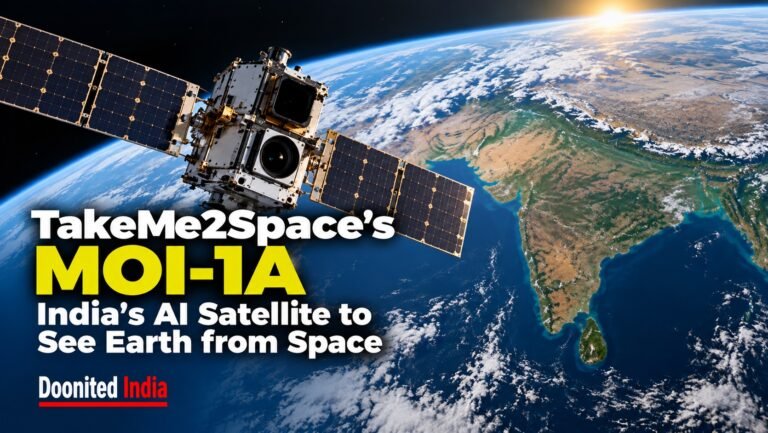
Space science and technologies
-
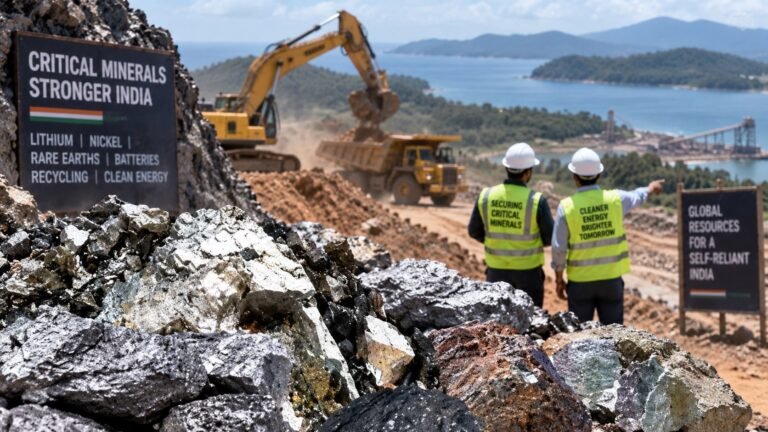
Advanced manufacturing and energy technologies
-
Agri-tech, food systems and nutrition
-
Preventive medicine and advanced healthcare
-
System and synthetic biology
-
Ocean science and maritime technologies
-
Immersive technologies, generative XR and spatial computing
These are not isolated sectors. Semiconductor capability supports electronics and computing; AI increasingly intersects with manufacturing, healthcare and agriculture; and advances in communications can influence everything from industrial automation to national infrastructure.
The opportunity for India lies in connecting these capabilities to domestic needs while developing products and services that can compete internationally.
But each field has its own barriers. Deep-tech companies may need long development cycles, specialised equipment, patient capital, regulatory clearances and access to customers. A promising laboratory result does not automatically become a commercially viable product.
That gap is where collaboration between public research institutions, startups and industry becomes essential.
The Startup Question: Can Research Reach the Market?
For a deep-tech startup, access to scientific expertise is valuable—but access to manufacturing partners, testing facilities, customers and finance can be just as important.
ESTIC’s format includes startup presentations, an innovation-focused exhibition, poster presentations and opportunities for business-to-government and business-to-business engagement. The official exhibition page invites startups, industries, entrepreneurs, technology developers and research institutions to showcase their work.
This creates several possible benefits: a startup could find a research collaborator, an industrial partner could identify a technology for adoption, or a public institution could discover a route to commercialise research.
Yet an exhibition meeting is only the beginning. The real test is whether it leads to a pilot project, a licensing agreement, a procurement opportunity, a funded research programme or a product entering the market.
India’s innovation ecosystem would benefit from measuring such outcomes—not simply counting attendees, stalls or presentations.
Registration: What Participants and Startups Should Know
There are different routes for people attending the conclave and organisations seeking to exhibit.
1. General delegate registration
As checked on September 29, 2026, the official delegate-registration portal displays a notice stating that registrations are closed. The government’s September 10 announcement had said registration would close on September 15.
Anyone who has already registered should rely on official event communications for confirmation and practical details. Those who have not registered should check the official website for any subsequent update rather than assume that the delegate form remains open.
2. Startup and industry exhibition
The official exhibition page has a separate registration route for startups, industries, entrepreneurs and technology developers. It also lists a route for R&D and academic institutions.
Exhibition opportunities are limited. The page says applicants may indicate their space requirements, with a minimum of 9 square metres, and select between an Octanorm shell stall and bare space. Final allocation is subject to availability and the organising committee’s decision.
Interested organisations should review the current terms, pricing and eligibility requirements on the official exhibition page before applying. An exhibition application should not be confused with general delegate registration or a guarantee of a stall.
3. Abstracts and poster presentations
The published abstract-submission deadline was September 21, 2026, at 5:30 p.m. The official page states that shortlisted participants would be informed by September 30.
The deadline has therefore passed. Researchers who submitted abstracts should check their email for the selection communication. Submission alone does not mean acceptance.
Official links
-
ESTIC 2026: https://estic2026.in/
-
Exhibition registration: https://estic2026.in/expo.html
-
Delegate registration status: https://registration.estic2026.in/
-
Abstract and poster information: https://estic2026.in/abstract.html
The International Dimension: India’s Innovation Must Travel Both Ways
India’s technology ambitions are increasingly connected to global supply chains, research networks and markets. Semiconductors, quantum communications, AI, space technology and advanced healthcare all involve international standards, specialised knowledge and cross-border collaboration.
A conclave that brings Indian researchers and entrepreneurs into contact with global scientific leaders can help widen those networks. It can also provide international participants with a view of India’s research capabilities and technology needs.
However, global relevance cannot be measured by the presence of international speakers alone. It depends on whether partnerships lead to shared research, technology transfer, investment, talent exchange or solutions that can be deployed across markets.
India also needs to ensure that international collaboration strengthens domestic capability rather than leaving local firms dependent on imported systems. The objective is not technological isolation; it is the ability to collaborate from a position of growing competence.
What Success Should Look Like After October
A three-day event can create momentum, but innovation is a long process. ESTIC’s broader value will become clearer if its discussions translate into measurable outcomes.
Useful indicators would include:
-
Research partnerships that progress beyond initial meetings.
-
Startup technologies entering industrial pilots or procurement processes.
-
Licensing and commercialisation agreements involving public research.
-
Access to testing, certification and specialised research infrastructure.
-
Follow-on investment and collaboration for deep-tech companies.
-
Participation and opportunities for researchers and startups beyond major metropolitan centres.
These are suggested measures for assessing impact—not claims that ESTIC has already achieved them.
There is also a practical challenge: coordination across institutions can be slow. Different ministries, laboratories, companies and startups operate under different incentives and timelines. A shared stage may encourage cooperation, but it cannot by itself remove procurement barriers, funding gaps or delays in technology validation.
DOONITED View: The Conclave Must Be a Beginning, Not a Finish Line
ESTIC 2026 brings together many of the people needed to move ideas from scientific discovery towards practical use. That is a meaningful objective, particularly in sectors where India wants to expand its technological capabilities.
But the measure of an innovation platform is not the number of important people in the room. It is what happens after they leave it.
If a startup finds a research partner, a laboratory gains a route to commercialisation, or an industry adopts an indigenous technology, the value can extend well beyond the three days in New Delhi. If discussions end with photographs and business cards, the opportunity will be harder to distinguish from any other conference.
India does not lack scientific talent or ambitious technology goals. The harder task is building reliable pathways between research, capital, manufacturing, public procurement and customers.
ESTIC 2026 can help open those pathways. Its lasting significance will depend on whether the connections it creates become working partnerships.
Learning Point
For researchers and startups, the key question is not simply whether an event offers visibility. It is whether it provides access to the next step: a collaborator, a test facility, a customer, a funder or a route to deployment.
For policymakers and industry, the challenge is to make those next steps easier to pursue—and to track what comes of them.


World Beyond the News
Why Elephants Stay Close to Their Herd
Elephants live in highly social family groups and use calls, touch and body movements to maintain strong bonds.
Most of the Deep Ocean Remains Difficult to Explore
Extreme pressure, darkness and distance make deep-ocean exploration one of Earth’s greatest scientific challenges.
Spacecraft Can Travel Without Traditional Roads
Spacecraft use carefully calculated trajectories and gravity assists to travel enormous distances through space.
Why Movie Trailers Are Released in Stages
Major films often use teaser trailers, full trailers and final promotional spots to build awareness over time.