India’s Festival Season 2026: Where India Comes Alive
India does not simply celebrate festivals.
It travels for them.
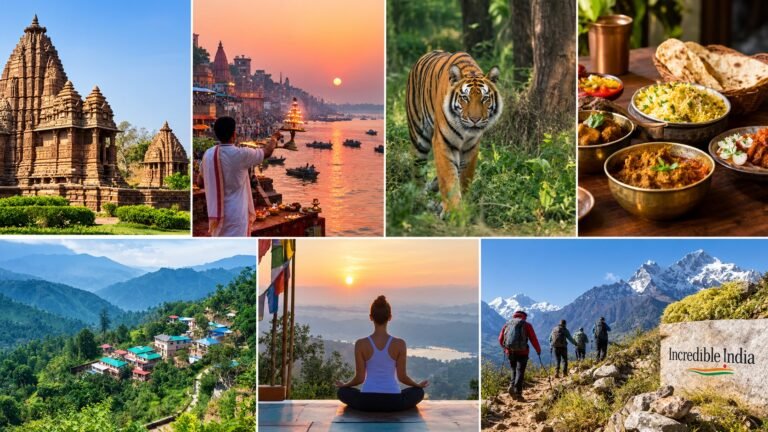
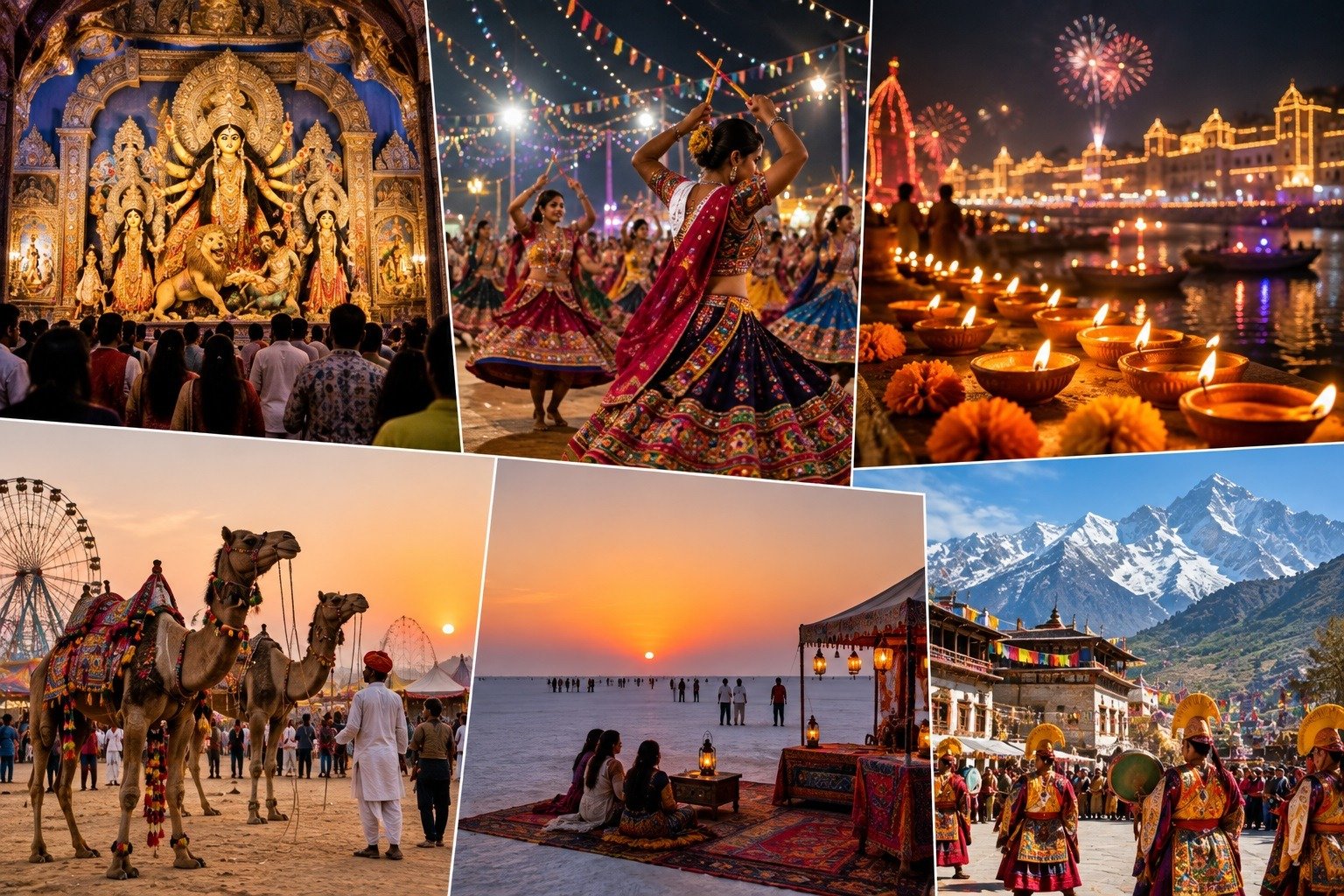
As the final months of 2026 approach, India’s festival calendar is turning into one of the country’s biggest cultural travel seasons. From Navratri and Durga Puja to Diwali and Chhath, from the Pushkar Fair and Rann Utsav to Tawang, Puri, Konark and Rajasthan’s heritage festivals, the coming months offer something much larger than a list of holidays.
They offer a journey through India’s many Indias.
A traveller can move from the devotional energy of Varanasi and Ayodhya to the music of Rajasthan, from the white desert of Kutch to the Himalayan culture of Tawang, from Kolkata’s Durga Puja to Odisha’s classical traditions.
And that may be the real story of India’s 2026 festival season.
October begins India’s great festival run
The festive calendar gathers extraordinary momentum in October.
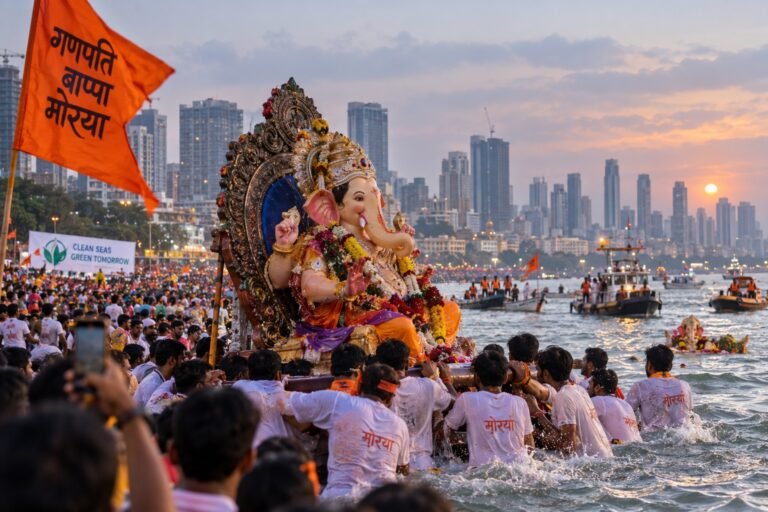
Navratri runs from October 11 to 20, 2026, with different regions giving the nine-night celebration their own identity. Gujarat turns the festival into a spectacular combination of Garba, music and community celebration, while Maharashtra, North India and other parts of the country follow their own traditions.
Then comes Dussehra on October 20.
But calling Dussehra simply a single-day festival misses India’s remarkable regional diversity. Incredible India lists celebrations ranging from the traditional Dussehra festivities of Delhi and Mysuru to Kullu, Vijayawada, Proddatur, Kota and other destinations.
In other words, the same festival can produce very different journeys.
And that is one of India’s tourism strengths.
Durga Puja turns cities into cultural stages
Few examples demonstrate this better than Durga Puja.
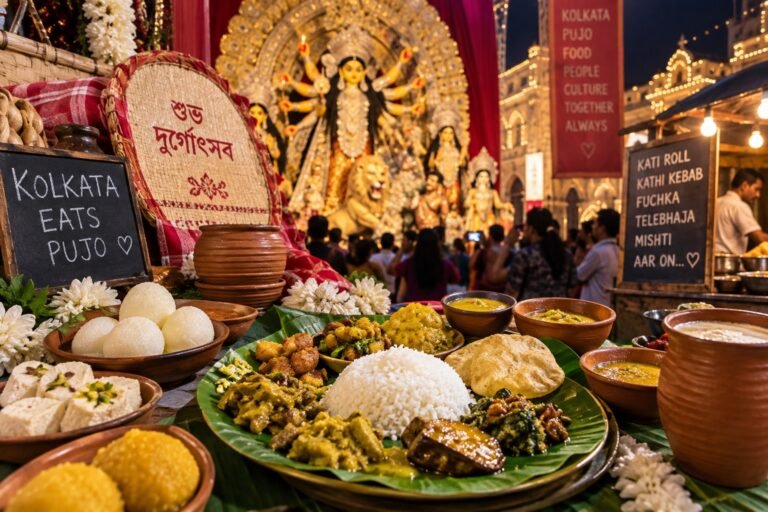
In Kolkata, the 2026 celebration is scheduled for October 17–21, with the city becoming a vast combination of devotion, art, architecture, food, fashion, music and public celebration.
The temporary pandals themselves have become important expressions of contemporary art and design. Themes, sculpture, lighting and environmental considerations increasingly form part of the experience.
For visitors, therefore, Durga Puja is not merely something to watch.
It is something to walk through.
One street may reveal a traditional neighbourhood puja. Another may look like an enormous contemporary art installation. A third may lead to a food stall serving something that suddenly makes the travel itinerary irrelevant.
That is the danger of travelling through Kolkata during Puja: you may arrive with a schedule and leave with a food list.
From the desert to the Himalayas
After the major October celebrations, India’s festival geography becomes even more interesting.
The Rajasthan International Folk Festival in Jodhpur is scheduled for October 22–26, bringing folk, classical and world music into the historic city.
The Rann Utsav begins on October 23 and runs into March 2027, transforming the Great Rann of Kutch into a large cultural and tourism experience centred around the landscape and traditions of Kutch.
Then comes the Tawang Festival in Arunachal Pradesh, October 27–31.
The contrast is extraordinary.
Within days, a traveller can move conceptually from Rajasthan’s desert heritage to Gujarat’s salt desert and then to the Himalayan cultural landscape of Arunachal Pradesh.
India’s festival calendar is almost behaving like a national geography lesson — except that the textbook has music, food and considerably better scenery.
November belongs to lights, fairs and pilgrimage
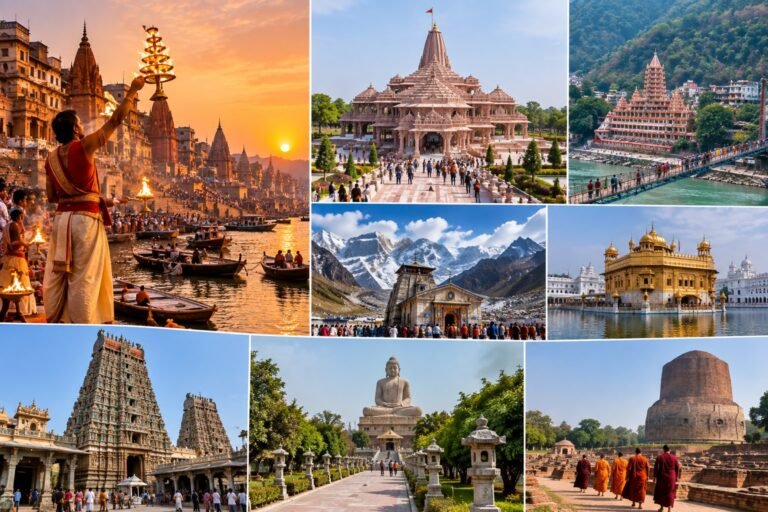
Diwali falls on November 8, 2026. The festival is celebrated across India, but the experience varies dramatically by region. Incredible India highlights destinations including Ayodhya, Varanasi, Mysuru, Udaipur, Jaipur and Delhi among places where visitors can experience distinctive Diwali celebrations.
Ayodhya is particularly significant for the festival calendar.
The Ayodhya Deepotsav is scheduled for November 6, bringing together illumination, devotion and cultural programming on the banks of the Saryu.
And then comes one of India’s most visually distinctive fairs.
Pushkar: where a traditional fair became a global attraction
The Pushkar Fair runs November 17–24, 2026, according to Rajasthan Tourism’s current festival schedule.
Pushkar’s identity is rooted in its livestock and camel fair, but the event has developed into a major tourism attraction featuring competitions, cultural activities and visitors from India and abroad. Rajasthan Tourism describes it as one of the world’s largest cattle fairs.
This is an important lesson for Indian tourism.
A traditional local economy does not necessarily have to disappear when tourism arrives.
With careful management, it can become part of the destination’s identity.
The challenge is maintaining authenticity rather than turning every traditional activity into a performance designed solely for visitors.
Chhath brings another dimension to festival travel
Chhath Puja is scheduled for November 13–16, with celebrations centred around reverence for the Sun and water bodies.
The festival has particular cultural importance in Bihar, eastern Uttar Pradesh and communities across India and abroad.
Its visual character — devotees gathering at rivers, ponds and ghats, often around sunrise and sunset — makes it one of the country’s most distinctive public religious observances.
But its deeper significance is perhaps more important for the traveller.
Chhath is not designed as a tourist spectacle.
It is a living tradition.
That distinction matters.
The best cultural tourism does not turn communities into exhibits. It gives visitors an opportunity to understand traditions while allowing the communities themselves to remain at the centre.
Rajasthan continues its festival marathon
Rajasthan almost deserves its own festival map.
The state has Pushkar Fair, Chandrabhaga Fair, Matsya Festival, Bundi Festival and Kumbhalgarh Festival among its late-2026 calendar. Rajasthan Tourism lists the Bundi Festival for November 27–29 and Kumbhalgarh Festival for December 1–3.
The Bundi Festival combines heritage, traditional arts, crafts, music, dance and local customs against the backdrop of the historic town.
This is precisely the kind of festival that demonstrates why smaller heritage destinations matter.
Jaipur and Udaipur may already be firmly established on the international tourism map.
Bundi offers something different.
And India’s tourism future may increasingly depend on destinations like this.
December brings culture to the centre
December moves the festival season towards classical arts, heritage and music.
The Konark Festival is scheduled for December 1–5, bringing Indian classical dance and music to Odisha against the extraordinary setting of the Sun Temple. The International Sand Art Festival is held around the same period at Chandrabhaga Beach.
Madhya Pradesh also hosts the Tansen Samaroh, celebrating the legacy of the legendary Hindustani classical musician, while the Unmesha International Literature Festival in Bhopal is scheduled for December 18–20.
The Ranakpur Festival on December 21–22 and Rajasthan’s Winter Festival from December 29–31 provide another cultural route through western India.
By this point, the festival season has moved well beyond religious celebration.
It has become a showcase of music, literature, crafts, architecture, food, theatre and regional identity.
The bigger story: festivals are becoming travel infrastructure
There is a larger economic story underneath all this celebration.
Festivals create temporary demand for hotels, homestays, transport, restaurants, local guides, handicrafts, clothing, food producers and cultural performers.
They can also bring attention to destinations that may otherwise receive fewer visitors.
But there is a catch.
A festival can bring thousands of visitors to a town much faster than the town can upgrade its roads, sanitation, waste management, parking, water supply and emergency services.
That means India’s next tourism challenge is not merely attracting more visitors.
It is managing successful destinations intelligently.
A crowded festival is not necessarily a successful festival if the local population pays the environmental and infrastructure cost.
The Doonited Perspective
India’s festival calendar is one of the country’s greatest tourism assets because it is not manufactured from scratch.
It comes from communities.
The music already exists. The food already exists. The rituals already exist. The crafts already exist. The stories already exist.
Tourism simply creates a larger audience.
The opportunity for 2026 is therefore to connect festivals with destinations, rather than treating festivals as isolated events.
A visitor going to Durga Puja should discover Kolkata.
Someone visiting Pushkar should understand Rajasthan beyond the camel fair.
A traveller attending Rann Utsav should discover Kutch’s crafts, food and communities.
Someone travelling to Tawang for its festival should experience Arunachal Pradesh’s cultural landscape rather than merely ticking another destination off a list.
That is where festival tourism becomes meaningful.
India’s festival calendar is its cultural map
The remaining months of 2026 offer an extraordinary sequence:
October: Navratri, Durga Puja, Dussehra, Rajasthan International Folk Festival, Rann Utsav and Tawang Festival.
November: Diwali, Ayodhya Deepotsav, Chhath, Pushkar Fair, Guru Nanak Jayanti, Bundi Festival and numerous regional fairs.
December: Konark Festival, Sand Art Festival, Tansen Samaroh, literature and theatre festivals, Ranakpur Festival and Rajasthan’s Winter Festival.
Together they reveal something important.
India’s festivals are not just dates on a calendar. They are routes through India’s history, faith, food, music, landscape and living culture.
And for travellers in 2026, that may be the best itinerary of all.
DOONITED INDIA — FESTIVAL TRAVEL INSIGHT
The smartest festival trip is not necessarily the biggest festival.
Look for the celebration where the festival, destination and local culture remain connected.
That is where the traveller gets the richer experience — and where tourism has a better chance of benefiting the people who keep the tradition alive.

World Beyond the News
Why Elephants Stay Close to Their Herd
Elephants live in highly social family groups and use calls, touch and body movements to maintain strong bonds.
Most of the Deep Ocean Remains Difficult to Explore
Extreme pressure, darkness and distance make deep-ocean exploration one of Earth’s greatest scientific challenges.
Spacecraft Can Travel Without Traditional Roads
Spacecraft use carefully calculated trajectories and gravity assists to travel enormous distances through space.
Why Movie Trailers Are Released in Stages
Major films often use teaser trailers, full trailers and final promotional spots to build awareness over time.