Somnath Kartak Poonam Fair: When a Sacred Full Moon Becomes a Living Coastal Tradition
Every Kartik Purnima, Somnath becomes more than a pilgrimage destination. Temple rituals, the Arabian Sea, the Triveni Sangam, folk culture and a public fair converge around one of India’s most important Shiva shrines. The 2026 celebration offers a revealing look at how pilgrimage and community life continue to shape India’s living heritage.
When the Full Moon Brings a Town Together
There are temples that people visit.
And there are places where an entire landscape seems to participate in the pilgrimage.
Somnath in Gujarat belongs to the second category.
Each year, around the full moon of Kartik Purnima, devotees gather around the Somnath Temple and the nearby Triveni Sangam for religious observances and the Somnath Kartak Poonam Fair.
The Ministry of Tourism’s Incredible India portal describes the event as a major fair held at Somnath during the November–December Kartik Purnima period, with the opening ceremony accompanied by religious and cultural activities.
In 2026, Kartik Purnima falls on 24 November.
That date matters because the fair’s attraction is not simply the presence of stalls or performances.
The fair grows around a religious calendar.
The temple provides the spiritual centre.
The full moon provides the timing.
The sea and Triveni Sangam provide the geography.
And thousands of visitors turn the occasion into a shared public experience.
This is the deeper story of Somnath’s Kartak Poonam tradition.
More Than a Temple Visit
The Somnath Temple is one of India’s most prominent Shiva temples and is traditionally recognised as the first among the twelve Jyotirlingas.
The temple’s own historical narrative describes Somnath as a sacred site with a long history of worship and reconstruction. The present temple was reconstructed in the mid-20th century in the traditional Chalukya-inspired style under the patronage of the Somnath Trust and the wider national reconstruction effort.
But the significance of Kartik Purnima is broader than the temple structure.
The festival draws people into the surrounding sacred landscape.
The Triveni Sangam, where the Hiran, Kapila and Saraswati rivers are traditionally believed to meet before flowing into the Arabian Sea, is another important pilgrimage point.
This creates a powerful geographical relationship:
Temple → river confluence → sea → full moon.
The fair grows around that sacred geography.
Why Kartik Purnima Matters
Kartik Purnima occupies an important place in the Hindu calendar.
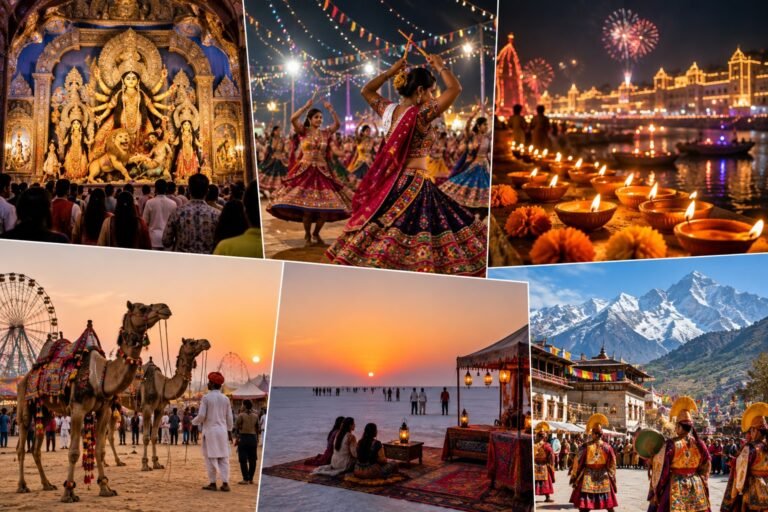
It is observed across India through temple worship, bathing rituals, devotional activities and local fairs. Different regions have developed their own traditions around the full moon.
At Somnath, the occasion is closely associated with pilgrimage and worship.
For visitors unfamiliar with Indian religious traditions, it is useful to understand that the fair should not be treated as an isolated entertainment event.
The cultural activity derives much of its meaning from the religious calendar.
That distinction matters.
A food stall or folk performance may look like an ordinary fair attraction.
But its presence beside a major pilgrimage centre during Kartik Purnima gives the entire event a different social context.
The fair becomes an extension of the pilgrimage experience.
The Lokmela: Where Devotion Meets Everyday Life
The public fair associated with Somnath adds another layer.
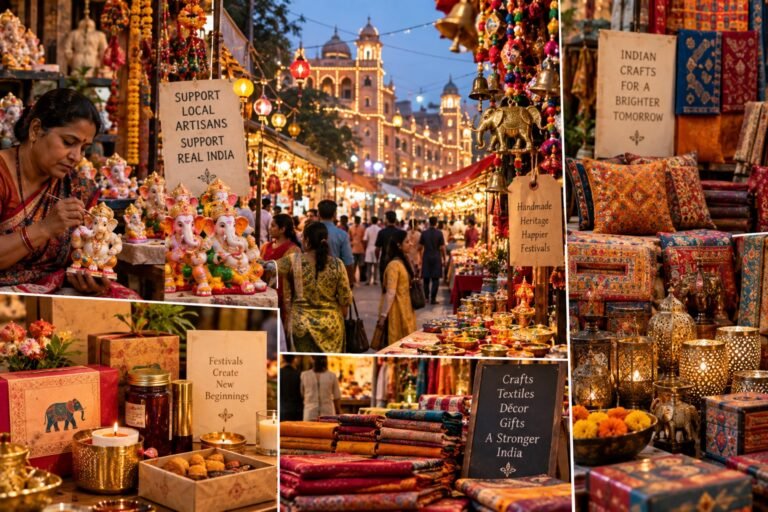
The Shree Somnath Trust has historically organised a Lokmela around the Kartik Purnima period, bringing together food, handicrafts, entertainment and community activity.
The Ministry of Tourism’s Utsav portal also identifies the Kartik Purnima celebration at Somnath as a religious and cultural event attracting visitors to the area. (utsav.gov.in)
This is where the festival becomes particularly interesting from a heritage perspective.
Pilgrimage is often described as a spiritual activity.
But pilgrimage has always had an economic and social ecosystem around it.
People need transport.
They need food.
They need accommodation.
They buy offerings and souvenirs.
Local performers find audiences.
Small businesses receive customers.
Artisans gain opportunities to sell.
The fair therefore connects faith with everyday livelihoods.
It is not necessarily a contradiction.
In traditional pilgrimage economies, commerce and devotion have often existed side by side.
The Local Economy Around a Sacred Event
The economic impact of a festival such as Somnath Kartak Poonam should nevertheless be discussed carefully.
There does not appear to be a publicly available authoritative 2026 economic-impact assessment that quantifies exactly how much revenue the fair generates for local hotels, vendors, transport operators and artisans.
It would therefore be misleading to attach a precise economic figure without evidence.
The mechanism, however, is straightforward.
A large temporary increase in visitors creates additional demand for:
- accommodation;
- restaurants and food stalls;
- local transport;
- pilgrimage services;
- handicrafts and souvenirs;
- guides and tourism services;
- temporary retail businesses.
The important point is that the economic activity is geographically distributed.
A visitor who comes to Somnath for the temple may also eat at a local restaurant, stay in a nearby hotel, visit another attraction, purchase a local product and travel onward through the region.
The fair therefore helps connect the temple to the wider tourism economy of Saurashtra.
The Sea Changes the Experience
Somnath’s location makes the Kartik Purnima experience particularly distinctive.
The temple stands close to the Arabian Sea.
At sunset, the relationship between the temple and the coast becomes part of the visual experience. During the full-moon period, the sea is no longer simply scenery. It becomes part of the emotional geography of the pilgrimage.
This is one reason Somnath cannot be understood solely through architecture.
The experience is environmental.
It involves sound, light, water, weather, crowds and ritual.
For international visitors, this is perhaps one of the easiest ways to understand the idea of living heritage.
A monument is something that can be preserved.
A pilgrimage landscape is something that must be continuously experienced.
The Challenge of Managing Sacred Tourism
Large religious gatherings also create difficult questions.
How do authorities manage crowds without turning a sacred experience into a purely controlled tourist operation?
How much temporary infrastructure can the area absorb?
How is waste handled?
How can the coastline remain environmentally responsible during periods of heavy visitation?
How are elderly pilgrims and people with disabilities accommodated?
And how can local residents benefit without having their everyday environment overwhelmed during peak periods?
These questions are not arguments against religious tourism.
They are questions of responsible destination management.
Somnath’s importance makes that particularly relevant.
A pilgrimage destination can be economically successful while simultaneously placing pressure on water, waste systems, roads and public spaces.
The long-term success of Kartik Purnima tourism should therefore be measured not only by visitor numbers.
It should also be measured by how well the destination protects the landscape that attracts those visitors in the first place.
A Fair Is Also a Cultural Archive
There is another reason the Somnath fair deserves attention.
The stalls, food, folk performances and temporary marketplace preserve forms of everyday culture that may never appear in formal museum collections.
A museum might preserve an object.
A fair preserves the use of culture.
A regional food is cooked.
A craft is demonstrated.
A song is performed.
A family tradition is repeated.
A pilgrim purchases something made by a local producer.
These small interactions are difficult to quantify.
They are also how cultural knowledge travels between generations.
This is why India’s fairs deserve to be considered seriously as heritage institutions rather than dismissed as temporary entertainment.
They are often informal cultural archives.
Tradition Without Freezing Time
Somnath also illustrates an important principle of Indian heritage.
Living traditions change.
The modern visitor arrives by car, bus, train or aircraft.
The temple has sophisticated visitor-management systems.
Digital information and online services coexist with centuries-old rituals.
Mobile phones record ceremonies that previous generations could only remember.
A fair may now include modern rides, contemporary lighting and professionally managed facilities.
None of this automatically destroys tradition.
The question is whether the new elements serve the cultural experience or overwhelm it.
A living tradition cannot be expected to remain technologically identical to the 18th or 19th century.
What should remain is the meaning.
At Somnath, that meaning is anchored in pilgrimage, devotion, sacred geography and community participation.
Why Somnath Matters Beyond Gujarat
For an Indian visitor, Somnath may be a familiar pilgrimage name.
For an international visitor, it provides a useful window into something more difficult to explain about India: the distinction between a monument and a living sacred place.
The Somnath Temple is architecture.
But Somnath as a destination is much larger.
It includes the temple, the sea, the Triveni Sangam, pilgrimage routes, rituals, local markets, food, accommodation, transport and annual festivals.
The Kartak Poonam Fair temporarily intensifies all of these relationships.
That makes the event relevant beyond Gujarat.
Around the world, historic religious destinations are trying to balance preservation with tourism.
Somnath presents an Indian example of the same challenge.
How do you welcome more people without reducing a sacred place to a tourist attraction?
How do you allow commerce without allowing commerce to define the destination?
How do you modernise visitor facilities without erasing the cultural character that brought visitors there?
There are no easy answers.
But the questions are essential.
The Full Moon Is Only the Visible Part
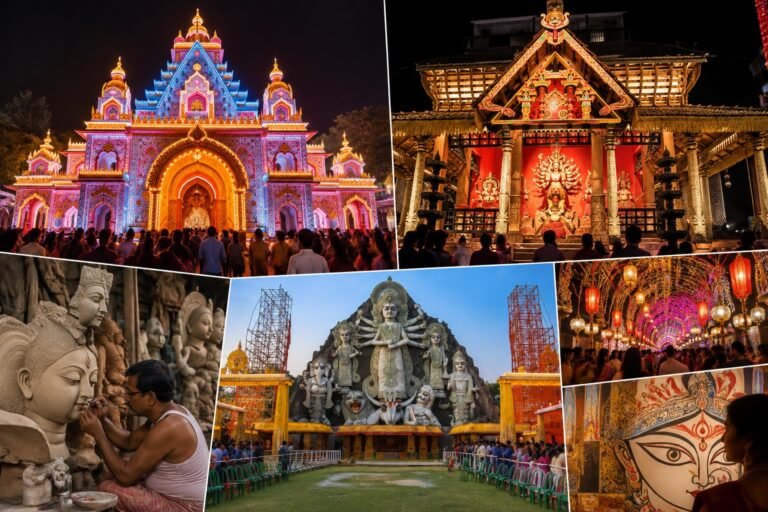
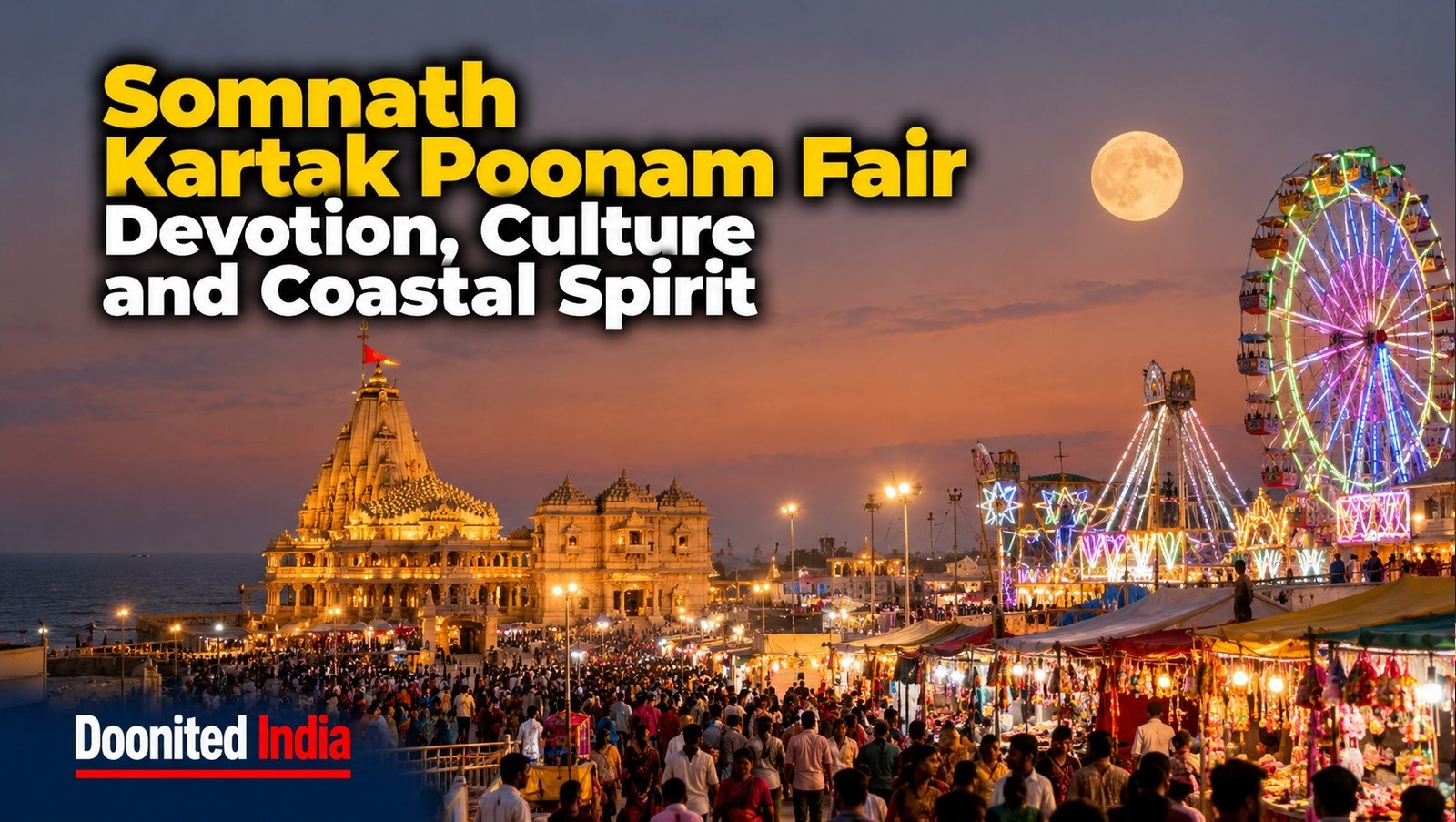
The most memorable image of Somnath during Kartik Purnima may be the temple illuminated against the night sky.
But the deeper story is less photographic.
It is the pilgrim arriving after a long journey.
The family walking towards the temple.
The vendor preparing food.
The artisan displaying a product.
The performer waiting for the evening programme.
The hotel filling with visitors.
The coastline absorbing another night of human activity.
And the temple continuing its ritual calendar as it has for generations.
That is what makes the Somnath Kartak Poonam Fair more than a fair.
It is a meeting point between sacred time and everyday life.
The full moon arrives for only one night.
The cultural and economic relationships it activates can last much longer.
And that may be the most important lesson from Somnath: living heritage survives when faith, community, culture and responsible local economic activity remain connected—not when heritage is preserved merely as an object behind glass.


World Beyond the News
Octopuses Can Change Their Appearance
Octopuses can rapidly alter their skin colour and texture to communicate, camouflage themselves and respond to danger.
Some Cities Exist Across Two Continents
A small number of cities are geographically associated with two continents, creating unusual cultural and geographic identities.
Earth’s Climate Is Measured in Many Ways
Scientists track temperature, atmospheric gases, sea level, ice cover and other indicators rather than relying on a single climate number.
Streaming Changed How Audiences Discover Shows
Recommendation systems and global streaming releases allow audiences to discover programmes far beyond their original markets.