BYD’s Denza Enters India: Can the D9 and Z9 GT Redefine Electric Luxury?
Priced at ₹90 lakh and ₹1.568 crore, the two electric models mark the arrival of BYD’s premium brand in India. One targets buyers seeking chauffeur-driven comfort; the other brings supercar-level performance. Their bigger test will be whether technology-led luxury can overcome India’s import costs and limited high-end EV market.
By Pradeep Banerjee | Editor, DOONITED.in
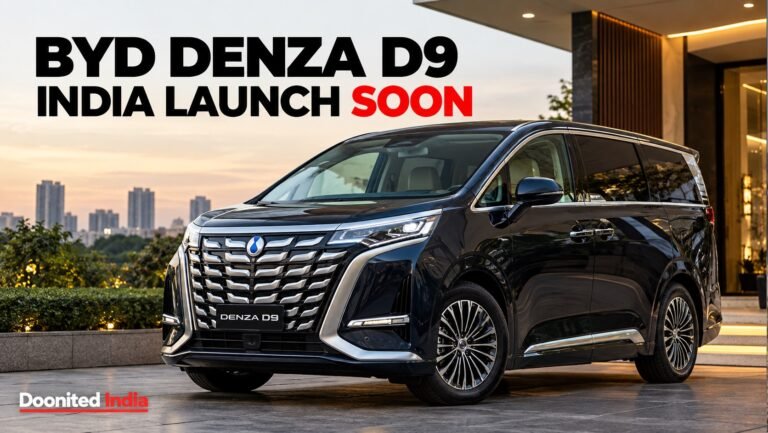
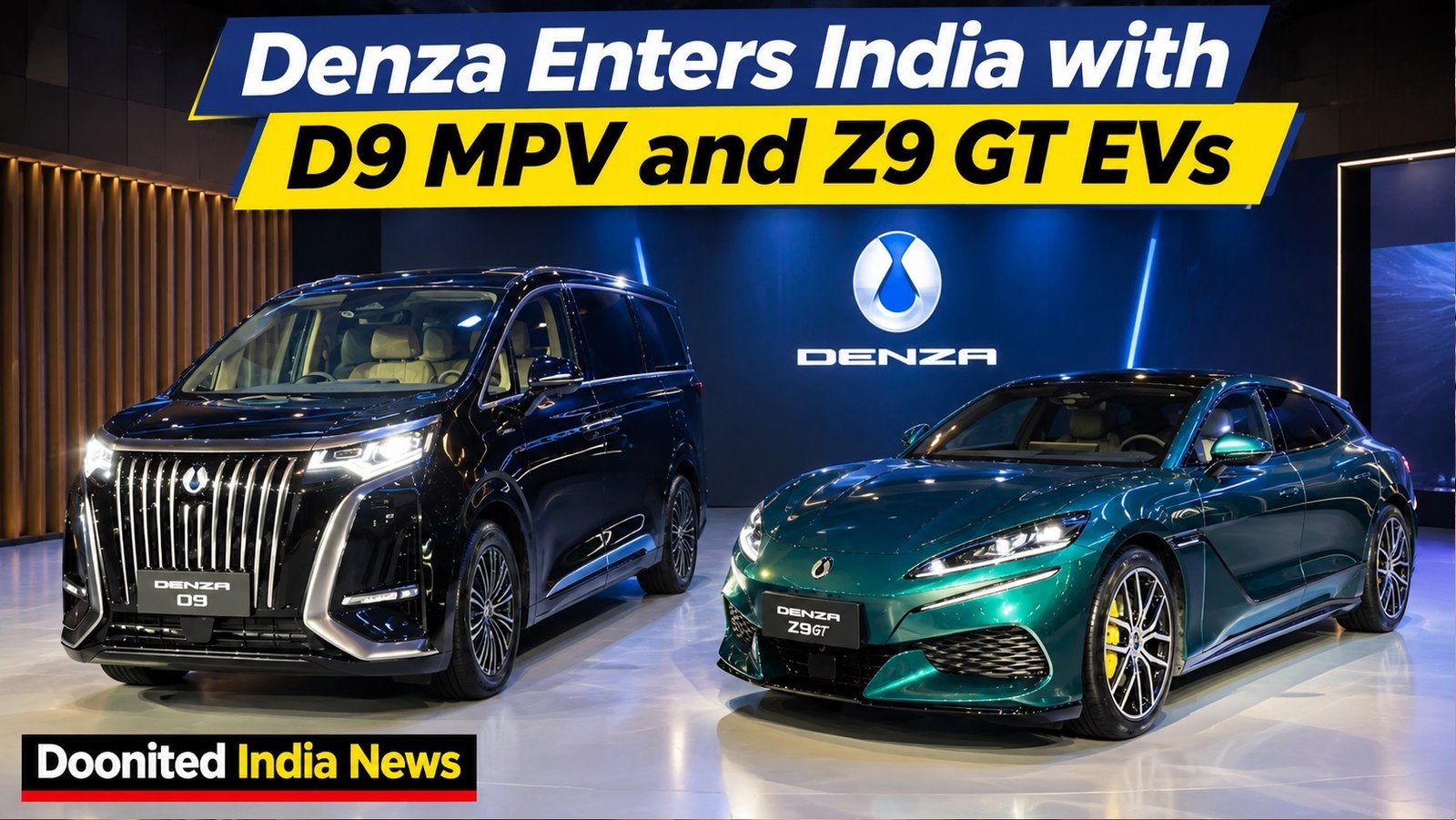
India’s luxury car market has a new electric challenger. Chinese automotive giant BYD has brought its premium brand Denza to the country with two very different vehicles: the D9, a seven-seat luxury electric MPV, and the Z9 GT, a high-performance electric shooting brake.
Launched on 13 November 2026, the D9 is priced at ₹90 lakh, while the Z9 GT carries an introductory ex-showroom price of ₹1.568 crore. The launch marks BYD’s attempt to move beyond its existing electric passenger-car range and compete in a segment traditionally dominated by established luxury manufacturers.
The two cars approach luxury from opposite directions. The D9 is designed around passenger space and rear-seat comfort. The Z9 GT is about performance, distinctive styling and advanced electric engineering.
Denza D9: A luxury lounge on wheels
The D9 is a full-size, three-row electric MPV with a seven-seat 2+2+3 configuration. Its natural competitors include the Toyota Vellfire, Mercedes-Benz V-Class and electric MG M9, although the powertrain differences make direct comparisons more complicated.
India receives a front-wheel-drive, single-motor version. It uses a 115.07 kWh second-generation BYD Blade battery, with a claimed output of approximately 462 hp and 365 Nm of torque. BYD quotes an NEDC driving range of up to 730 km. This is a laboratory-standard claim, not a guarantee of real-world Indian driving range.
The cabin is central to the D9’s proposition. Its second-row captain’s chairs offer electrically adjustable seating and comfort functions, while features such as powered sliding doors, a large infotainment screen, dual sunroofs and three-zone climate control reinforce its chauffeur-oriented character.
At ₹90 lakh, the D9 is not simply competing with conventional family MPVs. It is asking affluent buyers to consider an electric alternative to established luxury people-movers—and to accept the charging arrangements that come with it.
Z9 GT: Electric performance with an unusual body style
The Z9 GT is the more dramatic of the two launches. Denza describes it as a shooting brake: a low-slung performance car combining a sporty profile with a practical rear section and four-door layout.
Its Indian version uses a 122.49 kWh battery and three electric motors driving all four wheels. Combined output is quoted at 1,156 hp and 1,210 Nm, with a claimed 0–100 km/h acceleration time of 2.7 seconds. The company gives an NEDC range of up to 670 km.
Among its distinctive technologies are independent wheel-control functions that enable manoeuvres such as a 360-degree spot turn and diagonal movement, often described as a crab-walk function. These features demonstrate the engineering possibilities of multi-motor electric platforms, although their practical value will depend on driving conditions and owner requirements.
The Z9 GT is positioned as a technology-led luxury performance car rather than a mass-market electric vehicle. Its price places it in competition with a rarefied group of high-end performance offerings.
The ownership proposition: Price is only the beginning
Bookings for both models opened on launch day with a ₹10 lakh booking amount. The vehicles are being offered through a dedicated Denza retail network, separate from BYD’s existing dealerships. The initial retail plan covers six cities: Gurugram, Mumbai, Ahmedabad, Bengaluru, Chennai and Hyderabad.
Both cars are imported as completely built units from China. This is significant in India, where import duties can make premium vehicles substantially more expensive than locally assembled alternatives. Reuters has reported that tariffs on imported vehicles can reach 100%, while investment restrictions have also complicated BYD’s plans for local manufacturing.
The launch therefore comes with a practical question: can Denza build a sustainable customer base with imported vehicles, a new retail network and the service expectations associated with ultra-luxury ownership?
There are early signs of a cautious approach. BYD India has indicated that it will assess initial customer response before deciding on its longer-term expansion and sales strategy. Reports following the launch said the company had secured around 80–90 vehicles for the initial period, rather than announcing an aggressive volume target.
A small market with strong competition
India’s luxury car market is attractive because of its potential margins, but it remains small compared with the mass-market passenger-vehicle segment. Reuters reported that luxury cars accounted for just over 1% of India’s 4.4 million passenger-car sales in 2025. Established brands already have customer relationships, service networks and a strong reputation for after-sales support.
Denza will need to compete on more than battery capacity and acceleration figures. Buyers spending close to a crore—or considerably more—will expect dependable service, convenient charging, strong resale confidence and a premium ownership experience.
For electric luxury vehicles, the availability of high-power charging infrastructure and reliable long-distance charging routes will also influence purchasing decisions. Claimed NEDC range figures should be treated as standardised test results; actual range will vary with speed, temperature, traffic, air-conditioning use and driving style.
What Denza’s arrival means for India
Denza’s Indian entry is significant because it signals that global EV manufacturers see an opportunity beyond affordable electric cars. The premium segment can become a testing ground for advanced batteries, multi-motor powertrains, cabin technologies and new approaches to vehicle design.
But a successful launch is not the same as a successful market entry. Denza must establish trust in a market where established luxury manufacturers have spent decades building their service and dealer networks.
The D9 may appeal to buyers who prioritise rear-seat comfort and an electric alternative to traditional luxury MPVs. The Z9 GT is likely to attract a narrower audience interested in performance and unusual engineering.
Denza has arrived with technology and ambition. Its lasting place in India, however, will be decided not by launch-day specifications but by ownership experience, service confidence and the ability to make imported electric luxury commercially viable.


World Beyond the News
Birds Can Navigate Using Earth’s Magnetic Field
Several bird species can sense Earth’s magnetic field, helping them navigate during long-distance migration.
Fermentation Is a Global Food Tradition
People across continents have used fermentation for centuries to preserve food and create distinctive flavours.
Modern Batteries Store Energy Chemically
Rechargeable batteries repeatedly move ions between electrodes, allowing electrical energy to be stored and released.
Why Songs Become Global Hits
Streaming platforms, short-form video, playlists and international collaborations can rapidly carry music across borders.