Citroën C3 Facelift: Can a Feature-Rich Update Give India’s French Hatchback a Fresh Start?
A refreshed Citroën C3 is being tipped for India towards the end of 2026. The bigger question is not whether it will get a new dashboard or more technology, but whether Citroën can deliver the features, safety equipment and ownership confidence that Indian buyers increasingly expect.
The Citroën C3 has always taken a slightly different route through India’s crowded small-car market. Its SUV-inspired stance, distinctive styling and comfort-oriented character give it an identity beyond the usual budget hatchback formula. Yet a distinctive personality can only take a car so far when buyers are comparing equipment lists, safety features, service access and the final on-road bill.
A facelift could give the C3 another opportunity to make its case. Automotive portals currently point to a possible December 2026 arrival, with some listings specifying dates around December 30 or 31. These are tentative tracker dates—not a confirmed launch schedule from Citroën.
The expected update is reported to include styling revisions, cabin improvements and a broader equipment package. But the details need careful sorting: several features described as future upgrades are already available on certain versions of the current C3.
Launch timeline and expected price: Treat the numbers as estimates
CarWale lists the C3 facelift for December 2026 and estimates a price range of approximately ₹9 lakh to ₹15 lakh. Other online listings offer different price indications, including lower starting figures. Citroën has not announced an official facelift price, so neither the exact launch date nor the final price range should be treated as settled.
The wide estimates also raise a practical question: will the facelift remain an affordable small car, or will a heavily equipped top variant move into a price bracket occupied by larger, more powerful alternatives?
For context, the current C3’s pricing and variant structure have changed over time. Its 2025 range update brought price reductions and new X Shine variants, while the 2024 update added equipment such as a digital instrument cluster, automatic climate control and six airbags on selected versions. A new facelift will need to offer a clear reason for any price increase.
What could change on the outside?
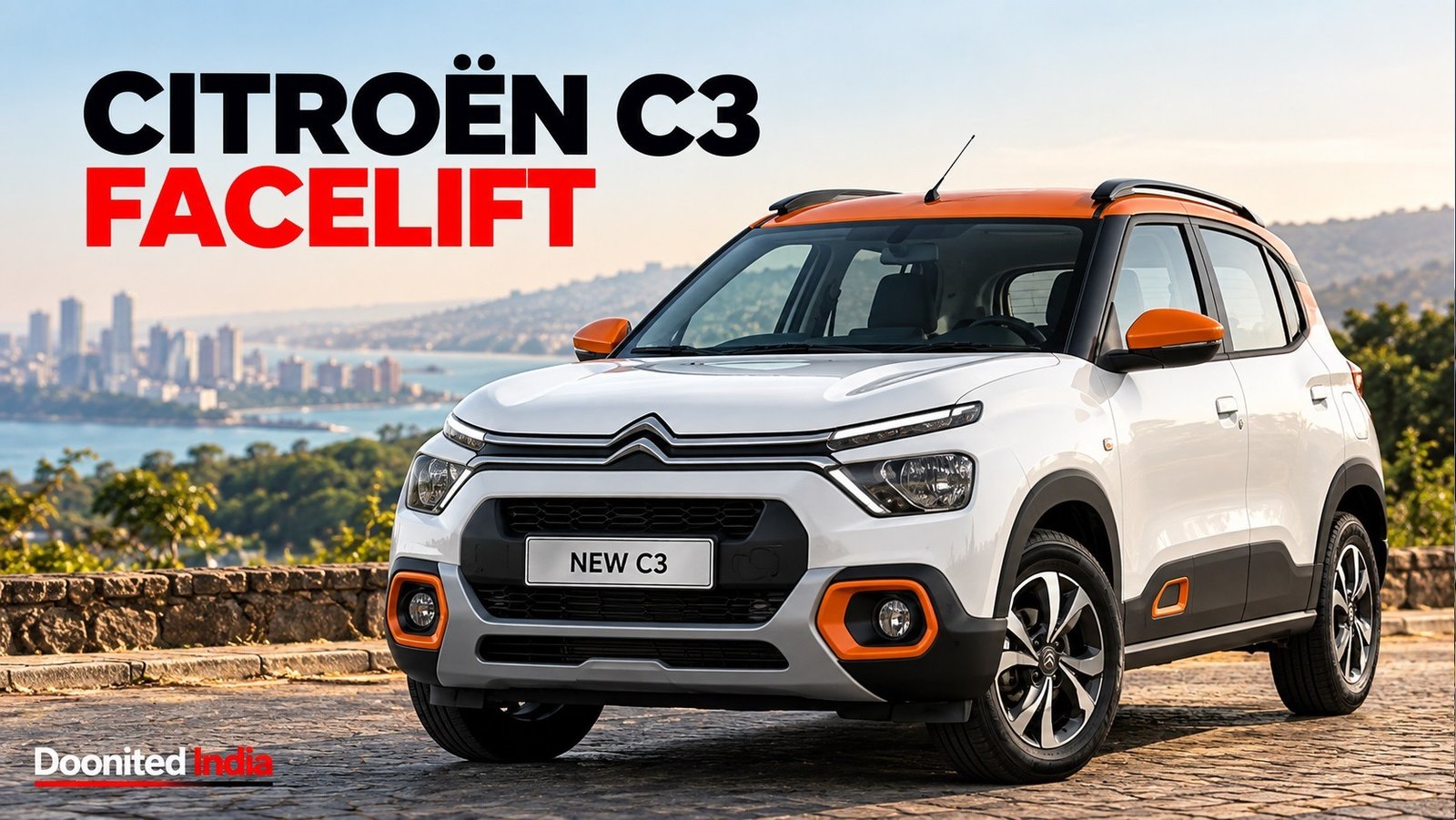
The facelift is expected to bring revised front and rear bumpers, updated lighting details and fresh alloy-wheel designs. These changes would be evolutionary rather than a complete redesign.
That approach makes sense for a mid-cycle refresh. The C3 already has a recognisable shape, high bonnet and SUV-inspired cladding. A sharper front fascia and more contemporary lighting could make it look newer without losing its identity.
Still, styling alone is unlikely to transform the C3’s position. In this segment, a fresh face attracts attention; a strong combination of price, features and ownership costs is what converts interest into a sale.
Cabin upgrades: The important distinction between new and already available
Reports suggest that the facelift could receive an updated dashboard, a larger touchscreen, a digital instrument cluster, an electric sunroof, automatic climate control and wireless charging.
However, the current Indian C3 already offers several of these features on selected trims. Its existing equipment includes a 10.2-inch touchscreen, a digital driver display on higher versions, automatic climate control and wireless charging availability. The turbo-petrol automatic is also already part of the line-up.
The meaningful upgrade, therefore, may be less about adding every feature for the first time and more about improving their availability across variants. A larger screen or sunroof may be attractive, but a better-designed cabin, convenient controls and fewer compromises in lower trims could matter to more buyers.
A digital display is useful when it is legible. A touchscreen is useful when it responds promptly. And wireless charging is useful when the phone does not emerge from the pad looking as though it has spent an afternoon in the sun.
Safety: The facelift’s most important promise
Some listings suggest that the refreshed C3 could offer six airbags, Electronic Stability Programme (ESP), hill-hold assist and a tyre-pressure monitoring system.
These should be treated as expected or reported features until Citroën confirms the final specification and variant-wise fitment. The current C3 already offers safety equipment such as six airbags and electronic stability-related features on selected versions; available equipment varies by trim.
The key question is whether the facelift will make important safety technology standard across the range or reserve some of it for the most expensive variant. Buyers should check the actual equipment list rather than rely on a headline saying “six airbags” without explaining which version receives them.
A comprehensive safety package is not merely a premium feature. It is part of the basic value proposition of a family car. Citroën has an opportunity to make the safety story clearer and more consistent.
Petrol engines: Familiar hardware, familiar trade-offs
The facelift is expected to retain the C3’s 1.2-litre naturally aspirated petrol and 1.2-litre turbo-petrol engines. Current specifications list the naturally aspirated unit at around 82hp and 115Nm, while the turbo produces approximately 110hp, with torque figures varying by model year and specification.
The naturally aspirated engine is paired with a five-speed manual. The turbo is available with a six-speed manual and a six-speed torque-converter automatic in the current range. The facelift’s final power and transmission specifications have not yet been confirmed.
Keeping the existing engines would help limit engineering costs and preserve a familiar driving character. The turbo’s stronger performance and automatic option are useful assets in urban traffic and on highways. The naturally aspirated version, meanwhile, will need to make its case through purchase price and everyday running costs.
What remains to be seen is whether the update brings improvements to refinement, fuel efficiency or emissions compliance—or concentrates mainly on equipment and styling.
The real competition is value, not just design
The C3 operates in a fiercely contested part of the Indian market, where buyers can choose from compact SUVs, tall hatchbacks and small crossovers. Rivals such as the Tata Punch, Hyundai Exter, Maruti Suzuki Ignis and Renault Kiger appeal to overlapping sets of customers, although their body styles, prices and equipment differ.
Citroën’s opportunity lies in its own strengths: distinctive design, a spacious-feeling cabin and a suspension setup that has been noted for ride comfort. The challenge is to balance those qualities with the features, safety equipment and after-sales confidence that shoppers expect.
The brand’s service reach and resale-value perceptions are also part of the purchase decision. A buyer does not evaluate a car only on the day of delivery; the ownership experience continues through servicing, parts availability, repairs and eventual resale.
A facelift can improve the product, but it cannot by itself solve every brand-level concern. Citroën will need to support the refreshed C3 with clear pricing, transparent variant packaging and consistent customer service.
DOONITED View: Make the upgrade meaningful
The C3 does not need to become a copy of every rival. Its distinctive design and comfort-oriented character are valuable differentiators. What it needs is a more compelling overall package.
If Citroën makes desirable features more accessible, improves the cabin experience and offers a strong safety specification without pushing prices too far, the facelift could give the C3 a clearer role in the market. If the changes are largely cosmetic while key equipment remains restricted to expensive trims, the update may struggle to change buyer perceptions.
There is also a wider lesson for automakers competing in India: localisation and competitive pricing matter, but so does the perceived value of the entire ownership journey. A sunroof can brighten the cabin; it cannot compensate for uncertainty about service or resale.
For now, the December 2026 timeline, expected prices and facelift equipment remain provisional. The decisive details will be the official launch date, variant-wise features, safety fitment and ex-showroom pricing.
Learning Point
When assessing a facelift, compare the current model with the exact new variant, not just the headline feature list. Check which features are genuinely new, which were already available, what is standard, and what requires a more expensive trim.
That is how buyers can distinguish a meaningful product upgrade from a longer brochure.


World Beyond the News
Why Elephants Stay Close to Their Herd
Elephants live in highly social family groups and use calls, touch and body movements to maintain strong bonds.
Most of the Deep Ocean Remains Difficult to Explore
Extreme pressure, darkness and distance make deep-ocean exploration one of Earth’s greatest scientific challenges.
Spacecraft Can Travel Without Traditional Roads
Spacecraft use carefully calculated trajectories and gravity assists to travel enormous distances through space.
Why Movie Trailers Are Released in Stages
Major films often use teaser trailers, full trailers and final promotional spots to build awareness over time.