Royal Enfield Himalayan 750: Can India’s New Adventure-Touring Flagship Make the 750cc Twin Mainstream?
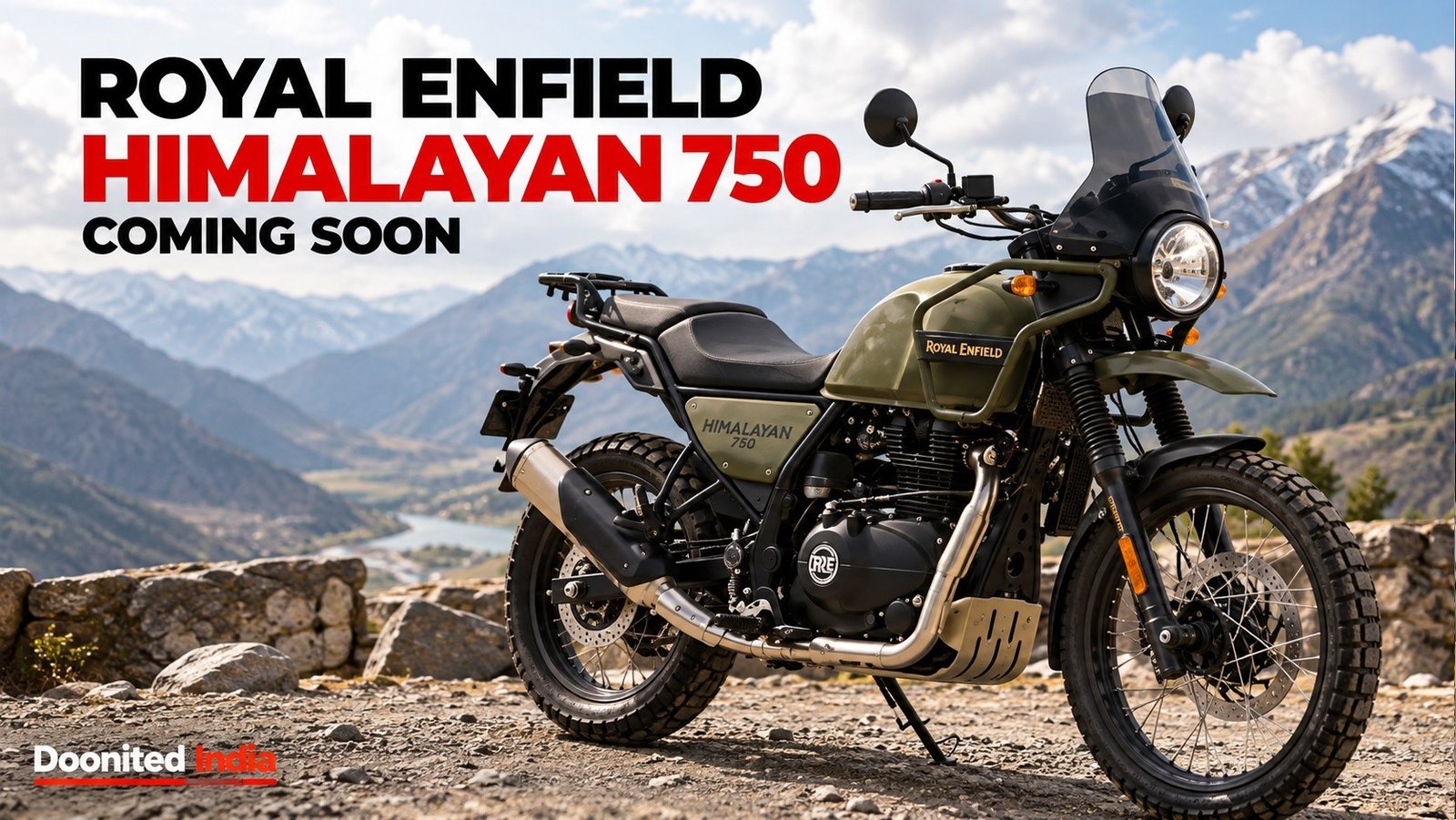
Royal Enfield’s upcoming Himalayan 750 could mark a defining moment for the company’s adventure-motorcycling ambitions. The Himalayan name has built its reputation around long-distance travel, rugged terrain and a relatively straightforward riding experience. The new 750cc twin-cylinder model aims to carry that identity into a more powerful class—without abandoning the practical priorities that matter to Indian touring riders.
The motorcycle has already been showcased in India at Royal Enfield’s Himalayan Basecamp event in Leh, Ladakh. The production-spec model is expected to make its global debut at EICMA 2026, followed by an Indian launch that could take place around Motoverse in November or December 2026, or in early 2027. The precise launch date has not been officially confirmed.
The bigger story is what the Himalayan 750 represents: Royal Enfield’s attempt to move into a more powerful adventure-touring category while retaining its distinctive approach to motorcycling.
A new 750cc twin: the next step beyond the 650 platform
The Himalayan 750 is expected to use a new 750cc parallel-twin engine developed from the architecture of Royal Enfield’s existing 648cc twin-cylinder platform. The company has not yet published final production specifications, so reported output figures should be treated as estimates rather than confirmed performance data.
Automotive publications have suggested power in the region of 55–60hp, with torque estimates varying by source. The existing 650cc twin produces around 47hp and 52Nm, giving a useful reference point for the expected increase.
The Himalayan 750’s final engine character will matter more than its displacement alone. Riders will want to know how smoothly it pulls from low revs, whether it feels relaxed at highway speeds and how much vibration reaches the handlebars and footpegs after several hours in the saddle.
Royal Enfield has built much of its modern identity around approachable, characterful motorcycles. The challenge with the 750 is to add performance without making the experience feel intimidating or unnecessarily complicated.
Two wheel configurations, two kinds of adventure

The Himalayan 750 has been seen in different configurations during testing. Reports point towards a more road-focused version with alloy wheels and a 19-inch front and 17-inch rear setup, alongside a more adventure-oriented version expected to use spoked wheels. The final variant names and specifications remain unconfirmed.
The distinction is meaningful. A 19/17-inch wheel combination generally suits road use and touring, while a larger front wheel is commonly favoured for tackling rougher terrain. Spoked wheels can also be attractive to riders who prioritise adventure styling and the ability to accommodate certain types of wheel damage, although the actual wheel construction and tubeless arrangement matter.
The test motorcycles have been seen with adjustable upside-down front forks and a rear monoshock. Reports describe adjustment at the front and preload adjustment at the rear, including a remote adjuster. These details suggest that Royal Enfield is paying attention to the needs of riders who travel with luggage or a passenger.
The Himalayan 750’s final weight, ground clearance, suspension travel and wheel options will therefore be important buying considerations—not minor footnotes beneath the engine specifications.
Technology: cruise control and traction control arrive
The Himalayan 750 is expected to introduce several features to Royal Enfield’s adventure line-up, including cruise control and traction control. Reports also point to multiple ride modes and dual-channel ABS with selectable settings. These features have been observed or reported on pre-production motorcycles, but the final production specification should be confirmed at launch.
Cruise control could be particularly useful for riders who regularly cover long distances on open highways. It can help maintain a steady speed and reduce the need to keep a constant hand pressure on the throttle. It is less relevant on congested roads, where traffic conditions demand continuous adjustment.
Traction control can help manage rear-wheel slip when grip is limited. On wet roads, loose gravel or uneven surfaces, it can provide an additional layer of assistance. However, electronic aids do not replace appropriate tyres, sensible speed or rider training.
The motorcycle is also expected to get a 4-inch circular TFT display, similar in concept to the unit used on the Himalayan 450. Reported features include Bluetooth connectivity, call and SMS alerts, and Google Maps-based navigation. A tyre-pressure monitoring system has also been mentioned in reports, but its inclusion and availability across variants require confirmation.
The practical test will be whether these features are easy to operate with gloves, readable in bright sunlight and reliable on long rides. A menu full of technology is only useful if the rider can access the right information without taking attention away from the road.
Expected price: ₹4.50 lakh to ₹5 lakh
Current estimates place the Himalayan 750 in the ₹4.50 lakh to ₹5 lakh ex-showroom range. Autocar India lists ₹4.50–5 lakh, while ZigWheels currently estimates a starting price around ₹4.50 lakh. Some other portals have published lower figures, demonstrating how uncertain pre-launch pricing can be.
The final price will determine how the Himalayan 750 sits between more affordable middleweight motorcycles and premium imported adventure-tourers. Buyers will also need to account for insurance, registration, accessories, riding gear and any variant-specific equipment.
Royal Enfield’s established Indian retail presence could be an advantage, particularly for riders outside major metropolitan areas. But premium ownership brings higher expectations. Service quality, spare-parts availability and technician familiarity with the new platform will matter just as much as the showroom price.
A ₹4.5 lakh motorcycle can still become an expensive proposition if owners have to travel long distances for specialist service or wait weeks for essential parts.
The competition: more power, more choices
The Himalayan 750 is expected to compete with middleweight adventure motorcycles such as the Honda NX500, Kawasaki Versys 650 and, depending on final pricing and positioning, the BMW F 450 GS. These models differ in engine layout, equipment, weight and intended use, so the comparison will need to go beyond displacement.
Royal Enfield’s potential advantage is the combination of a twin-cylinder engine, adventure-oriented hardware and a broad Indian customer base. The company also has an established touring community, which could help the new model find an audience.
Its challenge is to deliver a motorcycle that feels genuinely capable at the price—not simply a larger Himalayan with a longer list of features. Buyers will expect stable highway manners, manageable low-speed handling, useful luggage capacity and comfort over full-day rides.
The 750 will also need to distinguish itself from Royal Enfield’s own 650cc motorcycles. Customers must see a clear reason to pay more: greater touring ability, stronger performance, improved equipment or a combination of these benefits.
What it could mean for Indian motorcycling
The Himalayan 750 reflects the growing maturity of India’s premium motorcycle market. More riders are looking beyond daily commuting and considering long-distance touring, multi-day trips and routes that combine highways with rougher roads.
A locally developed and manufactured middleweight adventure motorcycle could make this kind of riding more accessible than some imported alternatives. It may also strengthen Royal Enfield’s presence in international markets, where adventure-touring motorcycles have a broad audience.
But a larger engine alone does not make a motorcycle better suited to the Himalayas—or to the roads leading there. Weight, ground clearance, cooling, suspension calibration, fuel range and service access all become more important when the nearest workshop is far away.
For Indian buyers, the best outcome would be a motorcycle that combines the 750’s added performance with the Himalayan family’s practical touring focus.
DOONITED View
The Royal Enfield Himalayan 750 could become an important bridge between the company’s 650cc road-going twins and the larger adventure-tourers that often carry premium price tags. Its expected twin-cylinder engine, adjustable suspension, touring electronics and potential choice of wheel configurations suggest a broader mission than simply adding power.
The key uncertainties remain the final specifications, variant strategy, weight, price and launch timing. Until those are announced, buyers should treat detailed online feature lists as provisional.
Royal Enfield’s real achievement will be measured not by how many features it can fit into the brochure, but by how naturally the motorcycle handles a long Indian journey—with luggage, changing weather, imperfect roads and the occasional detour that was definitely not part of the original plan.
Learning Point
For an adventure motorcycle, match the machine to the journey. Wheel size, suspension, weight, seat height, luggage capacity and service access can matter as much as engine output. The most suitable touring motorcycle is the one that fits the rider’s routes and abilities—not necessarily the one with the largest engine.


World Beyond the News
Birds Can Navigate Using Earth’s Magnetic Field
Several bird species can sense Earth’s magnetic field, helping them navigate during long-distance migration.
Fermentation Is a Global Food Tradition
People across continents have used fermentation for centuries to preserve food and create distinctive flavours.
Modern Batteries Store Energy Chemically
Rechargeable batteries repeatedly move ions between electrodes, allowing electrical energy to be stored and released.
Why Songs Become Global Hits
Streaming platforms, short-form video, playlists and international collaborations can rapidly carry music across borders.