Volvo EX90 and ES90: Two Flagship Electric Cars Set for India on October 12
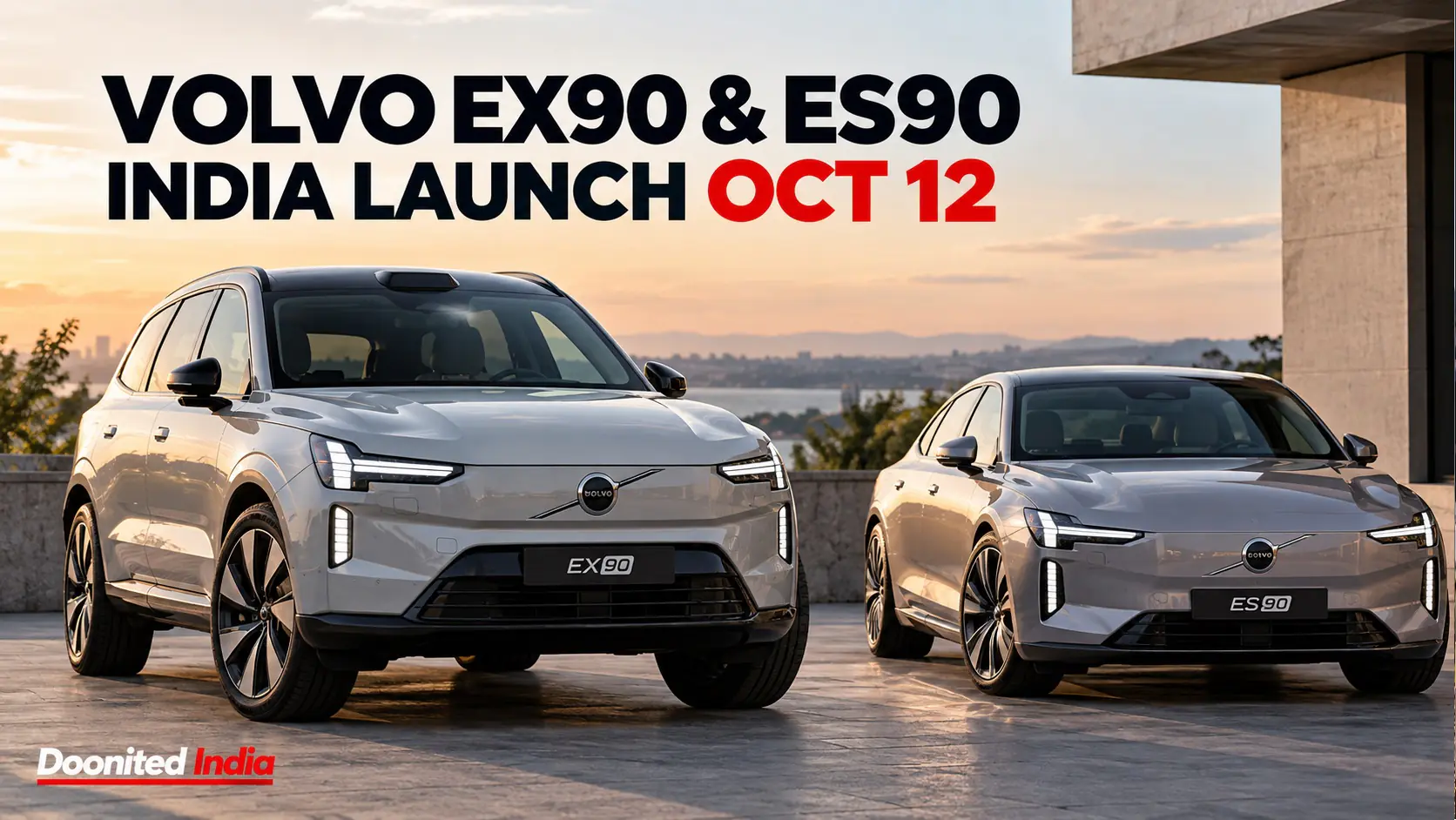
Volvo Cars India is preparing to introduce two flagship electric vehicles on October 12, 2026: the three-row EX90 SUV and the ES90 luxury sedan. The launch brings two distinct body styles to the top of Volvo’s Indian electric-car range—and marks the ES90’s return to the luxury-sedan conversation after the S90 was discontinued in India in 2025.
Both models use Volvo’s SPA2 platform with an 800-volt electrical architecture. International specifications quote a range of up to 625 km for the EX90 and up to 696 km for the ES90 under the WLTP test cycle. These are laboratory-cycle figures, not a guarantee of the distance either car will cover in Indian traffic, weather and driving conditions.
Two flagships, two different ideas of luxury
The EX90 and ES90 share an electric-vehicle foundation, but they address different needs. The EX90 is a large, three-row SUV designed around family space and a commanding driving position. The ES90 takes a lower, sedan-shaped approach, prioritising sleek proportions, cabin comfort and long-distance travel.

Volvo EX90: a spacious electric flagship
The EX90 sits at the top of Volvo’s SUV range. In global markets, it is offered with different battery and motor configurations; the 106kWh twin-motor version is quoted at up to 625 km of WLTP range. Volvo’s published specifications list all-wheel drive, 456 hp and 670 Nm for this configuration. The India launch will clarify which configuration and equipment package is offered locally.
Its three-row layout is a key part of its appeal. For Indian buyers who regularly travel with family, the EX90’s value proposition will depend on how comfortably adults can use the rear rows, how much luggage space remains with all seats occupied, and how easily passengers can enter and exit.
The large footprint may be an advantage on highways, but it can become a consideration in older city neighbourhoods, narrow parking ramps and crowded shopping districts. Luxury does not exempt a vehicle from the geometry of an Indian parking space.
Volvo ES90: the sedan returns to the spotlight
The ES90 represents Volvo’s renewed presence in the premium electric-sedan segment. Its long, low profile gives it a different character from the EX90, while the electric platform allows a flat floor and a cabin designed around digital interfaces and comfort.
The ES90’s quoted maximum WLTP range is up to 696 km in the relevant global configuration. Autocar India reports that the ES90 is available internationally with 92kWh and 106kWh battery options, although the final Indian specification remains to be confirmed.
Its return is notable because luxury buyers in India have increasingly gravitated towards SUVs. The ES90 gives Volvo an opportunity to serve customers who prefer a sedan’s lower stance and road manners, but are unwilling to compromise on electric range, technology or premium-cabin expectations.
SPA2 and 800V: why the architecture matters
Both vehicles are based on Volvo’s SPA2 platform, with an 800V electrical system. Higher-voltage architecture can support high-power DC charging and help manage electrical current, though the actual charging experience depends on the car’s battery condition, charger output, temperature and charging curve.
International specifications indicate DC charging capability of up to 350kW, with a 10–80% charging time reported at around 22–23 minutes under suitable conditions. That figure should not be read as a promise that every public charger in India will deliver the same result.
For Indian customers, the ownership question is broader than the vehicle’s maximum charging rate. Home-charging access, dependable highway fast chargers, service support and the ability to plan long journeys will all influence whether a flagship EV is convenient in daily use.
Range: impressive figures, with an important caveat
The headline figures—625 km for the EX90 and 696 km for the ES90—are based on the WLTP test cycle. They are useful for comparing vehicles under a standardised procedure, but actual range can vary significantly.
High speeds, air-conditioning use, heavy loads, steep gradients, temperature and driving style can all affect energy consumption. Indian buyers should therefore look for the India-spec battery and motor configuration, then consider a practical buffer for longer trips rather than planning every journey around the maximum published figure.
The ES90’s higher quoted range does not automatically make it the better choice for every buyer: the EX90 offers a different combination of passenger capacity, body style and utility.
Expected prices and import status
The prices of both models are expected to sit in the premium luxury-EV bracket, but online estimates vary. Until Volvo announces official prices, estimates should be treated as indicative rather than a basis for a firm purchase decision.
Reports have also described the two vehicles as CBU imports. The final launch announcement should be used to confirm the India-specific import route, variants and equipment. Import status can influence pricing, availability and the cost of certain parts, so it is a relevant ownership detail—not merely a technical footnote.
The Indian luxury-EV test: beyond the showroom
The EX90 and ES90 arrive in a market where premium EV buyers are weighing performance and technology against charging convenience, long-distance confidence and after-sales support.
Volvo’s established safety-focused identity gives the cars a clear brand context, while their electric platforms offer the packaging and performance advantages expected of modern flagship EVs. But the ownership experience will be judged over years, not during a launch presentation.
For the EX90, buyers should pay close attention to third-row usability, luggage capacity, manoeuvrability and the practicalities of charging a large SUV. ES90 shoppers should consider rear-seat comfort, ground clearance for Indian roads, boot usability and whether the sedan format suits their regular travel.
Both cars will also need a clear service and software-support proposition. A sophisticated digital cabin is only as reassuring as the reliability of its systems and the support available when something needs attention.
DOONITED View: the real luxury is confidence
The EX90 and ES90 give Volvo India two different ways to make its electric flagship proposition more complete. One is built around space and family utility; the other around the comfort and proportions of a luxury sedan.
The range figures and 800V architecture are meaningful technical credentials, but they are only part of the decision. For Indian buyers, confidence will come from the combination of real-world range, charging access, service support, warranty terms and a price that reflects the complete package.
The ES90’s arrival is especially interesting because it challenges the assumption that every premium buyer wants an SUV. Whether it can attract sedan loyalists will depend on the final specification and how convincingly Volvo communicates the benefits of its electric platform.
On October 12, the most important announcements may not be the headline range figures. They will be the India-spec variants, final prices, charging support and ownership terms that turn two impressive global products into practical choices for Indian customers.
Learning Point
Compare electric cars using the complete ownership picture, not range alone. Check the India-specific battery and motor configuration, realistic highway range, home-charging options, public charging access, warranty, service network and final on-road price before deciding between an electric SUV and sedan.


World Beyond the News
Octopuses Can Change Their Appearance
Octopuses can rapidly alter their skin colour and texture to communicate, camouflage themselves and respond to danger.
Some Cities Exist Across Two Continents
A small number of cities are geographically associated with two continents, creating unusual cultural and geographic identities.
Earth’s Climate Is Measured in Many Ways
Scientists track temperature, atmospheric gases, sea level, ice cover and other indicators rather than relying on a single climate number.
Streaming Changed How Audiences Discover Shows
Recommendation systems and global streaming releases allow audiences to discover programmes far beyond their original markets.