Groww Charges Explained: Zero Account Fees, Brokerage and the Real Cost of Investing
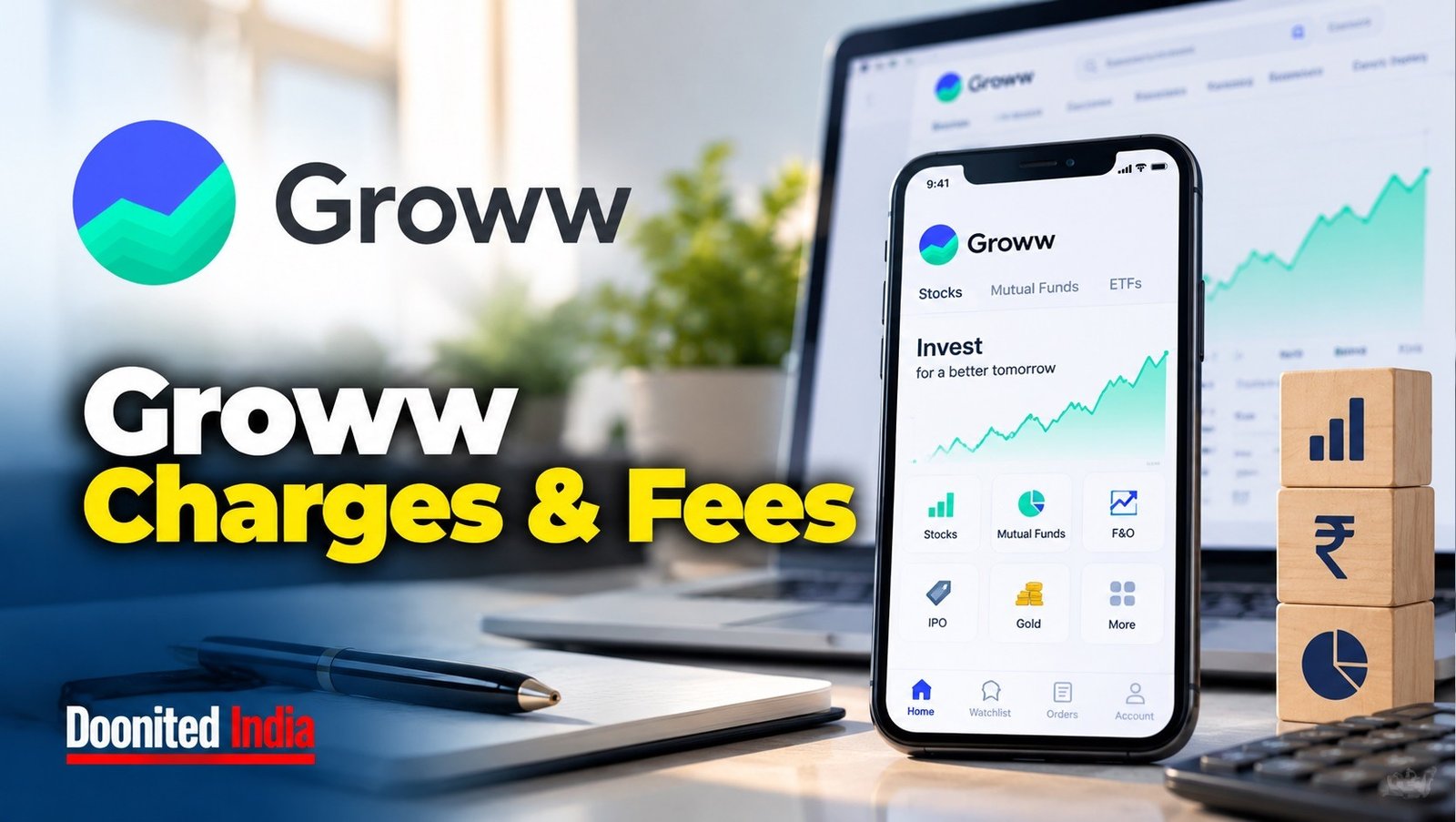
Opening a demat account has become easier for Indian investors, with digital platforms offering paperless onboarding and zero account-maintenance fees. Groww is among the platforms advertising ₹0 account-opening charges and ₹0 annual maintenance charges (AMC). But a free account does not mean every transaction is free.
Investors may still pay brokerage, securities transaction tax (STT), stamp duty, exchange transaction charges, GST and depository participant (DP) charges. The total depends on what is traded, whether the order is a buy or sell, and the value and frequency of transactions.
The distinction is important for first-time investors: account fees are the cost of keeping the account open; transaction charges are the cost of using it. Understanding both helps investors compare platforms on the basis of their actual trading habits, rather than a headline that says “zero”.
What does Groww offer for account opening?
Groww’s official demat-account page lists:
-
Account opening fee: ₹0
-
Annual maintenance charge: ₹0
-
Equity brokerage: lower of ₹20 or 0.1% of executed order value, subject to a ₹5 minimum
-
Futures and options (F&O) brokerage: ₹20 per executed order
The zero AMC applies even when an account remains inactive, according to Groww’s help information. This can be useful for long-term investors who buy shares occasionally and hold them for years.
However, the account’s zero-fee status should not be confused with zero-cost investing. Regulatory and statutory charges may apply when transactions take place, and selling shares from a demat account can trigger DP charges.
Equity delivery and intraday: how brokerage works
For equity delivery and intraday trades, Groww’s published pricing states that brokerage is the lower of ₹20 or 0.1% of the executed order value, with a minimum brokerage of ₹5.
Consider a hypothetical executed order worth ₹10,000. At 0.1%, the brokerage would be ₹10. For a ₹50,000 order, 0.1% would be ₹50, but the ₹20 cap would apply. These examples illustrate brokerage only; they do not include taxes, exchange charges or other applicable levies.
Intraday trading follows the same headline brokerage formula on Groww’s pricing page, but the statutory charges differ from delivery trades. Intraday positions are generally bought and sold within the same trading day, while delivery trades result in securities being credited to the demat account.
The order value, number of executed orders and type of trade all affect the final cost. Splitting a transaction into multiple orders can also change the total brokerage because charges are calculated per executed order.
Futures and options: flat brokerage, different risks
Groww lists brokerage of ₹20 per executed order for futures and options. A flat fee may make the brokerage component easier to estimate, but it does not make derivatives inexpensive or low-risk.
F&O transactions can involve exchange charges, statutory levies and other costs. Options also have their own STT and exchange-charge structures, which differ from equity delivery and intraday trading.
More importantly, derivatives can produce substantial losses, sometimes rapidly. Brokerage is only one part of the decision. Investors should understand contract size, expiry, margin requirements, liquidity and the possibility of losing the entire premium in certain options positions before trading.
The charges beyond brokerage
The following charges appear on Groww’s published equity pricing schedule. Rates are shown as listed on the pricing page; investors should check the live schedule before placing a trade.
|
Charge |
Equity delivery |
Equity intraday |
|---|---|---|
|
STT |
0.1% on buy and sell |
0.025% on sell |
|
Stamp duty |
0.015% on buy |
0.003% on buy |
|
Exchange transaction charge |
Applies on buy and sell |
Applies on buy and sell |
|
SEBI turnover charge |
Applies on buy and sell |
Applies on buy and sell |
|
DP charge |
On eligible demat sell transactions |
Generally not applicable as a demat delivery debit |
|
GST |
Applies to specified charge components |
Applies to specified charge components |
STT and stamp duty are statutory levies, not brokerage income. Exchange transaction charges and SEBI turnover charges are also separate from the broker’s fee. GST applies to specified services and charge components, rather than being a tax on the full value of every share transaction.
DP charges: the cost that can surprise delivery investors
When shares are sold from a demat account, a DP charge may apply. Groww’s pricing page lists a Groww charge of ₹16.50 plus the depository charge—₹3.50 for male investors and ₹3.25 for female investors—per eligible sell transaction. GST is additional on the applicable charges.
The pricing page also states that Groww waives its fee for a debit value below ₹100, leaving the depository charge applicable under the stated terms.
This is why a small delivery sale may have a different effective cost from a larger transaction. Investors who make frequent small sales should account for DP charges rather than comparing brokerage alone.
Direct mutual funds: no commission does not mean no cost
Groww offers direct mutual fund plans. Direct plans do not include the distributor commission associated with regular plans, which can mean a lower expense ratio for the same scheme.
But “zero commission” should not be interpreted as “zero expenses”. Mutual funds have scheme expenses reflected in the expense ratio, and investments remain subject to market risk. The fund’s current scheme documents and expense ratio are the appropriate sources for assessing those costs.
Investors should also distinguish between using Groww as a platform to access direct mutual funds and investing in a fund managed by Groww’s own asset management company. The platform and the fund are not the same thing.
How investors can compare the real cost
A meaningful comparison between investment platforms should look beyond account-opening fees. For a long-term delivery investor, AMC, brokerage, DP charges and the cost of holding investments may matter most. For an active trader, per-order brokerage, exchange charges, taxes and other trading-related costs can accumulate quickly.
Before opening an account, investors can use this checklist:
-
Check the current brokerage schedule for each segment you plan to trade.
-
Estimate charges for both buying and selling.
-
Include DP charges when calculating delivery-sale costs.
-
Check GST and statutory levies separately from brokerage.
-
Review any additional fees for pledging, delayed payments, auto square-off or other services you may use.
-
For mutual funds, compare direct and regular plans and review the scheme’s expense ratio.
Groww provides a brokerage calculator and a detailed pricing page, which can help estimate charges for a proposed transaction. The final contract note is the record to check after a trade has been executed.
DOONITED View: free entry is not free investing
Groww’s zero account-opening fee and zero AMC remove two recurring or upfront charges that can matter to investors, especially those who hold investments for the long term. Its published brokerage schedule is relatively straightforward to calculate: a capped fee for equity orders and a flat fee for F&O orders.
The catch is not unique to Groww. Brokerage is only one line in the transaction-cost picture. Statutory levies, exchange charges and DP fees can change the final amount, while frequent trading can multiply costs. A platform can make investing easier to access, but it cannot remove market risk—or make every trade worthwhile.
The sensible approach is to choose a platform based on the services and costs relevant to your own investing behaviour. A person investing periodically in direct mutual funds has different needs from someone trading intraday or derivatives. The same fee schedule can have very different implications for each.
Learning Point: Before placing a trade, estimate the total cost—not just the brokerage. Zero account fees are useful, but informed investing begins with understanding both the charges and the risks.


World Beyond the News
Why Elephants Stay Close to Their Herd
Elephants live in highly social family groups and use calls, touch and body movements to maintain strong bonds.
Most of the Deep Ocean Remains Difficult to Explore
Extreme pressure, darkness and distance make deep-ocean exploration one of Earth’s greatest scientific challenges.
Spacecraft Can Travel Without Traditional Roads
Spacecraft use carefully calculated trajectories and gravity assists to travel enormous distances through space.
Why Movie Trailers Are Released in Stages
Major films often use teaser trailers, full trailers and final promotional spots to build awareness over time.