The New Architecture of Light: Why Indian Homes Are Learning to Design With Illumination
A home can have beautiful furniture, expensive flooring and an impressive kitchen—and still feel wrong.
Often, the culprit is not something occupying physical space. It is light.
A ceiling fixture placed too centrally can flatten a room. A badly positioned downlight can produce glare exactly where a person wants to read. A bright white lamp switched on throughout the evening can make a supposedly relaxing living room feel more like an office.
That is why lighting is increasingly being treated not simply as an electrical specification but as part of the architecture of a home.
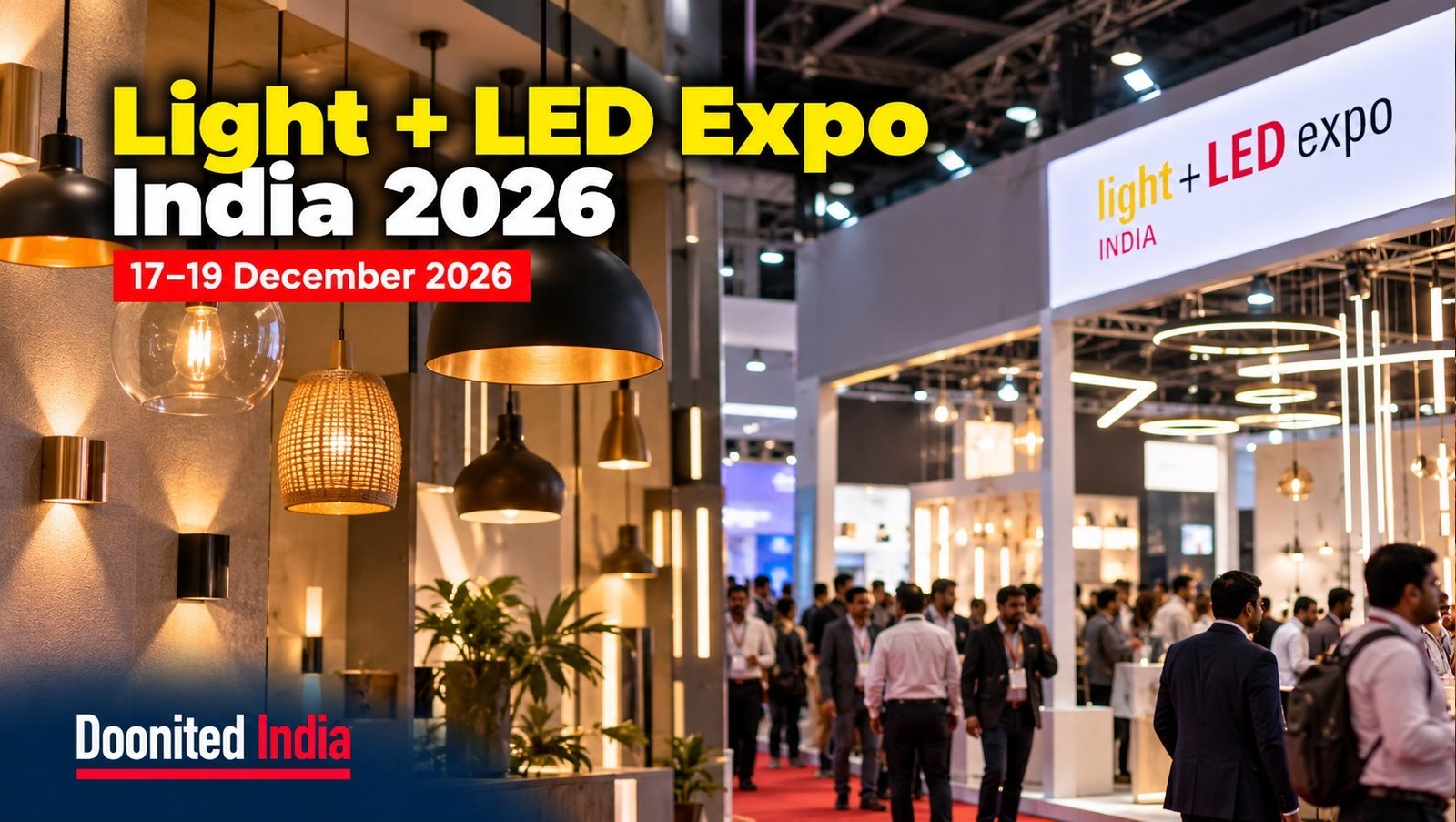
The shift will be visible at Light + LED Expo India 2026, scheduled for 17–19 December 2026 at Yashobhoomi (IICC), Dwarka, New Delhi. Organised by Messe Frankfurt Trade Fairs India, the exhibition is focused on intelligent lighting technology, LEDs, components, architectural and decorative lighting and related applications.
But the more interesting story lies beyond the exhibition floor.
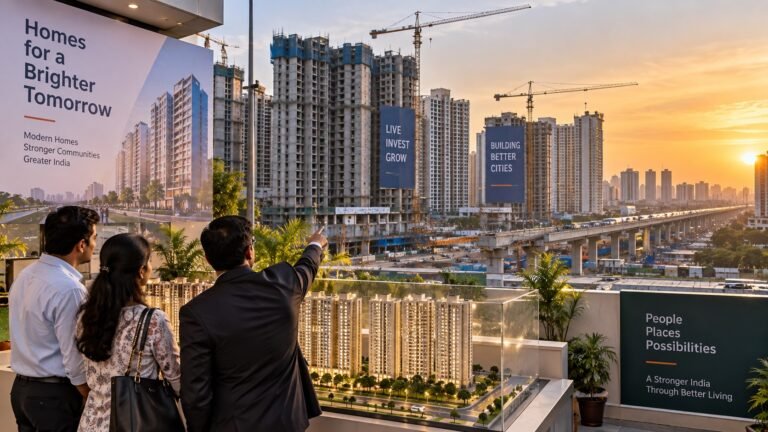
India’s homes are changing. Apartments are becoming more compact in many urban markets, interiors are expected to perform multiple functions, and homeowners increasingly want spaces that can shift from work to dining to entertainment to rest without physically changing the room.
Light is one of the few architectural tools capable of doing that almost instantly.
The small-home problem: making four walls feel less like four walls
In a compact apartment, every square metre matters.
Furniture can occupy space. Partitions can divide it. Heavy decorative fixtures can make the ceiling feel visually lower.
Lighting, however, can create the impression of depth without adding a single square metre.
A common design principle is to avoid making one bright ceiling fixture responsible for the entire room. Instead, light can be distributed vertically and horizontally: wall-washing can emphasise surfaces, concealed linear lighting can trace architectural edges, and carefully positioned lamps can illuminate corners that would otherwise disappear into shadow.
The result is not magic. The walls have not moved.
But the eye no longer reads the room as one small illuminated box.
This is particularly useful in Indian apartments where living rooms may have to perform several jobs at once. The same space may be a family room in the afternoon, a workspace during the day and an entertainment area at night.
A layered lighting system can allow those identities to change without changing the furniture.
That is the beginning of what designers mean when lighting becomes part of spatial architecture.
Luxury does not necessarily mean more light
Large homes have the opposite problem.
When there is abundant floor area, the temptation can be to illuminate everything. Yet a luxury interior often becomes more convincing when everything is not equally bright.
A painting may require accent lighting. A textured stone wall may need grazing light. A dining table may benefit from a concentrated pool of illumination while the surrounding space remains softer.
This creates hierarchy.
The eye moves from one element to another rather than receiving the entire room at the same visual volume.
Concealed coves, recessed fixtures, wall washers, pendant lights, floor lamps and architectural spotlights can therefore work together as a lighting composition.
The fixture itself may disappear.
That is perhaps the clearest sign of sophisticated lighting: you notice the room before you notice the equipment producing the light.
The most important room may be the one where nothing dramatic happens
There is another reason the lighting conversation is becoming more serious: homes are not galleries.
People sleep, read, cook, work, eat, talk and watch television in them.
Light therefore influences not only how a room looks but how it is used.
Research has established that evening light can affect the body’s circadian system. A field study of home environments found that manipulating evening household light could shift circadian timing, while later research has shown that residential lighting can have highly variable effects depending on both the light environment and individual sensitivity.
This does not mean every cool-white LED is a health hazard, nor does it justify the simplistic idea that “blue light is bad”.
The more useful lesson is about timing and intensity.
Bright, cooler light can make sense when people need alertness and visual clarity. In the evening, lower and warmer illumination can help create a clearer transition towards rest. International expert recommendations have similarly proposed substantially lower melanopic exposure during the evening and very low ambient light during sleep.
For homeowners, the practical implication is surprisingly simple:
The light needed for cooking at 7 p.m. does not necessarily need to remain the light needed for relaxing at 10:30 p.m.
One switch for an entire room is increasingly an outdated concept.
Smart lighting is useful only when it solves a real problem
This is where the smart-home industry enters the picture.
Connected lighting can offer dimming, scheduling, colour-temperature adjustment, occupancy sensing and integration with other home systems. The technology makes it possible for lighting to respond to time, activity or user preference rather than remaining static.
But smart does not automatically mean better.
A ₹5,000 smart bulb that requires a smartphone application every time somebody wants to switch it off is not necessarily an improvement over a well-designed conventional circuit.
The better question is: What problem is the technology solving?
Automatic corridor lighting can be useful. Scene-setting in a living room can be useful. Gradual evening dimming can be useful. Lights that respond to occupancy in areas frequently left illuminated can save energy.
Technology becomes decoration when it exists mainly to demonstrate that the house has technology.
Energy efficiency changes the equation
India’s lighting revolution also has a practical foundation: energy.
The Bureau of Energy Efficiency identifies lighting as an important component of household electricity consumption and has promoted LED adoption as part of India’s broader energy-efficiency strategy. BEE’s material on LED lamps notes substantial energy savings compared with older incandescent technology, while LED lamps are also covered under its Standards & Labelling programme.
But energy efficiency cannot be separated from design.
A highly efficient lamp used excessively is still unnecessary consumption.
Likewise, daylight should not be treated as something that must be defeated by artificial lighting. India’s residential energy-efficiency framework explicitly considers daylighting and natural ventilation as part of building performance.
The smartest lighting plan may therefore begin with a surprisingly low-tech question:
How much artificial light does this room actually need during the day?
Indian homes need lighting designed for Indian life
There is also a cultural dimension that international lighting trends sometimes overlook.
Indian homes are rarely used in exactly the same way throughout the day.
A living room can host morning prayer, children’s homework, a work meeting, lunch with relatives and an evening gathering. Kitchens can remain active for long periods. Balconies and terraces become social spaces when weather permits. Festivals temporarily transform ordinary rooms with diyas, decorative lights and colour.
The lighting system therefore needs flexibility rather than a single visual identity.
This is particularly important as Indian interior design moves between traditional materials and contemporary architecture. Brass, wood, stone, textiles, artwork and craft surfaces can respond very differently to the same light source.
Good lighting reveals those differences.
Bad lighting hides them.
The hidden cost of fashionable lighting
There is, however, a danger in turning every lighting problem into a technology opportunity.
The industry can easily sell homeowners more fixtures when the real answer is fewer, better-positioned sources.
A room covered in downlights is not automatically better designed. Neither is a ceiling filled with LED strips.
Glare, excessive brightness, poor colour rendering, difficult maintenance and complicated controls can make an expensive lighting installation less comfortable than a simpler one.
The environmental question also remains relevant. Energy-efficient operation is only one part of sustainability; products have physical materials, electronics, drivers, packaging and eventual disposal requirements.
The future of residential lighting should therefore not be measured only by how many features a lamp has.
It should be measured by how well the entire lighting system performs.
The real luxury is control
Perhaps the most important change is philosophical.
For decades, residential lighting was largely specified as a collection of electrical points: one here, two there, a fan point, a tube light, perhaps a decorative chandelier.
The emerging approach is different.
Where should attention fall?
Where should the room feel calm?
Where should a person work?
What should remain in shadow?
How should the room change after sunset?
And, increasingly, what kind of light should the occupants receive at different times of day?
Those are architectural questions.
Light + LED Expo India’s 2026 edition reflects an industry moving towards intelligent lighting, connected systems and applications beyond the conventional bulb-and-fixture market. The organiser describes the New Delhi show as a platform for smart lighting technology, components and next-generation LED applications.
For the homeowner, however, the lesson is much simpler.
The next generation of Indian homes may not necessarily have more light.
They may have better light.
And that distinction matters.
Because architecture tells us where we live.
Furniture tells us how we occupy the space.
But light tells our eyes—and often our bodies—how that space should feel at a particular moment.
That makes lighting more than decoration.
It makes it an invisible layer of architecture.
DOONITED Editorial Perspective: The lighting industry should resist the temptation to equate innovation with complexity. The best residential lighting system may ultimately be the one occupants barely notice: efficient when it needs to be, adjustable when circumstances change, visually comfortable, respectful of sleep and daylight, and simple enough that nobody needs a manual to turn the living room into a living room.


World Beyond the News
Bees Communicate Where Food Is
Honeybees use movement patterns known as waggle dances to communicate information about food locations.
Street Food Reflects Local History
Many famous street foods developed from migration, trade, local ingredients and the everyday needs of working communities.
A Day on Venus Is Extremely Long
Venus rotates so slowly that one rotation relative to distant stars takes longer than its trip around the Sun.
Human Achievement Continues to Push Limits
Athletes, engineers, scientists and explorers regularly establish new benchmarks in speed, endurance, scale and precision.