UPI Merchant Fees Deferred Until After Diwali: What India’s New Payment Rules Mean for Shoppers and Businesses
India’s planned merchant discount rate on selected high-value UPI payments has been postponed from 15 October 2026 until after Diwali, with the revised date still to be announced. The proposed framework would charge eligible merchants—not consumers—on certain transactions above ₹2,000. The decision brings temporary relief during the festive shopping season, but leaves a bigger question unresolved: how should India fund the infrastructure behind its hugely popular digital payments system without undermining the low-cost convenience that made UPI successful?
Paying by scanning a QR code has become an ordinary part of shopping in India. A customer buys a household appliance, pays a restaurant bill or settles an invoice, and the money moves without cash changing hands. For many people, the convenience is so familiar that the cost of operating the system barely enters the conversation.
That may change for some businesses—not because customers are about to be charged a new UPI fee, but because the payment industry is preparing to introduce a merchant discount rate (MDR) on selected transactions.
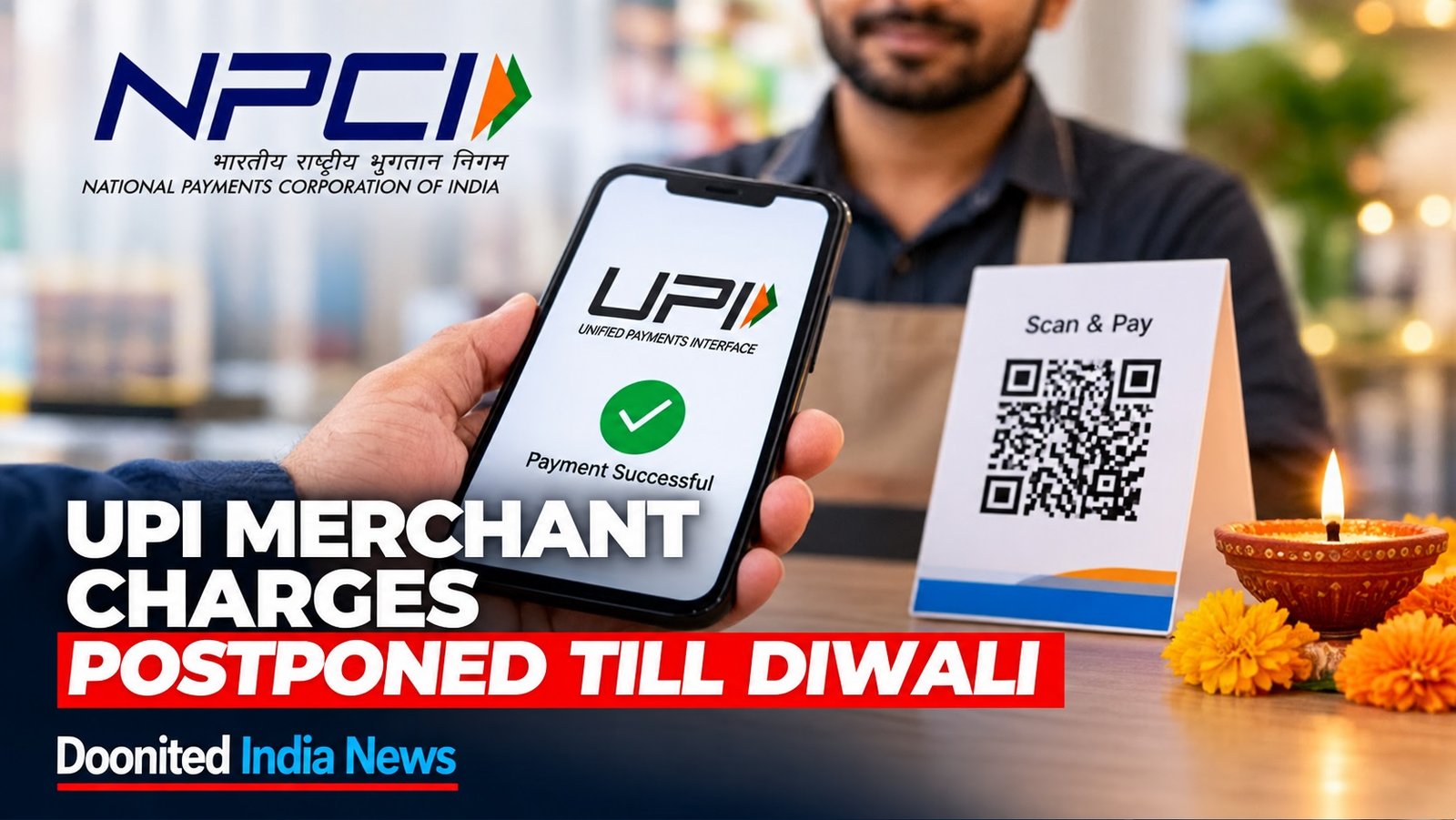
The National Payments Corporation of India (NPCI) has deferred the planned implementation from 15 October 2026 until immediately after Diwali, saying the new date will be notified separately. The postponement follows concerns from trader and retail associations about adding a new operating cost during one of the busiest shopping periods of the year. The proposed fee structure has not been cancelled.
For consumers, the most important distinction is this: the proposed MDR is a charge paid by eligible merchants, not a fee to be deducted from a customer’s UPI payment. Person-to-person transfers remain free, and merchant payments of ₹2,000 or less are outside the proposed charge.
For businesses, however, the change could affect the economics of accepting digital payments—particularly where margins are thin and transaction values are high.
What exactly is changing?
The Department of Financial Services published a framework for MDR on selected person-to-merchant (P2M) UPI transactions on 15 September 2026. It was initially scheduled to take effect on 15 October, before NPCI deferred the rollout until after Diwali. The final implementation date remains unannounced.
Under the published framework, the main proposed rates are:
Standard eligible merchant transactions above ₹2,000: MDR of 0.4%, capped at ₹300 per transaction for payments of ₹75,000 and above.
Specified sectors: A flat ₹5 fee on eligible transactions above ₹2,000 in categories including fuel, railways, telecom, insurance and designated utility payments.
Capital-market transactions: A concessional MDR of 0.02%, capped at ₹300, for specified payments involving mutual funds, securities and stockbrokers.
Person-to-person transfers: No MDR.
Merchant payments of ₹2,000 or less: No MDR under the proposed framework.
Eligible micro-merchants: Vendors classified under the P2PM framework, receiving up to ₹1 lakh a month through UPI QR payments, remain exempt.
The merchant’s classification matters. A small vendor receiving an individual payment above ₹2,000 does not automatically become liable if the account qualifies for the exempt P2PM category. Businesses should confirm their classification and applicable rates with their acquiring bank or payment service provider rather than assuming that every QR code will be treated identically.
The government’s FAQ says more than 95% of UPI merchant transactions by volume are valued at ₹2,000 or less. The proposed fee is therefore intended to affect a minority of merchant transactions, although higher-value payments can account for a much larger share of the total money transferred.
What will customers pay?
Under the published framework, consumers are not supposed to pay MDR directly. A merchant accepting a qualifying payment would pay the processing fee through the payment system’s acquiring arrangements. UPI app providers are also prohibited under the framework from adding a platform fee for making the payment.
Consider three examples:
A customer pays ₹3,000 at a participating merchant. At 0.4%, the merchant’s MDR would be ₹12.
A customer pays ₹50,000. The fee at 0.4% would be ₹200.
A customer pays ₹1 lakh. The percentage calculation would be ₹400, but the proposed cap limits the merchant’s MDR to ₹300.
These amounts illustrate the proposed framework; they do not mean the fee is already being collected. The rollout has been deferred, and the implementation date is pending.
The prohibition on directly passing the MDR to customers is important. A merchant should not add a separate “UPI charge” to a bill simply because a payment was made through UPI. If a customer encounters such a surcharge, they should ask for an explanation and retain the receipt.
There is nevertheless an economic question beyond the checkout counter. Businesses absorb many operating costs, but some may respond to sustained cost increases by adjusting prices, changing payment preferences or reducing other expenses. That is a possibility, not proof that general retail prices will rise because of this policy. The actual effect will depend on competition, margins and the extent to which merchants can absorb the charge.
Why introduce a fee after years of zero MDR?
UPI’s growth has been supported by the simplicity of bank-account-to-bank-account payments and a policy environment designed to encourage digital adoption. The zero-MDR approach helped merchants accept digital payments without paying a conventional processing fee on eligible bank-account-funded UPI transactions.
But a payment system that feels free to its users still requires infrastructure. Banks, technology providers and payment companies must maintain servers, transaction routing, fraud monitoring, cybersecurity, customer support and dispute-resolution systems.
The Department of Financial Services’ September FAQ cites industry estimates of around ₹20,000 crore a year to maintain UPI operations, including infrastructure and fraud prevention. That is an industry estimate reproduced in the government document, not an independently audited figure presented here. The government argues that a threshold-based MDR can provide a more dependable revenue stream for the ecosystem and support further investment.
The underlying issue is legitimate: a system handling billions of transactions cannot rely indefinitely on funding arrangements that leave its operating costs unclear or unevenly distributed. Yet the method of recovering those costs matters. UPI’s low-friction model is itself a public benefit, and new charges could affect merchant behaviour if the rules are poorly designed or communicated.
The question is not simply whether payment companies need revenue. It is whether the proposed structure distributes costs fairly, protects small businesses and preserves the reasons people adopted UPI in the first place.
Why trader groups pushed back
For retailers, the timing was as important as the amount. The festive period brings higher sales, more customer traffic and a greater need for reliable payment processing. Introducing new fees, changing billing systems and explaining the rules to staff immediately before Diwali could create avoidable friction.
The Retailers Association of India said on 13 October that the proposed rollout had been deferred and that it would continue to seek reconsideration of the framework. Trade associations have raised concerns about the burden on merchants and the possibility that some businesses could shift customers towards cash or other payment methods.
The postponement offers time for businesses and payment providers to prepare, but it does not resolve the wider disagreement. Retailers may still seek changes to the thresholds, exemptions or rate structure.
There is also a practical risk in a system with several categories. Merchants need to know whether a transaction is subject to the standard percentage rate, a sector-specific flat rate or an exemption. If classification is confusing, disputes over deductions could damage trust in digital payments even when the customer-facing payment remains free.
Clear communication from banks, payment aggregators and NPCI will therefore be essential before implementation.
Will small businesses and consumers be protected?
The proposed exemptions are designed to shield everyday payments and eligible micro-merchants. That matters for street vendors, small retailers and service providers, for whom even modest charges can add up over many transactions.
However, an exemption on paper is only useful if a merchant is correctly classified and understands the rules. Banks and payment providers should make the applicable category, fee and settlement deductions easy to see. Merchants should be able to check their account classification and challenge incorrect charges without a complicated process.
Consumers should also avoid unnecessary workarounds. Splitting a legitimate purchase into several smaller transactions solely to avoid a fee could create confusion and may conflict with a merchant’s billing or payment procedures. Customers should not be asked to pay an extra UPI surcharge simply because a merchant is liable for MDR.
For businesses, the sensible response is to compare the actual cost of accepting each payment method, review margins and ask their provider for written clarification. The change should not be treated as a reason to abandon digital payments before the final date and operational details are confirmed.
The larger question: who pays to keep digital payments reliable?
UPI has become important not only for urban consumers but also for small enterprises, service providers and businesses operating across India. Its value lies in more than convenience: digital transactions can make payments easier to record, reduce the need to handle cash and help businesses serve customers who do not carry physical money.
The proposed MDR brings a basic economic question into the open. If customers are to continue paying nothing directly, and the payment infrastructure must remain secure and dependable, the system still needs a sustainable way to finance its operations. Merchant fees are one possible route, but their design must account for the diversity of Indian businesses.
The deferral is a temporary pause, not a final verdict on the policy. The next steps should include a clear implementation date, unambiguous category rules, transparent settlement statements and a way to monitor whether fees change merchant acceptance or consumer behaviour.
India’s digital payments success was built on ease of use and broad participation. A sustainable payment system must protect those strengths while paying for the infrastructure behind them. The real test of the new MDR framework will be whether it funds a more resilient system without making digital payments less attractive for the businesses and customers who made UPI ubiquitous.


World Beyond the News
Why Elephants Stay Close to Their Herd
Elephants live in highly social family groups and use calls, touch and body movements to maintain strong bonds.
Most of the Deep Ocean Remains Difficult to Explore
Extreme pressure, darkness and distance make deep-ocean exploration one of Earth’s greatest scientific challenges.
Spacecraft Can Travel Without Traditional Roads
Spacecraft use carefully calculated trajectories and gravity assists to travel enormous distances through space.
Why Movie Trailers Are Released in Stages
Major films often use teaser trailers, full trailers and final promotional spots to build awareness over time.