How India’s Celebrations Are Creating New Markets for Local Products
India has a remarkable commercial calendar.
Before one festival’s decorations have been packed away, another celebration is already approaching.
Garba outfits appear.
Then Bengali saris.
Then diyas.
Then bamboo baskets.
Then winter handicrafts.
Then Christmas décor.
For consumers, it is a calendar of celebrations.
For thousands of artisans, designers, small manufacturers, retailers and online sellers, it can become something much more important:
a year-round market.
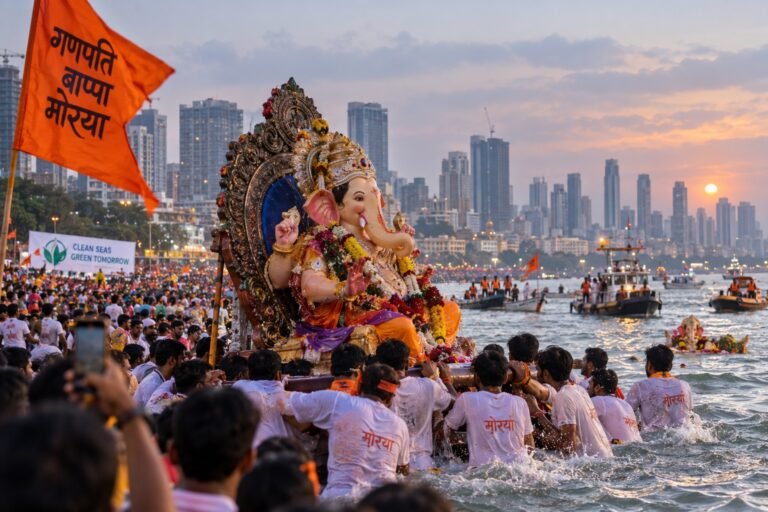
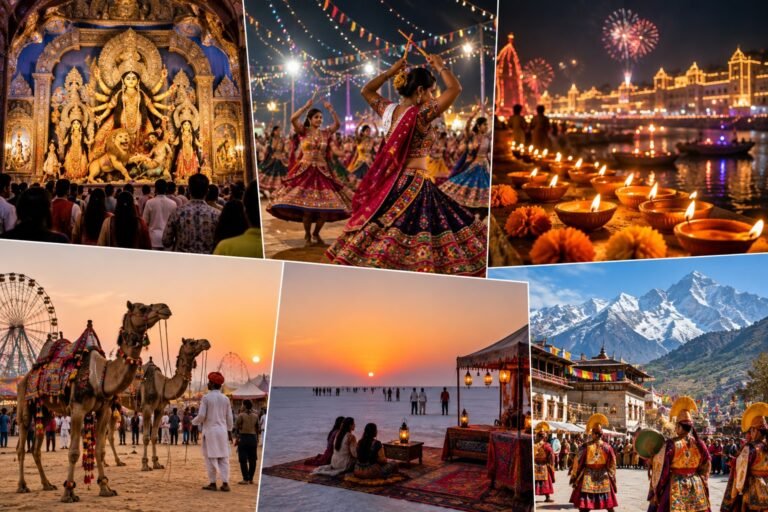
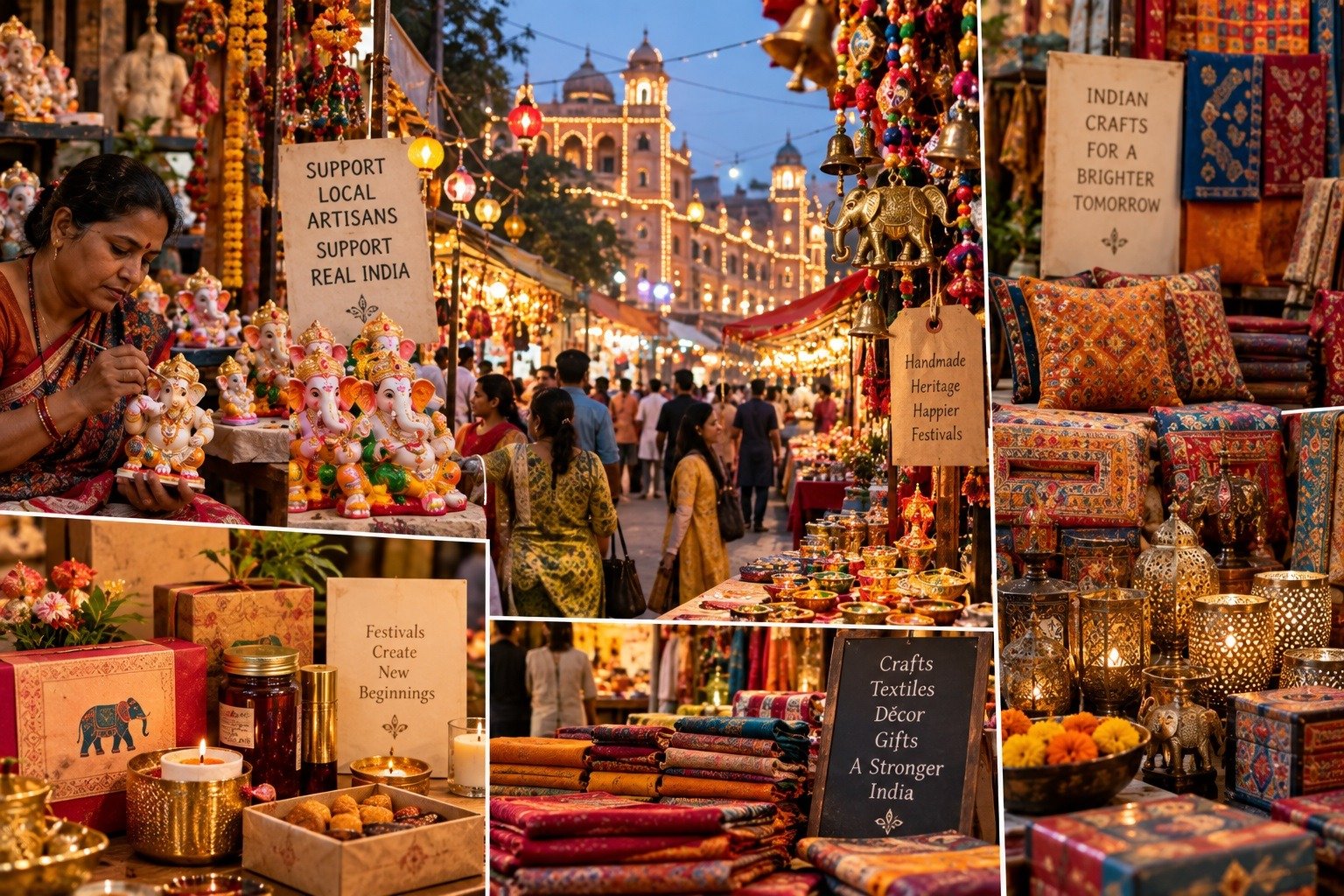
India’s festivals are increasingly creating opportunities for regional products to travel far beyond the places where they originated. A customer in Delhi can buy Kutch embroidery. A family in Bengaluru can order Bengali décor. A Mumbai household can purchase Banarasi textiles online. And a shopper in Hyderabad can discover handicrafts from the Northeast without boarding a flight.
The festival is local.
The market is increasingly national.
The opportunity begins with Navratri
Navratri and the Garba season create a particularly visible fashion market.
Chaniya cholis, dupattas, jewellery, embroidered accessories and ethnic footwear become seasonal products, especially in Gujarat and communities across India’s major cities.
But the opportunity is larger than selling another colourful outfit.
Garba has become a cultural export within India.
A Gujarati festival tradition now creates demand in cities far outside Gujarat, giving textile producers, embroidery artisans, jewellery makers and ethnic-fashion businesses a much larger customer base.
The commercial lesson is straightforward:
culture can travel faster than geography.
A small artisan business does not necessarily need a shop in Ahmedabad to participate in the Garba economy.
It needs good products, reliable fulfilment, strong photography and access to customers.
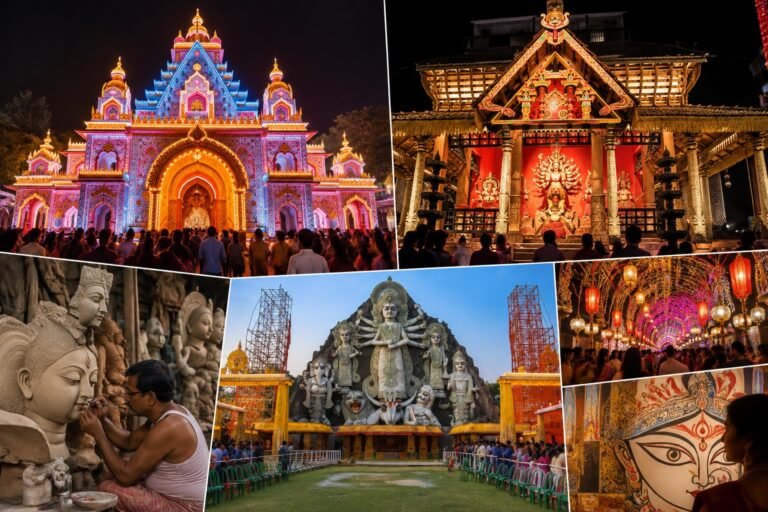
Durga Puja turns craft into culture
Durga Puja creates another distinctive market.
The obvious products include Bengali saris, jewellery, home décor and devotional items.
But the cultural opportunity is broader.
Handloom textiles, terracotta, traditional decorative crafts and Bengal-inspired home products can become part of the festival shopping experience.
The Ministry of Textiles has repeatedly highlighted the role of India’s handloom and handicraft sectors in preserving traditional skills while generating livelihoods. The challenge for sellers is to ensure that the commercialisation of regional craft does not erase the identity and craftsmanship that make the product valuable in the first place.
A machine-made product can copy a pattern.
It cannot automatically reproduce the story behind the craft.
Dussehra is a smaller shopping category — but a useful bridge
Dussehra is often commercially overshadowed by the much larger Diwali shopping season.
Yet it creates opportunities around festive décor, diyas, traditional clothing, gifts and religious products.
For small sellers, that can make Dussehra useful as a transition festival.
The same customer who buys festive clothing or décor for Navratri can be offered products for Dussehra and then Diwali.
The smarter businesses are not thinking:
“Which festival should I sell for?”
They are thinking:
“How do I serve the same customer across the entire festive season?”
That is a significant difference.
Diwali is India’s giant marketplace
If India’s festival calendar were a railway timetable, Diwali would probably require its own control room.
Diyas.
Candles.
Rangoli products.
Torans.
Lighting.
Home décor.
Clothing.
Sweets.
Corporate gifts.
Gift hampers.
The possibilities are enormous.
But Diwali is also where competition becomes intense.
A generic decorative product can quickly become a price-war commodity.
This creates an opportunity for differentiation.
Handmade diyas rather than mass-produced plastic décor.
Regional crafts rather than anonymous “ethnic” products.
Personalised gift hampers rather than standard boxes.
Natural materials rather than disposable decorations.
The premium opportunity is increasingly in story + craftsmanship + presentation.
Chhath shows why regional knowledge matters
Chhath Puja demonstrates another important principle of festival commerce.
A product can be highly relevant in one region and almost invisible commercially somewhere else.
Puja baskets, bamboo products, traditional offerings and devotional items have particular cultural importance around Chhath, especially in Bihar, Jharkhand, eastern Uttar Pradesh and among diaspora communities.
For businesses, this creates a clear lesson:
India is not one festival market. It is hundreds of overlapping regional markets.
Understanding that difference is essential.
A national marketplace that treats every festival as a generic “festive collection” may actually understand Indian consumers less than a small regional seller who knows exactly what a particular family needs.
The craft opportunity gets more interesting in Rajasthan and Gujarat
The Pushkar Fair and Rann Utsav create opportunities that go beyond conventional festival merchandise.
Pushkar brings together Rajasthan’s textiles, handicrafts, jewellery, home décor and traditional craft traditions within a major tourism environment.
Rann Utsav provides a showcase for Kutch’s extraordinary craft ecosystem — including embroidery, Ajrakh, Bandhani and other regional textile and artisan traditions.
These events demonstrate the commercial relationship between tourism and craft.
A traveller who discovers a craft in its place of origin can become a customer long after returning home.
That creates a powerful possibility for artisans:
the tourist becomes a long-term customer.
Digital commerce can extend that relationship.
Northeast India has an underused festival opportunity
Tawang Festival presents another kind of commercial possibility.
North-Eastern India has a rich craft landscape involving bamboo, textiles, weaving and handmade products, but national retail visibility remains uneven.
A festival such as Tawang can function as a cultural showcase as well as a tourism event.
The opportunity is not to turn Northeast crafts into generic “tribal décor.”
It is to bring authentic regional products to wider markets while retaining information about their origin, materials and makers.
That means provenance becomes important.
Who made it?
Where?
Using what technique?
With what material?
And, increasingly, was the artisan paid fairly?
The answers can become part of the product itself.
Konark demonstrates the power of heritage
The Konark Festival creates a different combination: performing arts, architecture, tourism and Odisha’s craft traditions.
Odisha’s handloom, silver filigree and other traditional crafts can benefit from the visibility created by cultural tourism.
This is an important business model for India’s heritage destinations.
A visitor should not leave with only photographs.
They can leave with a piece of the local creative economy.
That does not mean every tourist needs to buy something.
It means tourism can create an economic bridge between heritage preservation and artisan livelihoods.
Christmas is now an Indian market too
Christmas has a particularly interesting position in India’s festival economy.
Candles, décor, gift products and festive hampers have a nationwide retail market, even though Christmas traditions vary substantially between regions and communities.
For Indian businesses, this creates opportunities for locally produced candles, handmade décor, bakery products, gift boxes and personalised products.
It also demonstrates how India’s commercial festival calendar increasingly includes celebrations with different religious and cultural origins.
The marketplace is diverse because the country is diverse.
The real opportunity: festival-to-festival commerce
The biggest opportunity may not lie in any individual festival.
It lies in the sequence.
Navratri → Dussehra → Diwali → Chhath → Christmas.
Different regions.
Different products.
Different cultural stories.
But overlapping consumers.
An online business can create seasonal collections months in advance.
A textile business can produce festive clothing.
A home-decor brand can build multiple collections around regional aesthetics.
A candle maker can serve Diwali and Christmas.
A handicraft seller can connect Pushkar and Rann Utsav tourism demand with year-round online sales.
This turns the festival calendar into a commercial pipeline rather than a series of isolated events.
But there is a danger: turning everything into “festive”
Indian e-commerce has developed a predictable habit.
Add gold text.
Add marigolds.
Write “Festive Collection.”
Increase the price.
Call it heritage.
Job done.
Not quite.
The opportunity is strongest when the product genuinely reflects the festival or region.
Authenticity matters because consumers are becoming more aware of craft origins and materials.
There is also a responsibility not to appropriate community traditions simply because a pattern looks attractive.
A product inspired by Kutch embroidery is not necessarily a Kutch craft product.
A machine-printed “Ajrakh-style” fabric is not automatically Ajrakh.
And a generic candle with a diya printed on the box does not suddenly become a cultural artefact.
India’s festival economy needs better storytelling, not simply more decoration.
From artisan to digital entrepreneur
The internet changes the economics considerably.
An artisan who once depended on festival tourists can now potentially reach customers throughout the year.
Instagram can create discovery.
Marketplaces can provide distribution.
WhatsApp can support direct orders.
A dedicated website can build a brand.
Short-form video can demonstrate how a product is made.
The strongest opportunity may therefore be to combine traditional production with modern distribution.
India does not need to choose between craft and commerce.
It needs better systems connecting the two.
The DOONITED View
India’s festival economy should not be understood merely as an opportunity to sell more products.
It is an opportunity to make India’s regional creativity commercially visible.
The most interesting products of 2026 may be those that give consumers three things simultaneously:
something useful, something beautiful and something meaningful.
A handmade textile is not merely clothing.
A Kutch embroidery piece is not merely décor.
A bamboo basket is not merely packaging.
A traditional candle is not merely a light.
Each can carry a story about a place, a technique and a person.
The businesses that understand this will have an advantage over sellers competing only on price.
India’s festivals already create enormous emotional energy.
The next opportunity is to connect that energy with artisan livelihoods, responsible production and digital commerce.
That would turn the festival calendar into something more valuable than a shopping calendar.
It could become a year-round marketplace for India’s cultural economy.
The Learning Point
The biggest festival-commerce opportunity is not selling a product because a festival is coming. It is helping customers discover the people, places and traditions behind that product.
India has no shortage of festivals.
What it needs is more businesses capable of turning those celebrations into sustainable markets for authentic Indian creativity.

World Beyond the News
Why Elephants Stay Close to Their Herd
Elephants live in highly social family groups and use calls, touch and body movements to maintain strong bonds.
Most of the Deep Ocean Remains Difficult to Explore
Extreme pressure, darkness and distance make deep-ocean exploration one of Earth’s greatest scientific challenges.
Spacecraft Can Travel Without Traditional Roads
Spacecraft use carefully calculated trajectories and gravity assists to travel enormous distances through space.
Why Movie Trailers Are Released in Stages
Major films often use teaser trailers, full trailers and final promotional spots to build awareness over time.