Bundi to Banaras: How India’s Historic Cities Are Turning Heritage Into a Living Economy
Bundi and Banaras are approaching the same challenge from different directions: how can a historic city make its living culture economically relevant without turning heritage into a museum display? Their answer is increasingly found in festivals, crafts, food, art, architecture and the city itself.
A heritage town can survive in two very different ways.
It can become a place where visitors arrive, photograph a monument, buy a souvenir and leave.
Or it can become a place where the visitor’s presence activates the streets, workshops, kitchens, galleries, performances and small businesses that make the city culturally alive.
India’s historic cities are increasingly experimenting with the second model.
Two events in November 2026 illustrate the shift particularly well.
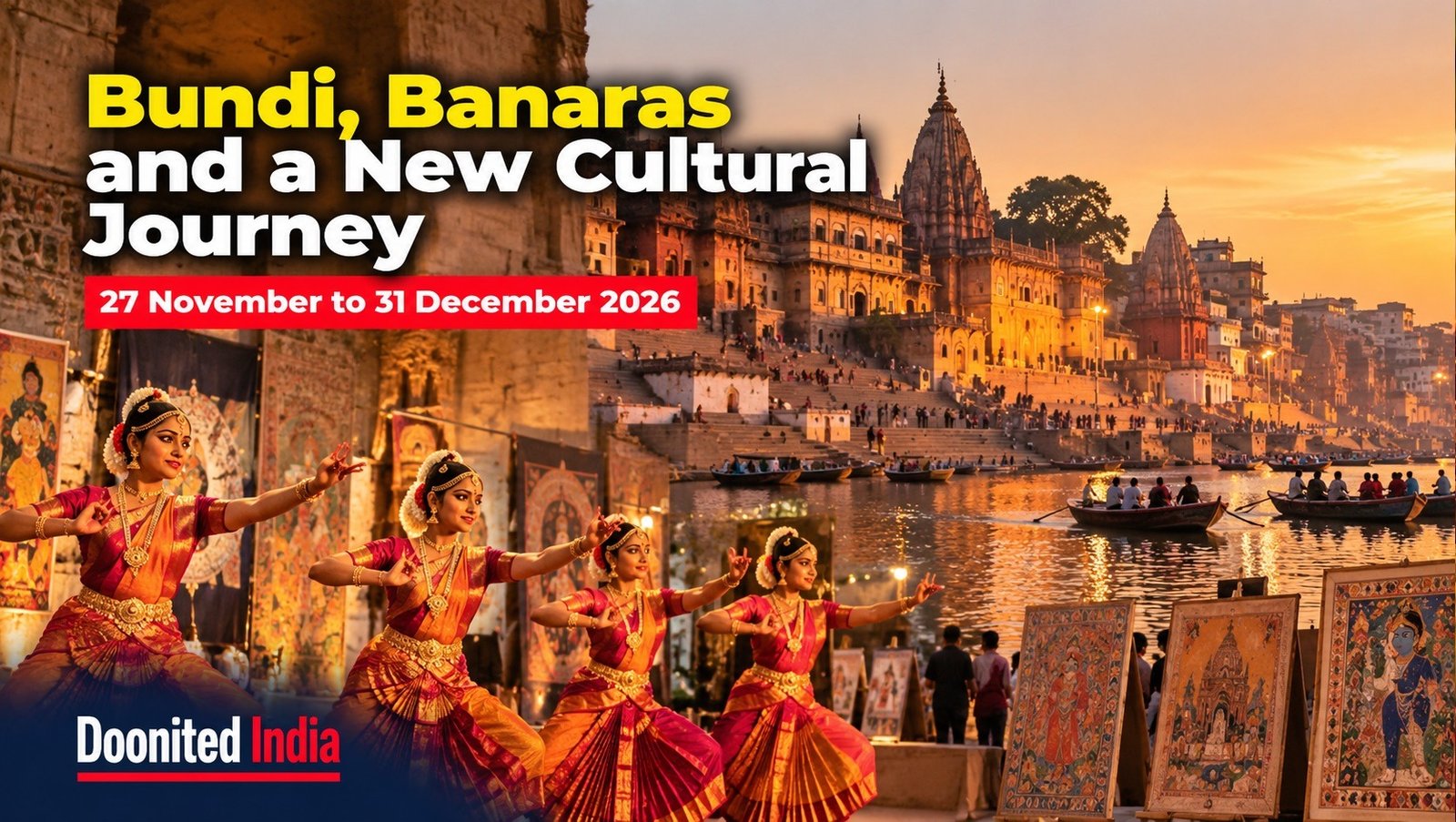
In Rajasthan, the Bundi Festival returns from 27–29 November, combining traditional art and crafts, music and dance, exhibitions, competitions and community celebrations. In Banaras, the inaugural CII Banaras Culture Biennale opens on 27 November and continues through 31 December, spreading exhibitions, textiles, food, music, public programmes and contemporary artistic encounters across multiple institutions and public spaces.
They are very different events.
Bundi’s festival grows from the cultural identity of a historic Rajasthani town.
Banaras’s biennale is a new, industry-led cultural platform backed by CII and supported by the Ministry of Culture, Ministry of Tourism, Government of Uttar Pradesh and Banaras Hindu University.
Yet both are testing the same proposition:
Can heritage become an economic ecosystem rather than simply an attraction?
Bundi’s advantage is that the town itself is the story
Bundi does not need to invent a visual identity.
Its fort, palace, stepwells, old lanes and miniature-painting traditions already provide one.
Rajasthan Tourism describes Bundi as a city surrounded by palaces and forts and popularly known as the “City of Stepwells.” Its setting, architecture and traditional character are central to its appeal.
The Bundi Festival builds on that existing identity.
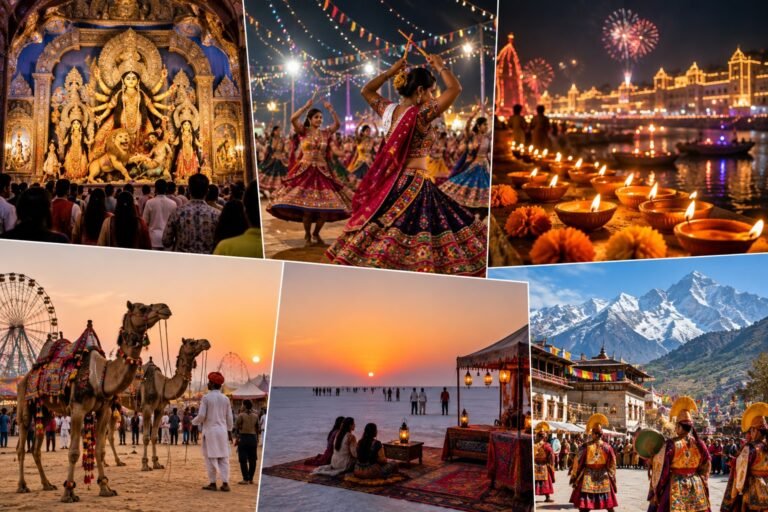
The official 2026 programme includes a Shobha Yatra, arts and crafts fair, ethnic sports, cultural exhibitions, classical music and dance, turban competitions, traditional bridal clothing, band competitions and fireworks. The festival also connects with Kartik Purnima traditions involving lamps along the river.
That is significant because the festival is not trying to create a cultural product separate from Bundi.
It is packaging Bundi itself as the experience.
A visitor who comes for the festival has reasons to walk beyond a single monument: through historic streets, towards stepwells, into craft spaces and around the town’s architectural landscape.
That creates opportunities for businesses that would otherwise be invisible in a conventional monument visit.
A tea shop can benefit.
A local guide can benefit.
A craft seller can benefit.
A small guesthouse can benefit.
A painter can benefit.
A restaurant can benefit.
The economic effect is therefore potentially distributed rather than concentrated at the ticket counter of one landmark.
That potential should not be confused with a measured economic impact, however. I found no authoritative 2026 study establishing how much additional income the Bundi Festival generates for local enterprises. The opportunity is evident; the scale still requires evidence.
Banaras is trying something more ambitious
Banaras begins from a different position.
It is already one of India’s most recognisable cultural cities.
UNESCO’s Creative Cities Network lists Varanasi as a Creative City of Music, noting the city’s long musical heritage and the role of festivals and cultural activity in its creative ecosystem. UNESCO also records a significant increase in active music companies and links the city’s creative development to the revitalisation of cultural heritage.
The new CII Banaras Culture Biennale therefore does not need to persuade the world that Banaras has culture.
It is asking a more sophisticated question:
What happens when a living cultural city is treated as a contemporary creative platform?
The answer is visible in the programme.
The inaugural biennale runs from 27 November to 31 December 2026, with exhibitions continuing beyond the opening days. Its programme includes visual art, textiles, photography, food, handicrafts, curated walks, music and public programmes.
And it is deliberately spread across the city.
Venues include Bharat Kala Bhavan, Banaras Hindu University, Jnana Pravaha, Nadesar Palace, Taj Ganges, Namo Ghat, Tulsi Ghat, Ramnagar Fort and Nagari Pracharini Sabha.
That matters enormously.
A conventional exhibition asks people to enter a building.
A citywide cultural platform asks people to enter a city.
The city becomes the gallery
This is perhaps the most interesting development in contemporary heritage tourism.
The historic city itself becomes part of the cultural programme.
In Banaras, the biennale’s stated curatorial approach is to bring historical collections and living practices into conversation with contemporary artistic work. The organisers describe the city as a “living cultural field” rather than a preserved relic.
That distinction is more than attractive language.
A museum can preserve an object.
A living city has to preserve relationships.
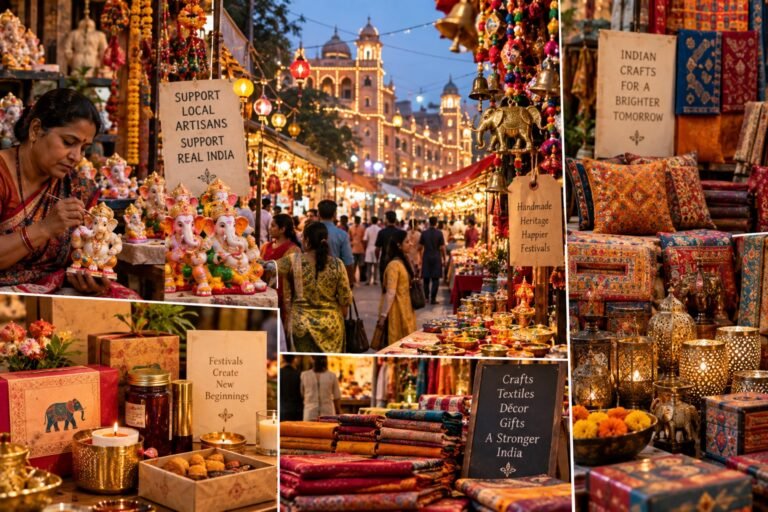
A Banarasi textile is not simply a beautiful piece of cloth. It is connected to weaving knowledge, workshops, labour, markets, design decisions and generations of skill.
Music is not merely something performed on a stage. It depends on teachers, performers, venues, audiences and systems of patronage.
Food is not simply a tourist attraction. It depends on ingredients, cooks, suppliers, neighbourhood businesses and inherited knowledge.
A creative economy exists when these relationships produce continuing work.
The artisan is becoming more important than the souvenir
This is where the new heritage economy could become genuinely useful.
Tourism has historically had a complicated relationship with artisans.
Visitors like traditional crafts.
But the person who makes the craft does not necessarily capture the largest share of the final retail value.
A festival can improve that equation if it connects audiences directly with makers, demonstrations, workshops, studios and authentic retail channels.
The Banaras Biennale explicitly includes a handicrafts haat showcasing One District One Product products at Namo Ghat and a textile exhibition at Bharat Kala Bhavan.
Its visual-arts programme also places the museum’s textile holdings in conversation with contemporary work, explicitly examining Banaras’s weaving lineages and their continuing reinterpretation.
That is a useful model.
Instead of telling visitors, “Here is an old tradition,” the city can ask:
Who is practising it now, what are they making, and what does the next generation want to do with it?
That question turns heritage into a living economic conversation.
Food may be the easiest gateway
There is another reason cultural economies are increasingly built around food.
Visitors do not need specialist knowledge to participate.
A painting may require explanation.
A textile may require an understanding of technique.
A musical form may require cultural context.
Food begins with appetite.
The Banaras Biennale programme includes a food festival at Namo Ghat from 27 November to 1 December.
That can serve as more than a tourism attraction.
Food connects agricultural supply chains, cooks, restaurants, street vendors, processors, family businesses and regional identity.
The challenge is ensuring that “local food” does not become merely a generic festival menu.
The most valuable culinary tourism is specific.
It tells visitors why a dish belongs to a place, who makes it, how its ingredients are sourced and how its preparation fits into the city’s history.
Otherwise, the cultural economy ends up selling the idea of authenticity without much authenticity inside it.
Architecture is no longer just a backdrop
Historic architecture has traditionally been treated as something to look at.
The newer cultural model treats it as something to use intelligently.
That is potentially a major difference.
Bundi’s festival invites visitors into a town whose architecture, stepwells and historic lanes form part of the experience.
The Banaras Biennale similarly uses a network of historic, academic, cultural and public locations rather than building one isolated festival compound.
This creates a more distributed visitor economy.
But it also creates a responsibility.
Historic spaces have physical limits.
Large crowds, temporary installations, amplified sound, waste and uncontrolled movement can place pressure on fragile buildings and neighbourhoods.
The creative economy therefore cannot be separated from conservation.
If a festival damages the asset that makes the festival possible, the business model has misunderstood its own balance sheet.
The real test is what happens after the festival
This is where the cultural-economy argument needs more evidence.
A festival can create an extraordinary week.
A biennale can fill hotels.
A craft market can produce a rush of sales.
But none of these automatically creates sustainable livelihoods.
The important questions come later.
Did artisans acquire repeat customers?
Did young people find paid opportunities?
Did visitors return?
Did local restaurants develop new demand?
Did cultural organisations establish lasting partnerships?
Did the city attract creative professionals who remained engaged after the event?
Did conservation receive enough attention alongside tourism?
These outcomes are much harder to measure than visitor numbers.
Yet they are the difference between event tourism and a genuine creative economy.
The Government of India is explicitly pursuing a broader culture-and-livelihood agenda. The Ministry of Culture said in March 2026 that its schemes aim to connect folk art, tribal traditions, handicrafts, traditional knowledge and Indian languages with education, skills, tourism and the digital economy to support income and livelihoods.
That policy direction makes the Bundi–Banaras experiment particularly relevant.
The festival is no longer just the product.
The ecosystem around it is the product.
There is a danger in turning every historic town into an “experience”
There is, however, a line India should be careful not to cross.
Once heritage becomes an economic strategy, every old lane can be branded.
Every artisan can become a photo opportunity.
Every traditional dish can become a premium experience.
Every building can become an event venue.
That may increase tourism in the short term while hollowing out the very culture being marketed.
The solution is not to keep tourists away.
It is to make communities participants in the economic value created by their own culture.
UNESCO’s recent work on living heritage tourism in Agra’s Taj Ganj neighbourhood offers a useful broader principle: local residents, artisans, drivers and families should not remain invisible around famous monuments; they can become interpreters and active participants in the visitor economy.
That principle applies equally to Bundi and Banaras.
The person who keeps the heritage alive should not disappear behind the heritage.
Bundi and Banaras are not the same—and that is precisely why the comparison matters
Bundi’s strength is intimacy.
It is a smaller historic city whose festival can encourage visitors to explore its architectural and cultural fabric.
Banaras’s strength is scale and density.
Its culture is already embedded in music, weaving, scholarship, pilgrimage, food, neighbourhoods and institutions. The biennale is attempting to connect these layers with contemporary artistic practice.
One is a festival rooted in an established local tradition.
The other is a new cultural platform deliberately constructing a citywide network.
Neither model should be copied mechanically elsewhere.
The lesson is more useful than the formula.
Historic cities need economic models that are as layered as their histories.
India’s next heritage boom should be measured differently
For years, the success of heritage tourism could be summarised in familiar numbers: visitor arrivals, hotel occupancy, ticket sales and monument footfall.
Those figures still matter.
But they are incomplete.
The next generation of cultural destinations should also measure artisan income, local employment, repeat customers, cultural participation, conservation outcomes and the proportion of tourism value retained within the local economy.
That would change how cities design festivals.
It would also change what success looks like.
A crowded heritage street is not necessarily a successful cultural economy.
A town where artisans gain stable customers, young people find creative work, historic buildings remain protected and visitors leave with a deeper understanding of the place—that is a more meaningful victory.
Bundi and Banaras are arriving at this conversation from different directions.
Bundi is showing how a festival can invite people into the texture of a historic town.
Banaras is attempting something more experimental: turning the entire city into a platform where inherited culture and contemporary creativity meet.
Both point toward the same future.
India’s historic cities do not need to choose between preservation and economic relevance. But they do need to ensure that the economy grows from the culture rather than consuming it.
The most valuable thing a visitor should take home may not be a photograph of a palace or a luxury souvenir.
It may be the understanding that the city they visited is not an old thing being preserved.
It is an old place still making something new.


World Beyond the News
Bees Communicate Where Food Is
Honeybees use movement patterns known as waggle dances to communicate information about food locations.
Street Food Reflects Local History
Many famous street foods developed from migration, trade, local ingredients and the everyday needs of working communities.
A Day on Venus Is Extremely Long
Venus rotates so slowly that one rotation relative to distant stars takes longer than its trip around the Sun.
Human Achievement Continues to Push Limits
Athletes, engineers, scientists and explorers regularly establish new benchmarks in speed, endurance, scale and precision.