Pitru Paksha 2026: Dates, Rituals and the Enduring Tradition of Honouring Ancestors
From Shraddha and Tarpan to acts of charity and family remembrance, Pitru Paksha offers India’s families an annual opportunity to honour their ancestors and reflect on the legacy passed down through generations.
Pitru Paksha 2026 begins with Pratipada Shraddha on Sunday, September 27, and concludes with Sarva Pitru Amavasya on Saturday, October 10. Purnima Shraddha is observed on September 26, the day before the main sequence begins. The distinction explains why some calendars describe the observance as starting on September 26, while others give September 27 as the beginning of Pitru Paksha proper.
Across India, families will mark this period through prayers, offerings, remembrance and charity. The customs vary by region and family tradition, but the central sentiment is shared: gratitude towards those who came before us.
In an age when family photographs sit in cloud storage and relatives sometimes struggle to recall the names of great-grandparents, Pitru Paksha offers a timely reminder that remembering our roots is more than a ritual. It is also a way of preserving family history, values and a sense of belonging.
Pitru Paksha 2026: Key dates
September 26, Saturday
Purnima Shraddha — observed before the main Pitru Paksha sequence.
Pratipada Shraddha — the beginning of the main sequence.
Sarva Pitru Amavasya, also known as Mahalaya Amavasya — the concluding observance.
Pitru Paksha follows the Hindu lunar calendar, so the observance is determined by tithi, not simply by counting dates on a conventional calendar. The precise tithi and suitable ritual period can vary by location. Families should check a local panchang for the timings applicable to their city.
What is Pitru Paksha?
Also known as Shraddha Paksha or Mahalaya Paksha, Pitru Paksha is a period dedicated to paying respect to departed ancestors. In Hindu tradition, families perform Shraddha and related rites to express devotion, gratitude and remembrance.
The word shraddha is associated with faith and sincerity. For many households, the observance is an important link between generations—a time to remember parents, grandparents and earlier ancestors whose efforts helped shape the family’s present.
The period is commonly described as a 15-day fortnight, although some calendars count Purnima Shraddha as part of the wider observance and therefore refer to 16 days. This difference in counting does not change the importance of following the appropriate tithi for the family’s ritual.
Shraddha, Tarpan and Pind Daan: the core traditions
Three practices are especially associated with Pitru Paksha.
Shraddha is the broader ritual performed in honour of ancestors. It is commonly observed on the lunar tithi corresponding to the ancestor’s death. The procedure differs across communities and family traditions.
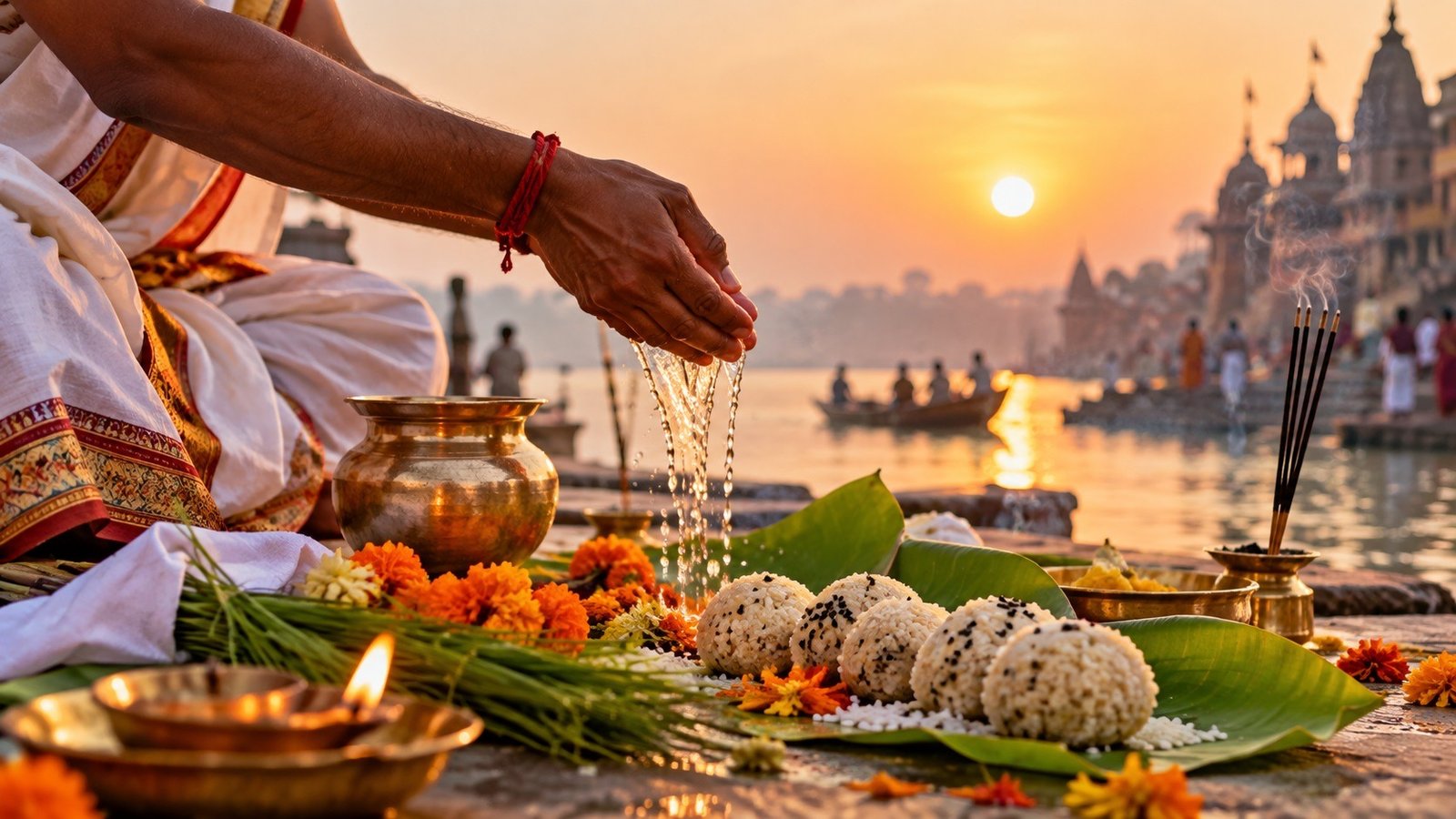
Tarpan involves offering water while reciting prayers or remembering ancestors. In many traditions, the water is offered with black sesame seeds and kusha grass. The act symbolises reverence and the expression of gratitude.
Pind Daan involves offering symbolic portions, often prepared using cooked rice and other ingredients. It is associated with ancestral rites and is performed according to the customs followed by the family and the place of pilgrimage.
These practices hold religious and spiritual meaning for devotees. Their significance is best understood within the traditions in which they are performed, rather than as claims that can be measured through scientific methods.
Why the death tithi matters
Families traditionally perform Shraddha on the lunar date associated with an ancestor’s passing. Because a lunar tithi does not always match the Gregorian date on a death certificate, identifying the correct observance may require consulting a panchang.
When the exact death tithi is unknown, or when a family is unable to perform the individual rite on its designated day, Sarva Pitru Amavasya is widely observed as a day to remember all ancestors.
This makes the final day especially meaningful for families whose records are incomplete or whose ancestral details have been lost over time. It provides an opportunity to include those who may no longer be remembered by name but remain part of the family’s history.
Feeding animals and giving to those in need
In several traditions, food is offered to crows, cows and dogs during Pitru Paksha. Crows, in particular, hold symbolic significance in some Hindu beliefs. Practices differ, however, and not every family follows the same customs.
Charity, or daan, is another important observance. Families may donate food, clothing or essential supplies, offer meals, or support people in need. Such acts can give the period a practical expression of compassion.
There is a simple principle worth remembering: charity should be voluntary and thoughtful. It should not become a display of wealth or a source of financial pressure. A modest donation or a meal offered with sincerity can be meaningful without elaborate arrangements.
A tradition that can preserve family history
Pitru Paksha also provides an opportunity to do something that requires no elaborate ritual: record the stories of older generations.
Ask elders about the family’s origins, the places where previous generations lived, their occupations, the languages they spoke and the challenges they overcame. Label old photographs, preserve family documents and write down the stories behind heirlooms.
These details can be invaluable to younger generations. Family history is rarely a perfect tale of achievement; it also contains hardships, mistakes, migration, sacrifice and resilience. Remembering ancestors honestly means recognising their humanity rather than turning every generation into a legend.
For families spread across cities and countries, sharing these stories can also restore connections that distance and busy schedules have weakened.
DOONITED View: Remembrance should bring gratitude, not fear
Pitru Paksha is sometimes discussed through warnings about bad luck, ancestral displeasure or the consequences of failing to perform a particular ritual. Such claims can create anxiety, particularly for grieving families or those who cannot afford elaborate ceremonies.
A constructive understanding begins with the values at the heart of the observance: gratitude, continuity, responsibility and compassion. Religious customs deserve respect, but families should not be pressured into spending beyond their means or made to feel that remembrance is meaningful only when it is expensive.
The strongest legacy we can offer the next generation is not merely a record of rituals performed. It is a family culture that respects elders, cares for the vulnerable, preserves its history and passes on its values with integrity.
Learning Point
Pitru Paksha is a time to honour the past while taking responsibility for the present. Check the appropriate tithi, follow your family’s tradition and make space for sincere remembrance. Preserve a family story, support someone in need or spend time with an elder. The observance concludes on October 10, but gratitude need not be confined to a fortnight.

World Beyond the News
Bees Communicate Where Food Is
Honeybees use movement patterns known as waggle dances to communicate information about food locations.
Street Food Reflects Local History
Many famous street foods developed from migration, trade, local ingredients and the everyday needs of working communities.
A Day on Venus Is Extremely Long
Venus rotates so slowly that one rotation relative to distant stars takes longer than its trip around the Sun.
Human Achievement Continues to Push Limits
Athletes, engineers, scientists and explorers regularly establish new benchmarks in speed, endurance, scale and precision.