Bengaluru Tech Summit 2026: Can “AI & Beyond” Turn India’s Tech Ambition into Global Impact?
Bengaluru has built its global technology reputation over decades—through software services, engineering talent, research centres and a startup ecosystem that connects India with international markets. In November, the city will once again put that ecosystem on display.
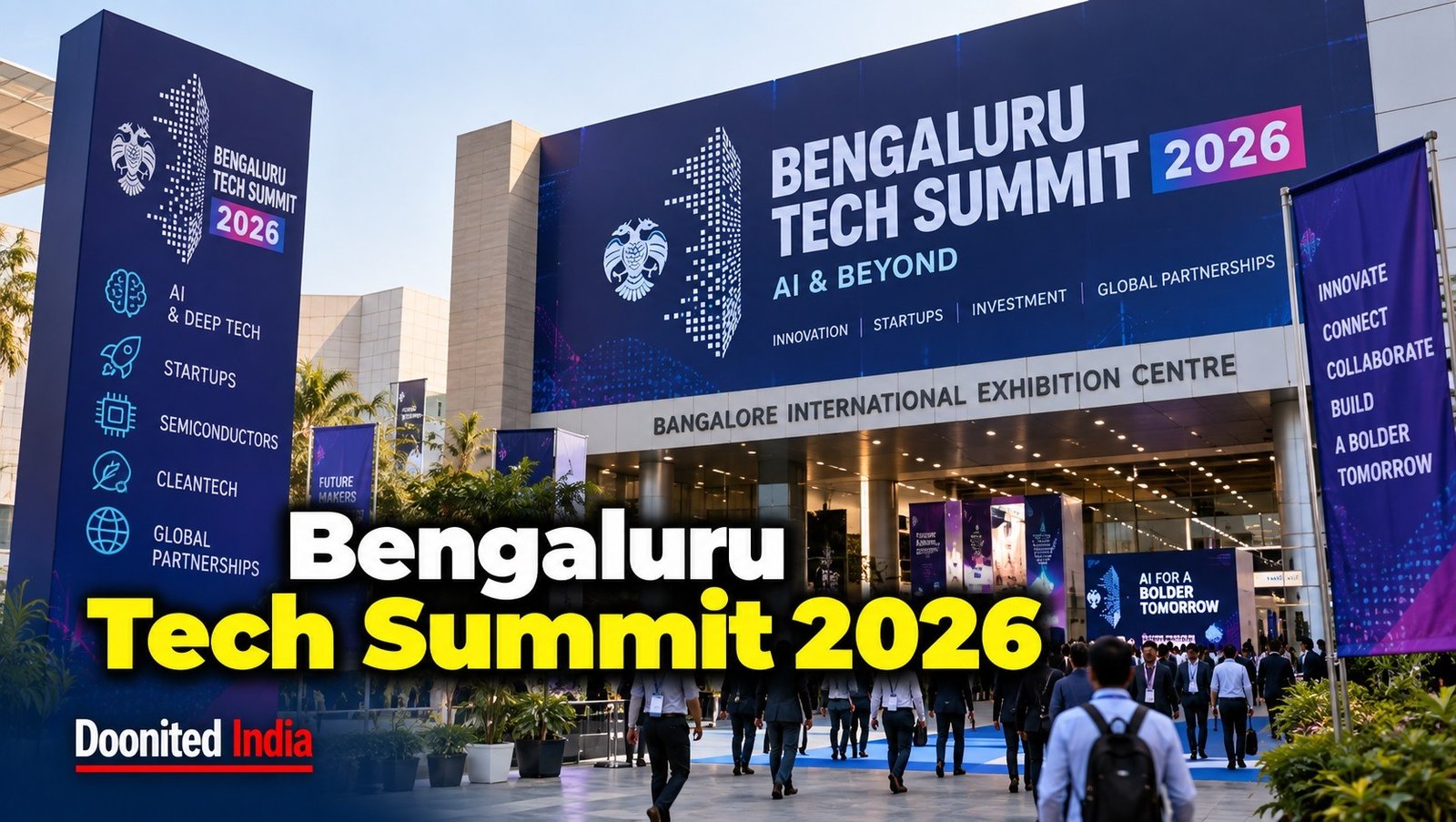
The 29th Bengaluru Tech Summit (BTS 2026) is scheduled for November 17–19 at the Bangalore International Exhibition Centre (BIEC), under the theme “AI & Beyond.” Organised by the Government of Karnataka’s Department of Electronics, IT, BT & S&T, the summit aims to bring together technology companies, startups, investors, researchers, policymakers and international delegates.
Artificial intelligence will be central, but the agenda reaches well beyond AI: semiconductors, deep technology, biotechnology, healthtech, fintech, electric mobility, digital infrastructure and space technology are among the areas featured in the summit’s programme.
The ambition is clear: position Bengaluru not merely as a place where technology talent works for global companies, but as a place where new technologies, products and businesses are developed—and taken to the world.
The harder question is whether three days of exhibitions, pitches and conferences can help convert that ambition into lasting partnerships, investment and measurable innovation.
BTS 2026 at a Glance
Event detail | Information |
|---|---|
Edition | 29th Bengaluru Tech Summit |
Dates | November 17–19, 2026 |
Venue | Bangalore International Exhibition Centre, Bengaluru |
Theme | AI & Beyond |
Organiser | Department of Electronics, IT, BT & S&T, Government of Karnataka |
Core audience | Startups, technology companies, investors, researchers and policymakers |
Main platforms | Exhibition, conference tracks, Future Makers, investor connects and awards |
The official summit website advertises more than 1,600 exhibitors, over 1,000 startups and participation from more than 60 countries. Other pages on the same official website cite figures of 1,800-plus exhibitors and 75-plus countries. These appear to be differing event projections or page updates; the figures should not be treated as a single confirmed final count.
AI Is the Headline. The Technology Stack Is Much Bigger.
The theme “AI & Beyond” reflects a technology landscape in which artificial intelligence increasingly depends on—and contributes to—other sectors.
AI models need computing infrastructure, semiconductors, data centres, networks and secure data systems. Their applications can extend into healthcare, industrial automation, financial services, mobility and scientific research.
That is why the summit’s broader sector mix matters.
Semiconductors and deep tech
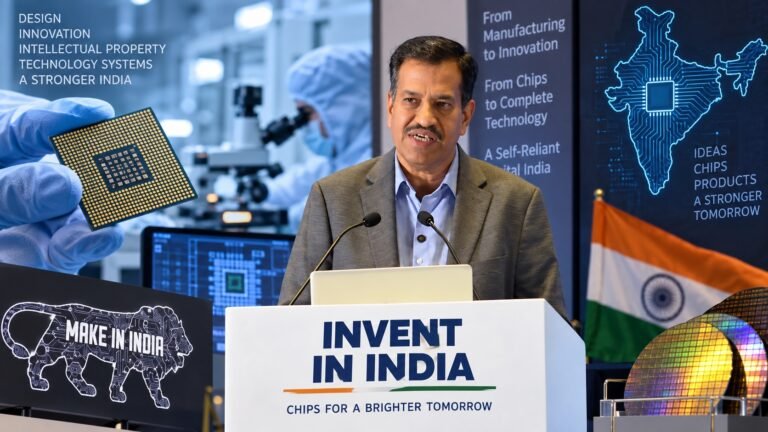
Semiconductors and embedded systems are foundational to electronics, connected devices, industrial equipment and AI infrastructure. For Indian companies, the opportunity spans chip design, electronic systems, specialised components and engineering services.
But semiconductor development is capital-intensive and technically demanding. A summit can help companies meet partners and investors; it cannot substitute for manufacturing capacity, skilled teams, dependable supply chains or long-term investment.
Biotechnology and healthtech
Bengaluru’s technology ecosystem also intersects with life sciences, biotechnology and healthcare. Digital tools can support diagnostics, research, clinical workflows and health-system management.
Yet healthtech is not simply another software market. Patient safety, clinical validation, privacy, regulation and access to healthcare all shape whether a promising innovation can be adopted.
Fintech, mobility and digital infrastructure
Financial technology, electric mobility, cybersecurity, data centres and digital infrastructure are also represented in the summit’s thematic programme. These fields have different commercial and regulatory requirements, but share a common need: reliable technology that solves a real operational problem.
The broader agenda makes BTS more than an AI showcase. It is a meeting point for the systems that make modern technology work.
Future Makers: A Platform for Startups and Investors
A central feature of BTS 2026 is Future Makers, which returns as a dedicated platform for deep-tech startups and the wider innovation ecosystem.
The official summit materials describe a programme that includes:
Startup pitching opportunities.
Investor-connect and mentoring sessions.
A startup exhibition pavilion.
Product and innovation launches.
Startup and innovation awards.
Discussions involving founders, venture capitalists, corporates and policymakers.
The official website says the startup pavilion is expected to feature more than 350 startups, incubators and accelerators. Future Makers is intended to connect founders with investors and potential business partners, while giving companies a platform to demonstrate their technology.
For an early-stage company, that access can be valuable. A founder may need more than capital: a first enterprise customer, a manufacturing partner, a distribution channel or an experienced mentor could determine whether a product moves beyond its prototype stage.
But visibility is not the same as commercial progress. A pitch that attracts applause still needs customers, a viable business model and the ability to deliver. Investors, meanwhile, must distinguish a compelling demonstration from evidence of repeatable demand.
The meaningful measure of Future Makers will be what happens after the introductions: pilots, contracts, follow-on funding, product adoption and durable partnerships.
Embedded World India and the Global Technology Link
BTS 2026 also features Embedded World India among its associated programmes. Embedded technology sits behind many products that rarely receive the attention given to consumer apps: industrial controllers, automotive electronics, medical devices, connected equipment and intelligent machines.
The connection with embedded systems is relevant to the summit’s wider technology agenda. AI increasingly moves from cloud platforms into devices and industrial environments, where computing, sensors, connectivity and reliability must work together.
The summit’s international engagement is another important dimension. Its programme includes global collaboration platforms and an India–USA Tech Conclave focused on technology partnerships, investment opportunities and policy dialogue.
For Indian startups and technology companies, international participation can open routes to customers and collaborators. For overseas businesses, Bengaluru offers access to engineering talent, technology suppliers, research institutions and a large domestic market.
However, international reach should be measured by the quality of collaboration, not just the number of flags on an exhibition floor. The real value lies in partnerships that continue after the event.
Registration: Delegates, Visitors and Startups
The official website provides separate routes for conference delegates, exhibition visitors and startups.
Conference delegates
Registration categories and delegate tariffs are available through the official conference registration page.
The official FAQ says visitors can register to explore the exhibition without registering as conference delegates. Conference sessions require delegate registration.
The summit directs Future Makers registration through F6S. Startups interested in exhibiting should check the official startup and booth-registration routes for eligibility and terms.
The official portal lists delegate pass categories, including Silver, Gold and Platinum. Prospective attendees should check the live registration page for current prices, inclusions, eligibility and availability before paying. Registration for a conference pass, exhibition visit, startup pitch or booth should not be assumed to cover the others.
Official Bengaluru Tech Summit Portal.
The Challenge: Turning a Summit into an Innovation Engine
Technology events can create useful connections, but the ecosystem’s deeper challenges remain outside the conference hall.
Startups need customers who are willing to pay, not just organisations willing to attend a demo. Deep-tech firms may require years of research and development before commercial returns become visible. Smaller companies can also struggle to access procurement opportunities, testing infrastructure and international markets.
For Karnataka, the summit’s national value will depend partly on how effectively it connects Bengaluru with technology ecosystems across India. Chennai, Hyderabad, Pune, Mumbai, Delhi-NCR and other centres have their own strengths in engineering, manufacturing, research, finance and entrepreneurship.
A truly national innovation platform should enable these ecosystems to collaborate. Technology clusters can compete for investment while still sharing talent, suppliers, research and market opportunities. Innovation rarely respects a state boundary, even when policy programmes do.
The summit’s scale projections also deserve careful interpretation. Exhibitors, startups, delegates and business visitors are different categories, and they should not be added together as though they represent unique participants. Clear reporting after the event would help readers and businesses understand its actual reach.
DOONITED View: Beyond the AI Showcase
Bengaluru Tech Summit 2026 arrives at a time when AI is reshaping business expectations. Almost every sector now has an AI story to tell. The more useful question is whether that story delivers measurable value.
For India, the opportunity is to connect AI with deep engineering, scientific research, manufacturing, healthcare and other areas where technological capability can produce tangible economic and social outcomes.
BTS can provide a meeting place for that work. Future Makers can give startups access to investors and industry. International programmes can create routes to overseas markets. But the summit’s long-term contribution will depend on the partnerships and products that emerge afterwards.
A technology showcase can make the future look close. Building it still takes years of engineering, capital, testing and customer trust.
The most important outcome of BTS 2026 will not be how many technologies are displayed, but how many useful ideas move one step closer to real-world adoption.
Learning Point
For startups, investors and technology professionals, the value of attending a summit lies in having a clear objective: finding a customer, validating a product, locating a partner, understanding a market or building a research connection.
For the wider Indian technology ecosystem, the lesson is equally practical. Innovation requires more than ideas and investment announcements. It needs a path from research and development to dependable products, paying customers and global markets.


World Beyond the News
Birds Can Navigate Using Earth’s Magnetic Field
Several bird species can sense Earth’s magnetic field, helping them navigate during long-distance migration.
Fermentation Is a Global Food Tradition
People across continents have used fermentation for centuries to preserve food and create distinctive flavours.
Modern Batteries Store Energy Chemically
Rechargeable batteries repeatedly move ions between electrodes, allowing electrical energy to be stored and released.
Why Songs Become Global Hits
Streaming platforms, short-form video, playlists and international collaborations can rapidly carry music across borders.