MONDAY, OCTOBER 26, 2026
01:29:56 PM
Doonited India
LOCAL WEATHER
Loading...
INDIA WEATHER
DELHI --°C
MUMBAI --°C
CHENNAI --°C
KOLKATA --°C
BREAKING NEWS
Pradeep Banerjee

Pradeep Banerjee

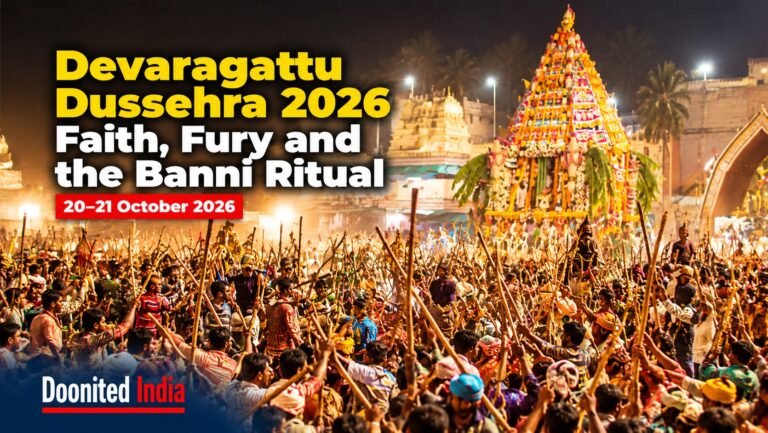
Devaragattu Dussehra: When Faith and Risk Meet

Devaragattu Dussehra: When Faith and Risk Meet

Devaragattu Dussehra: When Faith, Memory and Risk Meet on a Midnight Hill Every Vijayadashami, Devaragattu in Andhra Pradesh turns an ancient story of victory into a living ritual involving thousands of devotees, competing village groups and a midnight confrontation with…

Indian Philosophy “Vasudhaiva Kutumbakam” A Diplomatic Language

Indian Philosophy “Vasudhaiva Kutumbakam” A Diplomatic Language

Can the World Really Become One Family? Imagine a family dinner where everyone agrees on the menu, nobody argues about money, nobody fights over the remote control and, most importantly, nobody asks who is paying the bill. Sounds wonderful. It also sounds slightly unrealistic. That is precisely why one of India’s oldest philosophical ideas has acquired such an interesting new life in international politics. “Vasudhaiva Kutumbakam” — the world is one family. The Sanskrit phrase has travelled an extraordinary distance: from an ancient Indian philosophical text to modern diplomatic speeches, international conferences and the vocabulary of global governance. India made it particularly visible during its 2023 G20 presidency, choosing “Vasudhaiva Kutumbakam — One Earth, One Family, One Future” as the presidency’s theme. But there is an important question beneath the beautiful phrase: Can an idea about universal human unity actually work in a world where countries compete for security, technology, resources, markets and influence? The answer is neither a simple yes nor a cynical no. It is much more interesting. An ancient idea with a very modern message The expression appears in the Maha Upanishad, where the broader verse contrasts narrow-minded thinking — “this is mine, that is theirs” —

What Really Makes India a Major Military Power?

What Really Makes India a Major Military Power?

India’s Military Strength in 2026: Beyond the Numbers How powerful is India’s military? It sounds like a question with a simple answer: count the soldiers, tanks, aircraft, ships and submarines. But modern military power is rather less cooperative than a spreadsheet. A country can have thousands of tanks and still face problems with maintenance. It can possess hundreds of aircraft but have fewer available for immediate operations. It can have a large navy but still need greater numbers of tankers, submarines and long-range surveillance systems. So when we look at India’s military strength in 2026, the interesting story is not simply how many weapons India possesses. It is how those numbers combine with geography, technology, manpower, industrial capacity and strategic deterrence. Open-source assessments currently place India among the world’s major military powers. GlobalMilitary’s 2026 assessment ranks India fourth globally and lists about 1.48 million active troops, approximately 1.16 million reserves, 2,256 military aircraft and 353 naval vessels. MilitaryCompare also places India fourth in its 2026 ranking, although its underlying figures differ somewhat. The differences are a useful reminder: military statistics are estimates, not cricket scores. A massive manpower base India’s greatest conventional military asset remains manpower. The latest open-source estimates