MONDAY, OCTOBER 5, 2026
11:47:24 AM
Doonited India
LOCAL WEATHER
Loading...
INDIA WEATHER
DELHI --°C
MUMBAI --°C
CHENNAI --°C
KOLKATA --°C
BREAKING NEWS
Pradeep Banerjee

Pradeep Banerjee

Indian culture is also influencing America

Indian culture is also influencing America

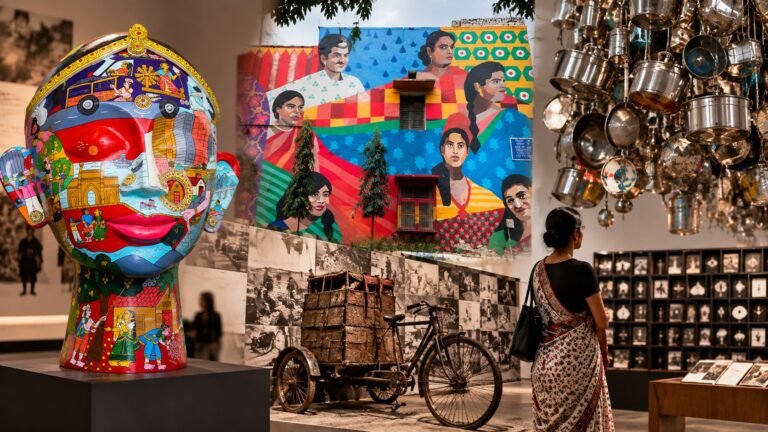
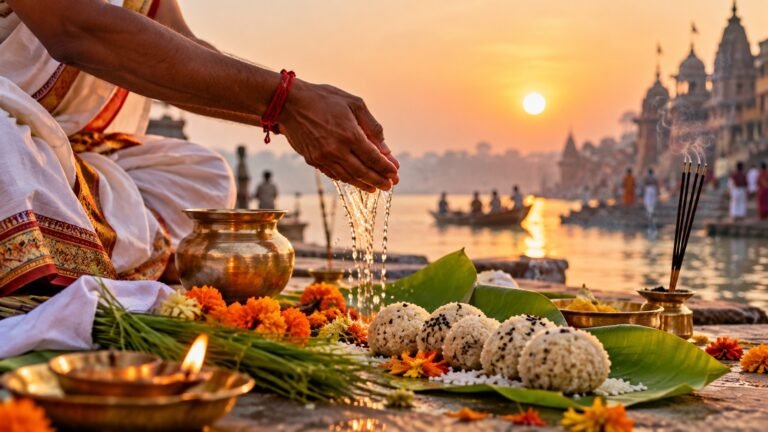
Indian Culture in America: How a Community Is Preserving Its Roots While Shaping American Life Walk through parts of New Jersey, Texas, California, Illinois or New York and it is possible to encounter an India that exists thousands of kilometres from the subcontinent. There may be an Indian grocery store, a temple or gurdwara, a restaurant serving regional cuisine, a Bharatanatyam class, a Hindi-speaking family or a community preparing for Diwali. But Indian culture in the United States is no longer simply an immigrant culture preserved behind closed doors. It has increasingly become part of the wider American cultural landscape. The scale of the community helps explain why. The U.S. Census Bureau’s 2024 American Community Survey counted approximately 5.56 million people of Asian Indian origin, alone or in combination with another race in the United States. The community is large, but its cultural identity is anything but uniform. One community, many Indias Indian Americans do not represent a single language, religion or regional tradition. Pew Research Center data shows that among Indians aged five and older, Hindi, Telugu, Gujarati and Tamil are among the leading languages spoken at home. At the same time, 84% are proficient in English. Religion is

From India to the World Business

From India to the World Business

How Indian-Origin Leaders Reached the Top of Global Business A boy growing up in Chennai becomes the head of one of the world’s most influential technology companies. An engineer from Hyderabad rises to lead Microsoft. A woman from Kolhapur reaches the top of Chanel. A Kanpur-born engineer helps shape the future of semiconductors. These are not isolated success stories anymore. Indian and Indian-origin executives now occupy some of the most influential positions in global business. Their companies span artificial intelligence, cloud computing, pharmaceuticals, semiconductors, cybersecurity, fashion and enterprise software. Investopedia’s list of 10 prominent Indian CEOs, updated in March 2026, illustrates how far this transformation has travelled. But the more interesting story is not simply the names on the list. It is how talent educated or shaped in India has become part of the leadership architecture of the global economy. From Hyderabad to Microsoft Satya Nadella is perhaps the most recognisable example. Born in Hyderabad, Nadella became Microsoft’s CEO in 2014 and subsequently chairman. His tenure has been strongly associated with Microsoft’s expansion in cloud computing and artificial intelligence. His education included electrical engineering, computer science and an MBA, while his career developed over many years inside Microsoft. His story

The UN Map Row: Why India Objected

The UN Map Row: Why India Objected

Depiction of Arunachal Pradesh and Aksai Chin A map normally sits quietly on a wall, in a textbook or inside a geography application. But sometimes a map becomes foreign policy. That is exactly what has happened after India raised concerns over the way Arunachal Pradesh and Aksai Chin appear on a recently published United Nations world map. The controversy is particularly interesting because it comes only days after India supported a United Nations General Assembly resolution promoting greater use of equal-area world maps. At first glance, that may look contradictory. India supports a new approach to mapping the world—and then objects to a UN map. But the two issues are not actually the same. And that distinction is at the heart of the story. What does the UN map show? The United Nations Geospatial section published its latest Map of the World on July 1, 2026. The UN’s own page identifies UN Geospatial as the author and lists the publication date. The map uses the Equal Earth projection, a system designed to represent the relative areas of continents and countries more accurately than projections such as Mercator. However, the treatment of disputed India-China territory has attracted attention in India. According

BRICS 2026 : Delhi Summit Is a Test of Strategic Autonomy

BRICS 2026 : Delhi Summit Is a Test of Strategic Autonomy

Global South Ambition and Practical Cooperation On September 12 and 13, New Delhi will become one of the most closely watched diplomatic addresses in the world. The occasion is the 18th BRICS Summit, hosted by India at Bharat Mandapam during its 2026 BRICS chairship. But this is not simply another diplomatic gathering where leaders arrive, pose for photographs, shake hands and return home with a folder full of declarations. The timing makes this summit particularly important. BRICS is now a much larger grouping than the original Brazil-Russia-India-China configuration. It has 11 members, including South Africa, Egypt, Ethiopia, Iran, Saudi Arabia, the United Arab Emirates and Indonesia. Together, the members account for nearly half of the world’s population and around 40% of global GDP, according to Indian government figures. And 2026 marks another milestone: BRICS is 20 years old. For India, therefore, this summit is both a diplomatic responsibility and a test. Can New Delhi turn an increasingly diverse group into a more useful instrument of economic and technological cooperation? Or will BRICS remain a fascinating collection of countries that agree on some things, disagree on others—and occasionally manage to agree on the punctuation? India’s four-word BRICS message India’s presidency has

Where Does the World Like India Most?

Where Does the World Like India Most?

The Countries Giving India Its Strongest Global Ratings India’s global image is often discussed through the language of diplomacy: strategic partnerships, trade agreements, defence cooperation, technology, the Global South and geopolitical influence. But there is another, quieter measure of India’s place in the world. What do ordinary people in other countries actually think about India? The latest 2026 Global Attitudes Survey from the Pew Research Center offers an unusually useful snapshot. Surveying more than 42,000 adults across 36 countries between February and May 2026, Pew found that a median of 45% had a favorable view of India, compared with 41% who had an unfavorable view. And the geographical differences are fascinating. In some countries, India is viewed remarkably positively. In others, the picture is considerably more complicated. That makes the story much more interesting than simply announcing that “the world loves India.” Sri Lanka: 79% and a remarkable turnaround At 79%, Sri Lanka recorded the highest favorable rating for India among all 36 countries surveyed. Only 11% expressed an unfavorable opinion. The number becomes even more interesting when viewed historically. In 2024, 65% of Sri Lankans surveyed had a favorable view of India. By 2026, that had increased by 14

India’s Foreign Policy Determined A New Geopolitical Balancing Act

India’s Foreign Policy Determined A New Geopolitical Balancing Act

West, the Global South and a Battle of Narratives The geopolitical map is becoming increasingly complicated—and India appears determined not to read it like a school timetable. One day, New Delhi is deepening strategic cooperation with the United States and its partners. On another, India sits at the same table as Russia, China and Iran in the Shanghai Cooperation Organisation. At the same time, it is speaking increasingly loudly about the concerns of developing countries and advocating a larger voice for the Global South. This is not necessarily a contradiction. It may actually be the central feature of India’s contemporary foreign policy. The recent Shanghai Cooperation Organisation summit in Bishkek offered a particularly revealing example. The SCO moment: India signs, but India does not simply align At the 26th SCO summit in Bishkek on August 31–September 1, 2026, Prime Minister Narendra Modi joined leaders of the organisation’s member states for discussions covering security, terrorism, regional stability, connectivity and economic cooperation. The summit adopted the Bishkek Declaration. The declaration expressed deep concern about developments around Iran and condemned military strikes on Iranian territory, describing their consequences as a threat to international peace, security and stability. It called for the conflict to

Singapore Draws a Line Against Anti-Indian Hate

Singapore Draws a Line Against Anti-Indian Hate

Why Lawrence Wong’s Message Matters Beyond Social Media A few ugly social-media posts can sometimes reveal something much larger than the people who wrote them intended. Singapore is discovering that again. Prime Minister Lawrence Wong has publicly condemned racist and xenophobic online remarks targeting the Indian community, warning that prejudice against any community must never be allowed to become accepted or normalised. His intervention came after a fresh wave of inflammatory online discussion linked to two sensitive subjects: the recent Nepal-Tibet disaster, in which Singaporeans were among those missing, and Singapore Airlines’ investment in Air India. According to Singapore’s authorities, some of the online discussion crossed from legitimate debate into anti-Indian abuse. For India’s global diaspora, the episode deserves attention—not because Singapore is suddenly an unsafe country for Indians, but precisely because its political leadership has chosen to confront racial hostility publicly rather than pretend that online abuse is harmless. When criticism becomes something else Singapore is no stranger to vigorous debate. Questions about immigration, foreign workers, employment, economic competition and the role of foreigners in Singaporean society are legitimate subjects for public discussion. But there is a line between criticising a government policy and blaming an entire ethnic community.

El Niño: Means for India and the World

El Niño: Means for India and the World

El Niño Is Strengthening: What the Pacific Warming Means for India and the World There is a vast stretch of ocean thousands of kilometres away from India that can influence weather patterns across the planet. That ocean is the tropical Pacific. And right now, scientists are watching it particularly closely. The World Meteorological Organization (WMO) reported on 3 September 2026 that El Niño is firmly established and is expected to strengthen into a very strong event in the coming months, potentially peaking towards the end of 2026. WMO forecasts give an exceptionally high, nearly 100%, likelihood that the phenomenon will persist through February 2027. So what exactly is El Niño—and why should Indians care? What is El Niño? El Niño is a naturally occurring climate phenomenon associated with unusually warm sea-surface temperatures in the central and eastern tropical Pacific Ocean. It is part of the larger El Niño-Southern Oscillation, or ENSO, a recurring pattern involving interactions between the tropical Pacific Ocean and atmosphere. The name has a surprisingly human origin. “El Niño” is Spanish for “the Christ Child”. The term was historically used by fishermen along the coast of Peru because the unusually warm ocean conditions often appeared around Christmas.

India Backed the UN’s ‘Correct the Map’ Resolution

India Backed the UN’s ‘Correct the Map’ Resolution

The World Map Is Being Rethought: Why India Backed the UN’s ‘Correct the Map’ Resolution For generations, millions of schoolchildren have looked at the same familiar world map and assumed that what they saw was an accurate picture of the planet. It was not. On September 4, 2026, the United Nations General Assembly took an unusual but significant step towards correcting that perception. It adopted a resolution titled “Correct the Map: Rebalancing Global Cartographic Representation and Promoting Equitable Representation of the World’s Regions, Particularly Africa.” The resolution received 164 votes in favour, one against and six abstentions. India voted in favour. The United States was the only country to vote against, while Estonia, Georgia, Lithuania, Moldova, Serbia and Ukraine abstained. But this is not quite the story of the United Nations simply replacing one world map with another. The more interesting story is about how maps shape our understanding of the world — and why India believes geographical representation should be more accurate. Why is the Mercator map controversial? The familiar Mercator projection was developed by Gerardus Mercator in 1569. Its great strength was navigation: it preserves angles and directions in a way that made it extremely useful for maritime

New Legal and Diplomatic Test for India-Pakistan

New Legal and Diplomatic Test for India-Pakistan

Indus Waters Treaty: The Hague Ruling Creates a New Legal and Diplomatic Test for India-Pakistan Water has always been more than a natural resource in South Asia. It is agriculture, electricity, food security and, increasingly, a matter of national strategy. That is why the latest development surrounding the Indus Waters Treaty deserves attention well beyond the courtroom. On August 31, 2026, a Court of Arbitration constituted under the 1960 treaty issued an award declaring that the agreement remains fully in force, despite India’s April 2025 decision to place it in abeyance. The tribunal also issued interim measures concerning the Ratle Hydroelectric Plant in Jammu and Kashmir. India has rejected the tribunal’s authority and maintained that its decision to hold the treaty in abeyance remains in force. The result is not simply another India-Pakistan diplomatic disagreement. It is a clash between two fundamentally different positions: one centred on the treaty’s dispute-resolution mechanism and the other on India’s sovereign and security concerns. What exactly did The Hague tribunal decide? The tribunal examined India’s decision of April 2025 to place the treaty “in abeyance” following an attack in Indian-administered Jammu and Kashmir. Its unanimous conclusion was that the grounds cited by India did